Works

101 works

Land Animals

Lion Head

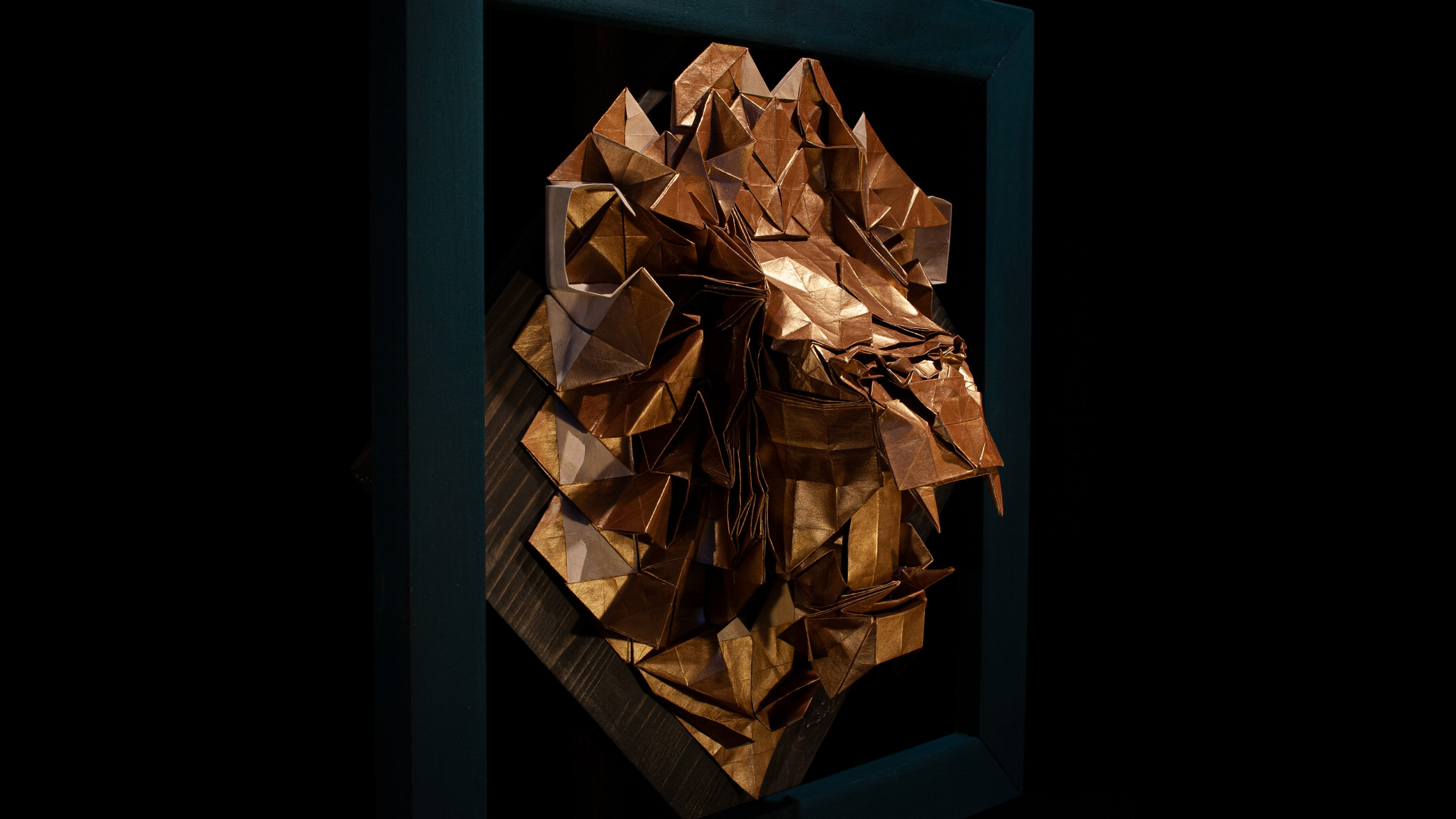
A three-dimensional lion’s head made from a single square sheet. It captures the expression of a wide-open mouth, along with the fine details of the mane, through folded-in shaping. It brings geometric and figurative expression together within a single piece.
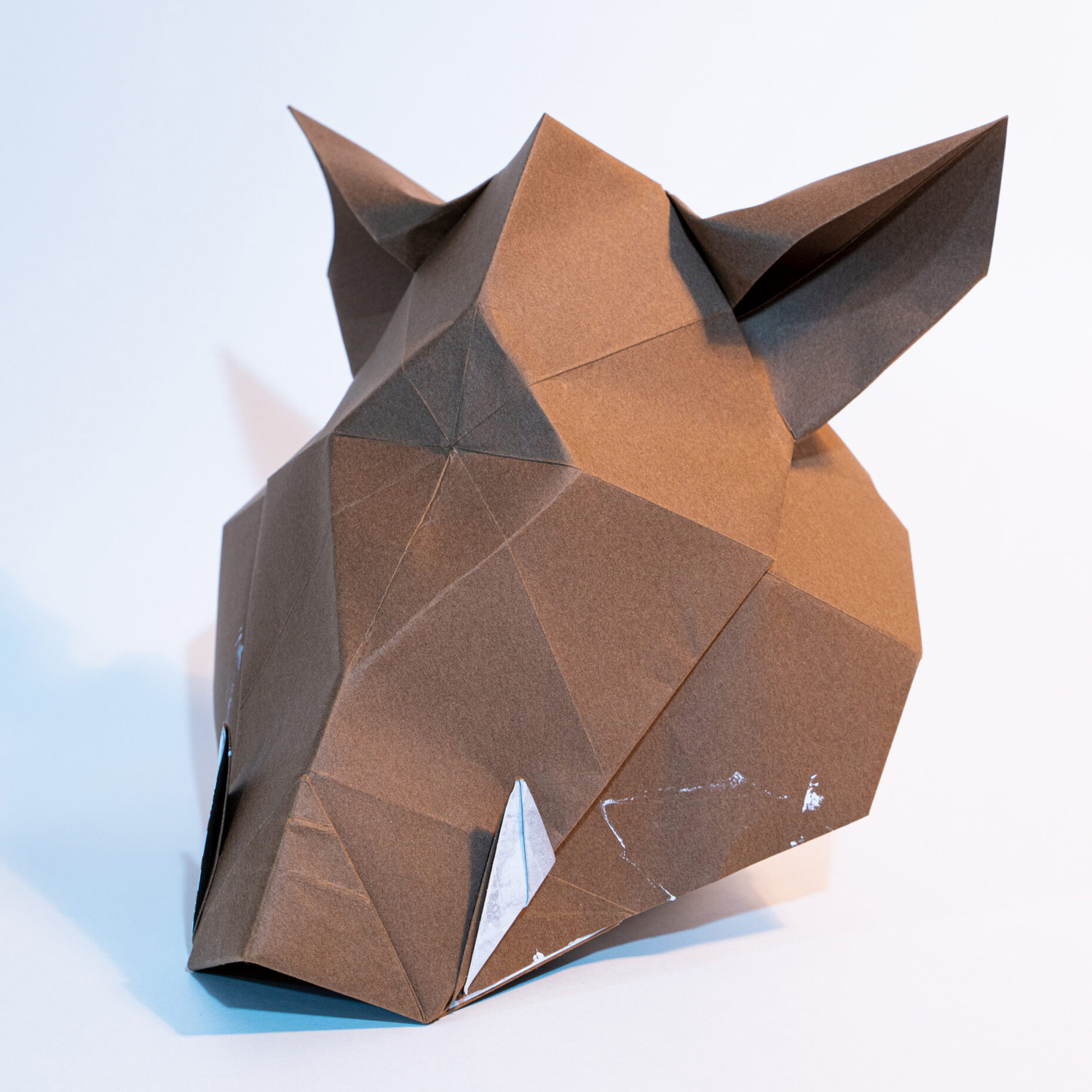
Cow Skull

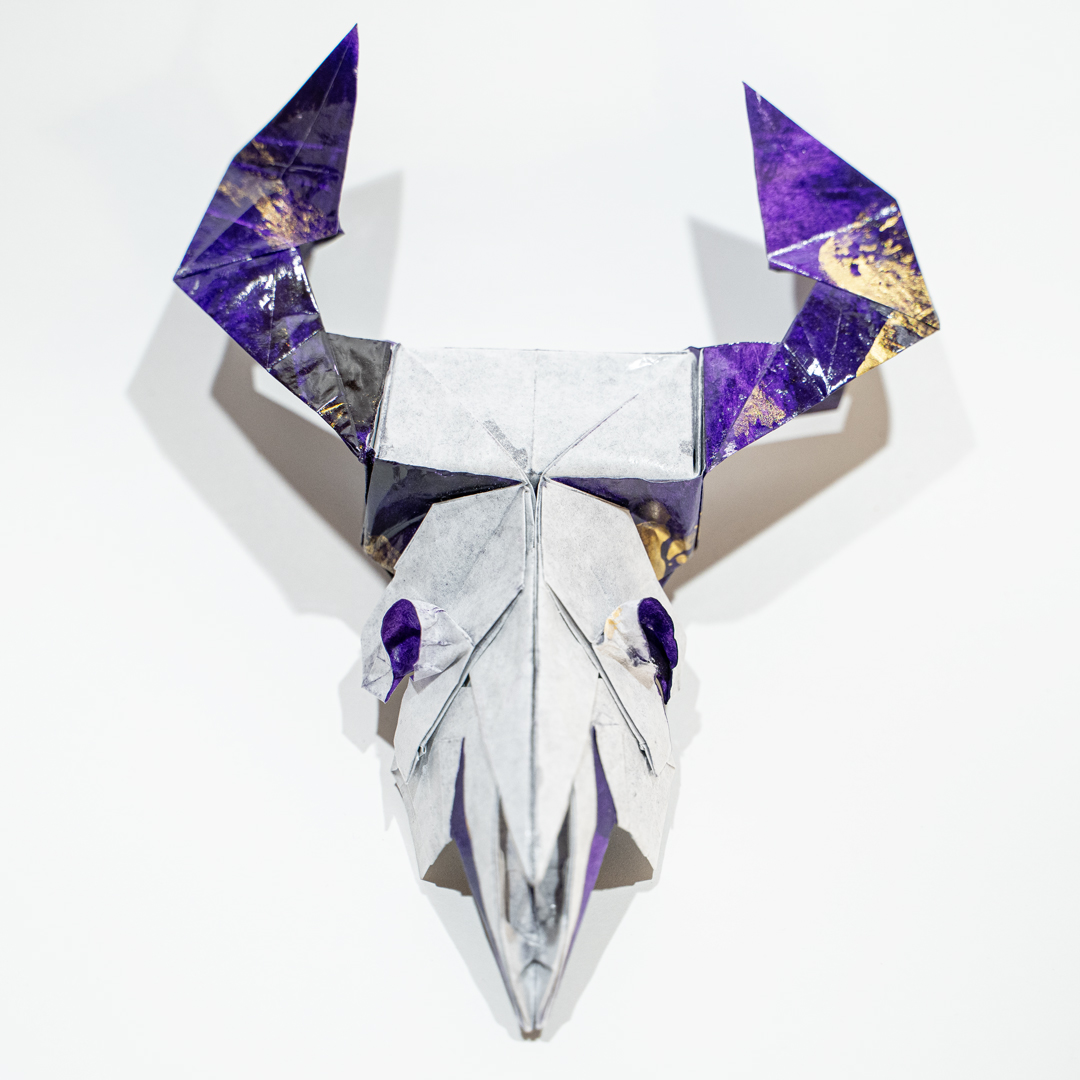
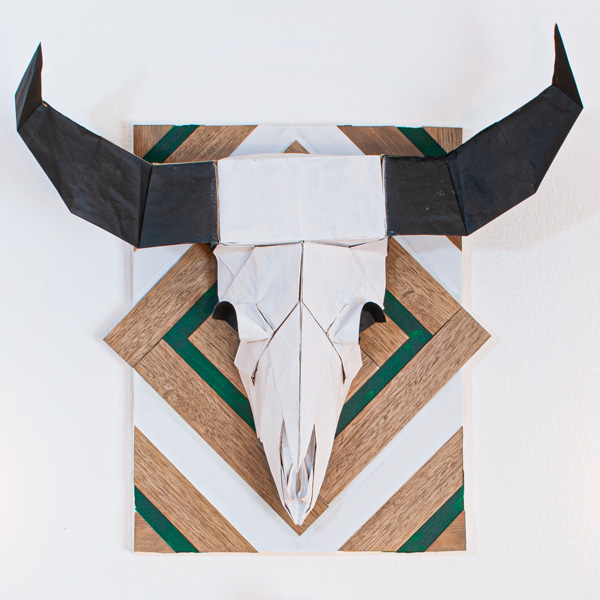
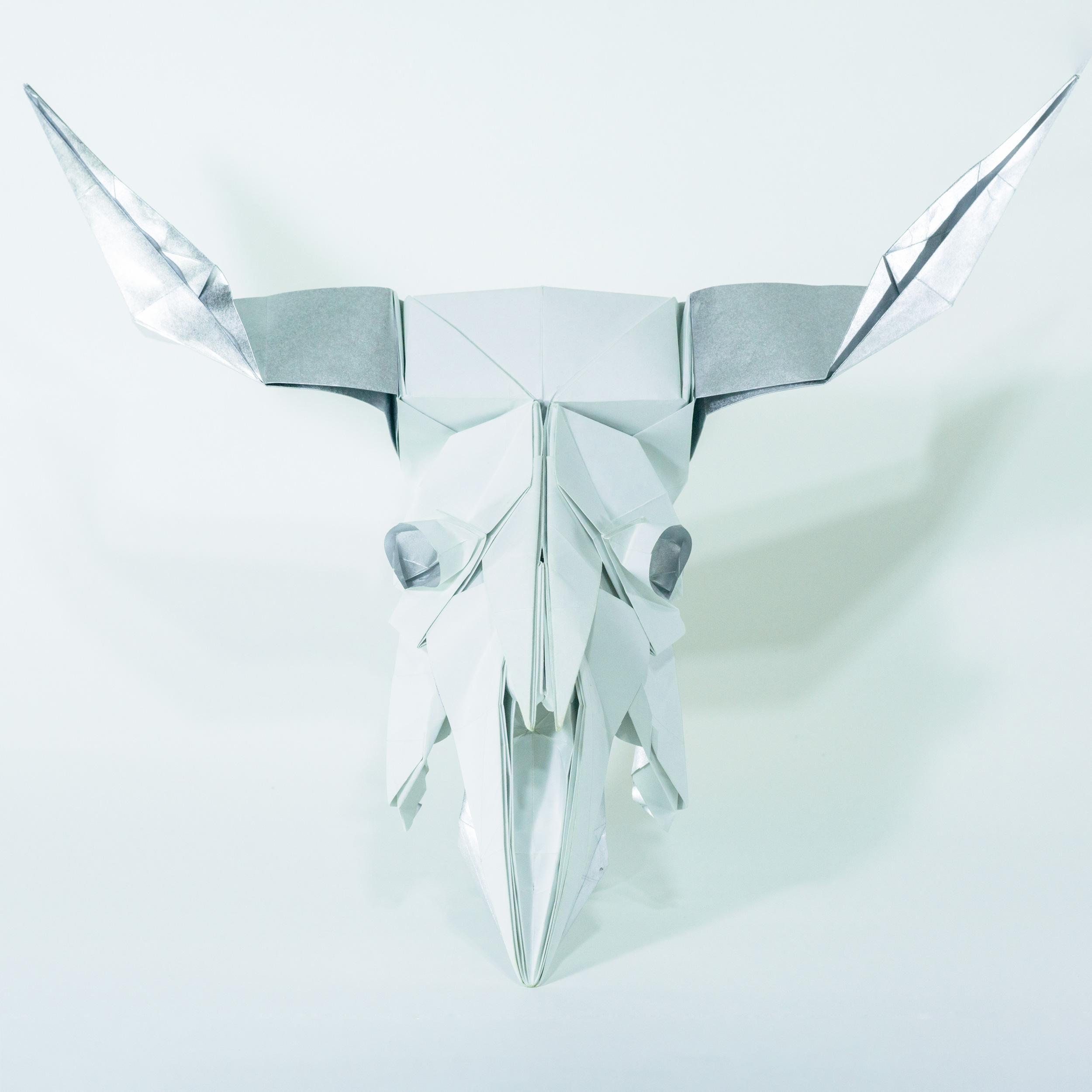
A three-dimensional cow skull with the horn and eye colors altered through an inside-out design.

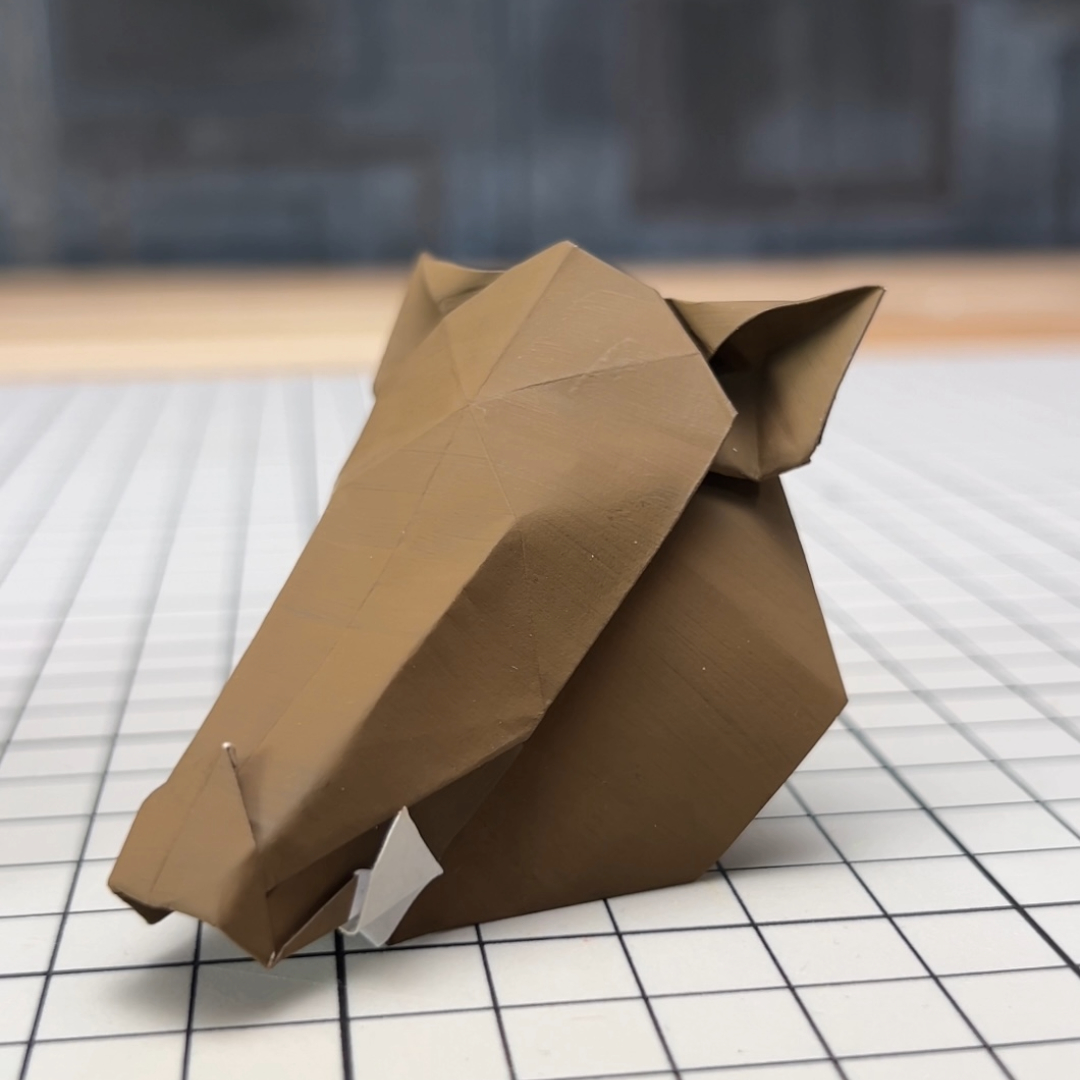
Cow Skull

A three-dimensional cow skull with an updated nasal structure.
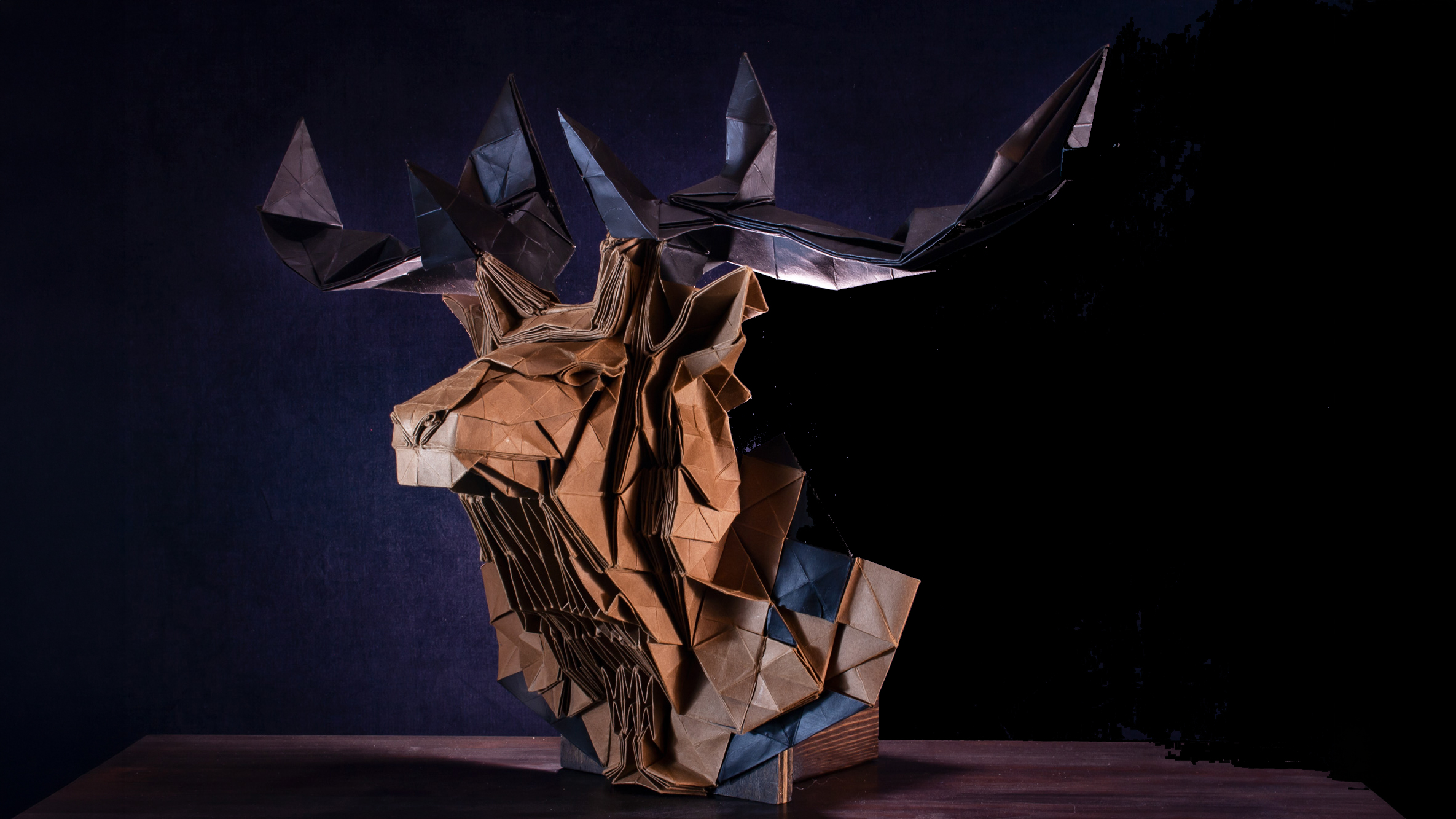
Deer Bust

A three-dimensional deer bust made from a single square sheet. The volume of the fur is expressed by densely folding the paper into complex layers using a technique called Miura-ori.
Cow Skull

A three-dimensional cow skull with a minor update to the horn design.

Tapir

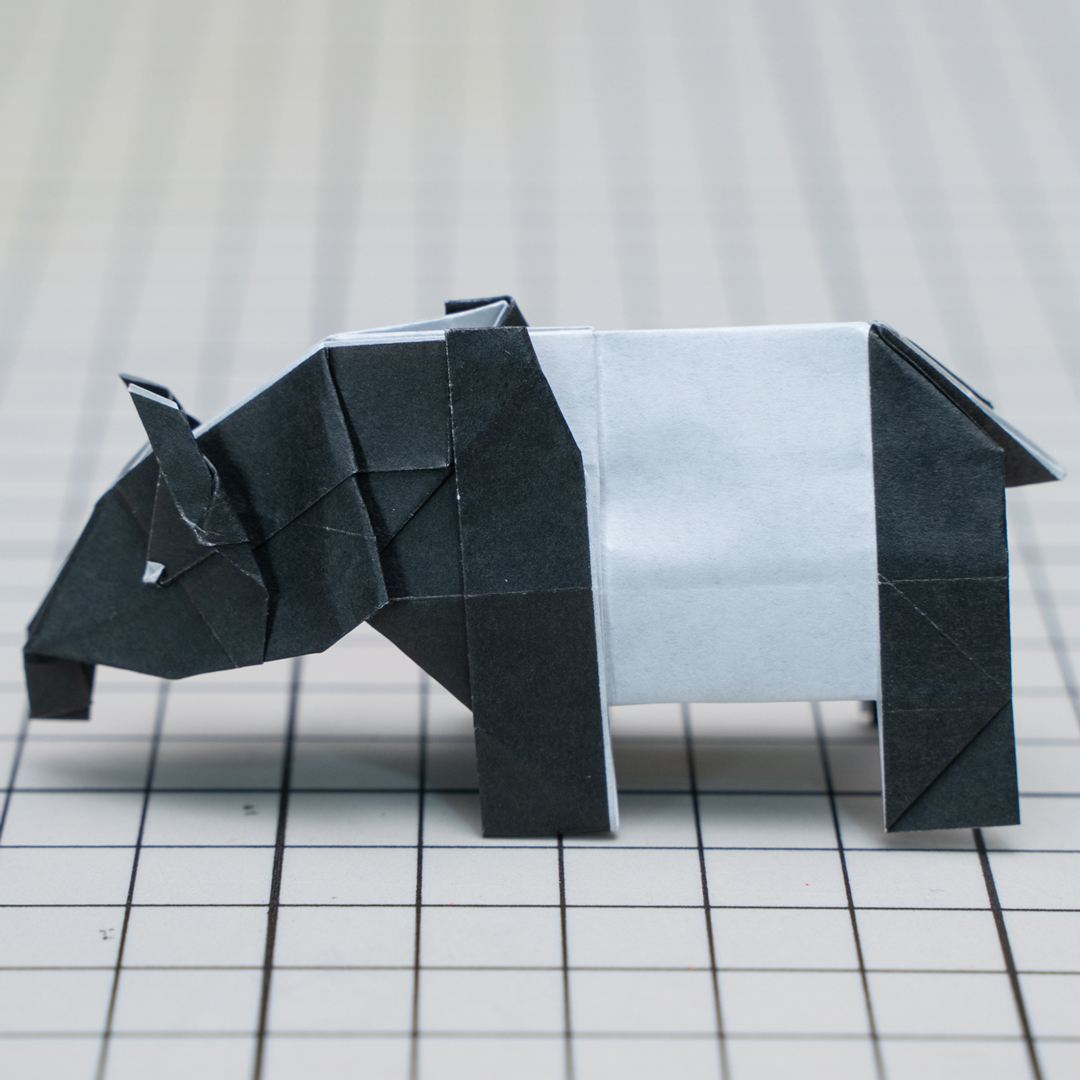
A Tapir with its eyes and patterns expressed through an inside-out design. Built on a 12-grid.

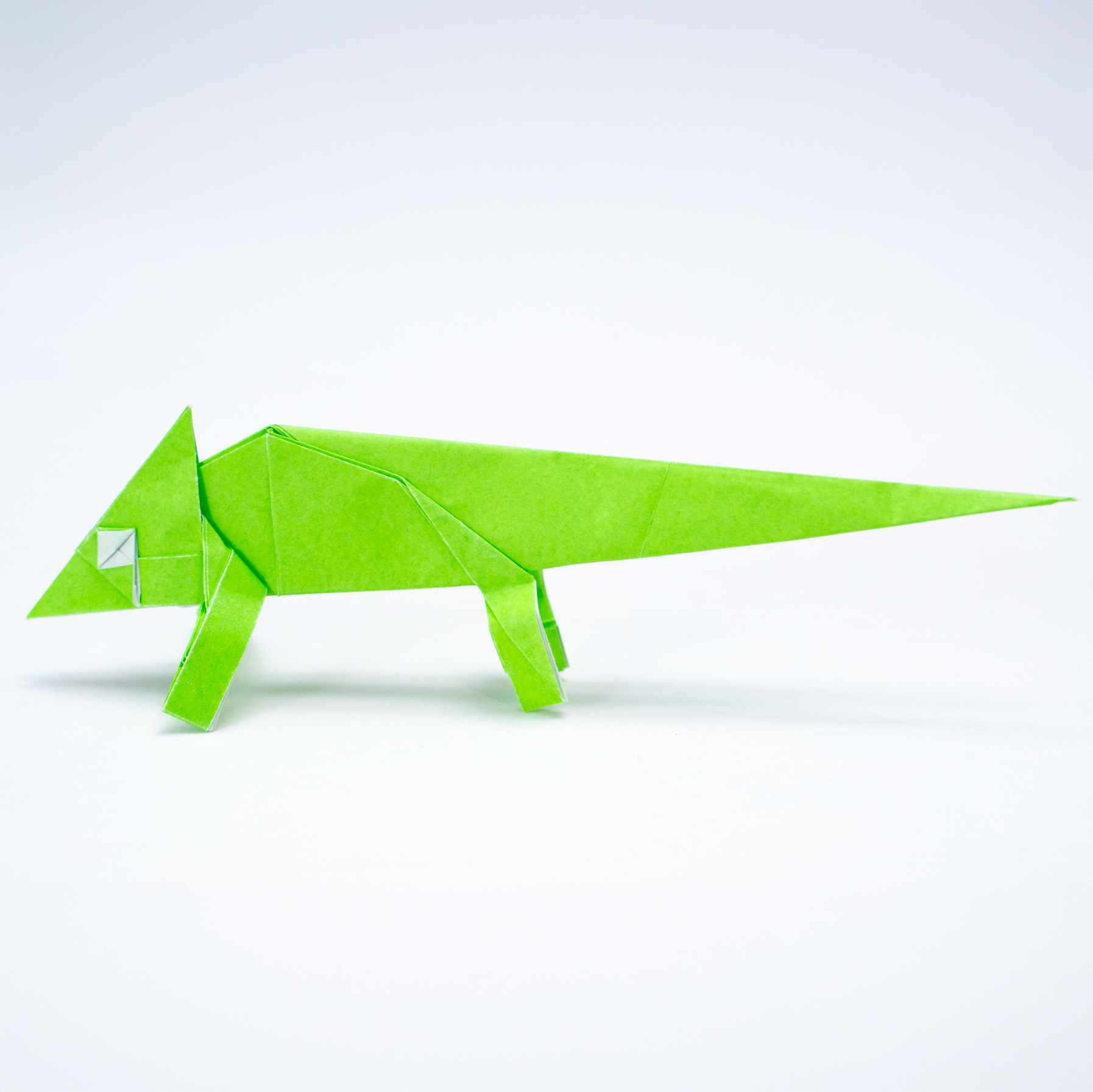
Chameleon

A simple chameleon composed of triangles, squares, and rectangles, with the details stylized into simplified forms.

Sea Creatures

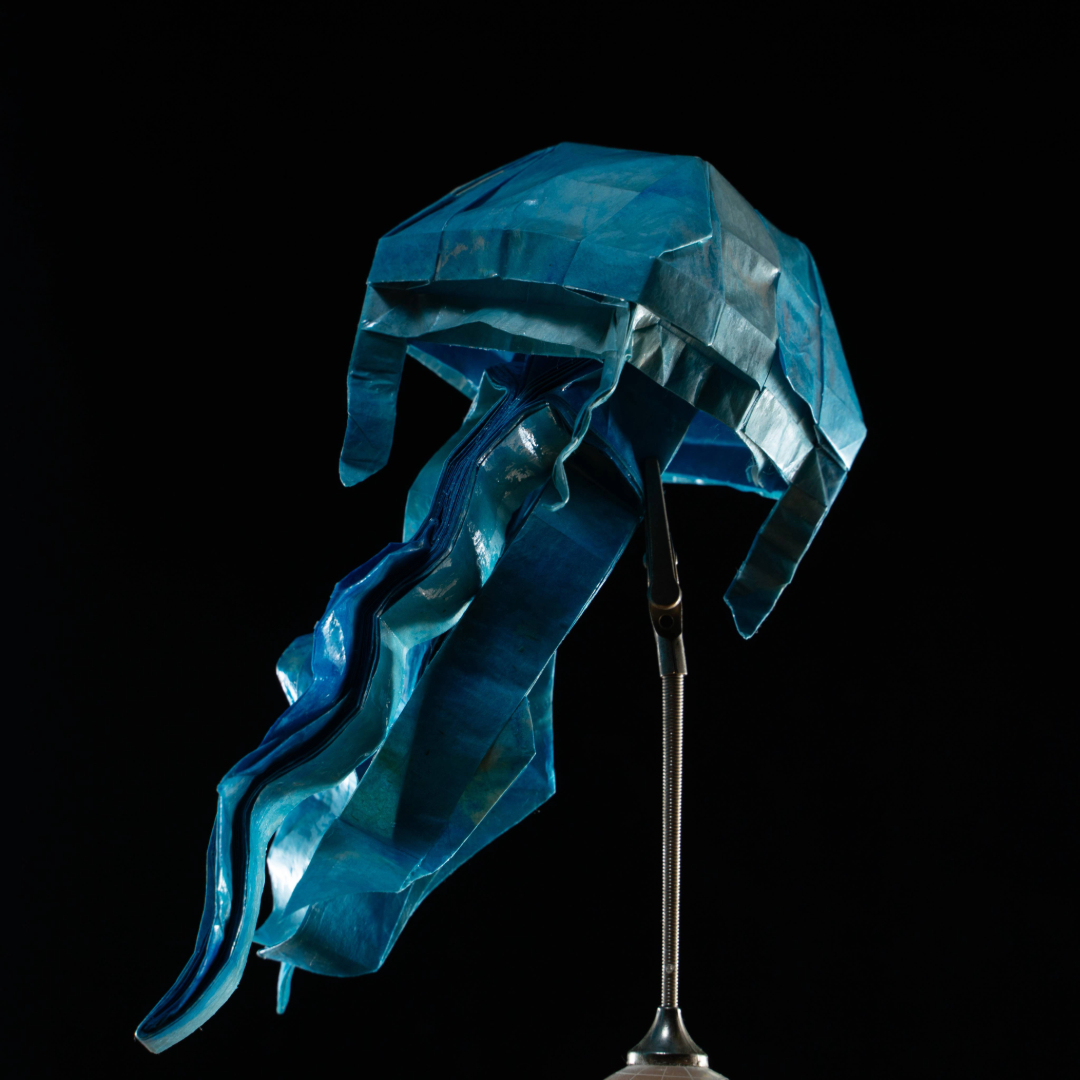
Jellyfish

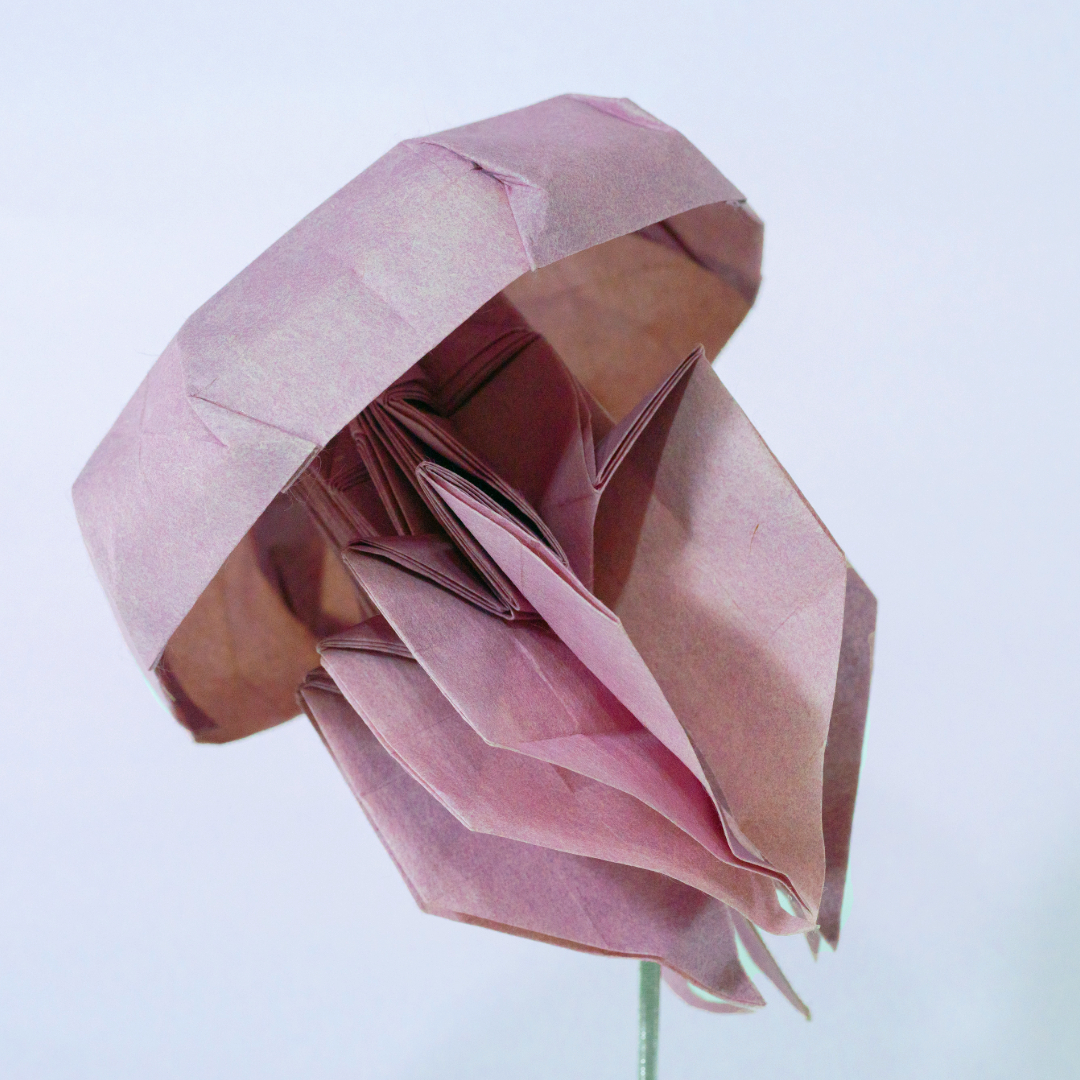
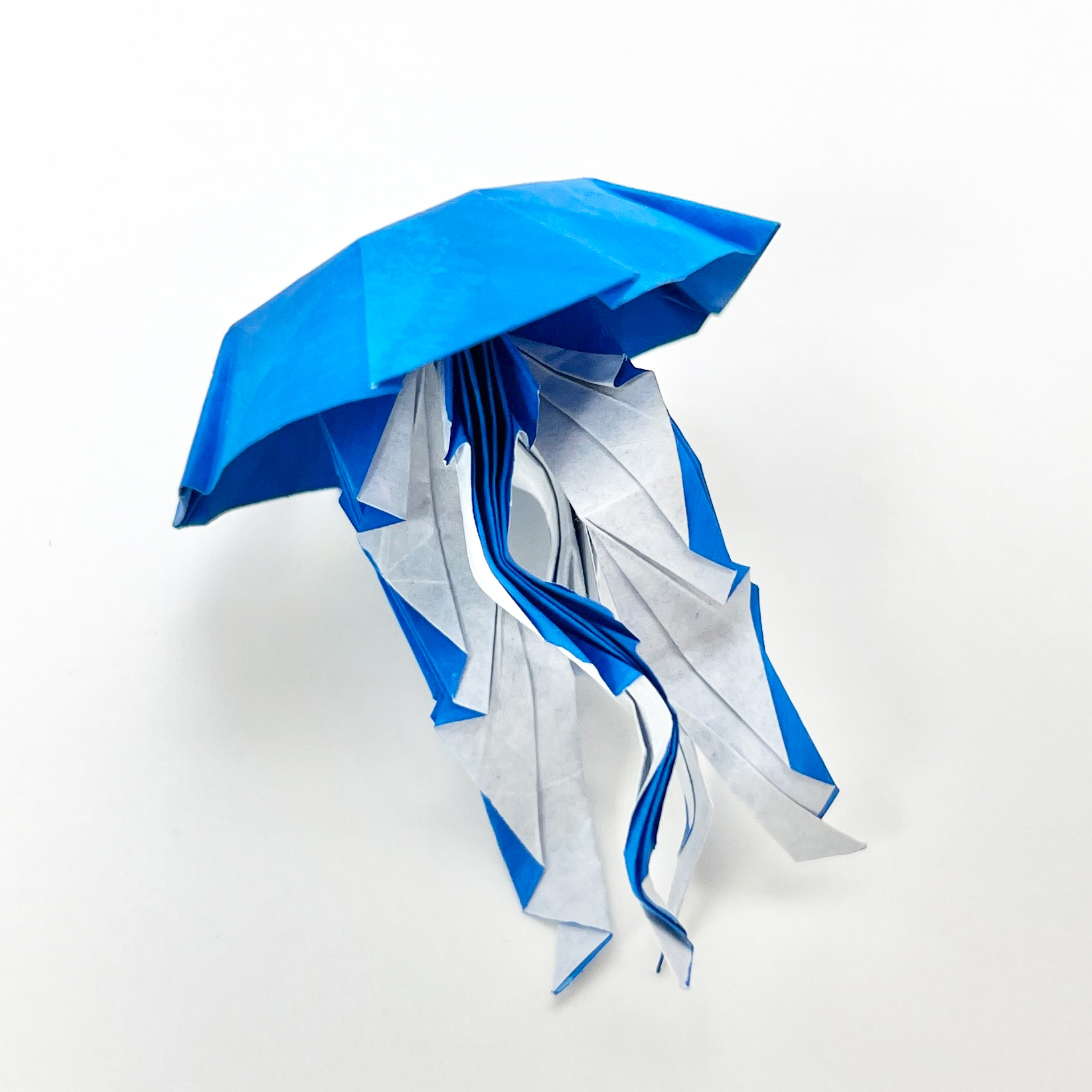
A three-dimensional jellyfish based on a cylindrical structure. The tentacles are folded out by building pleats into the bell.
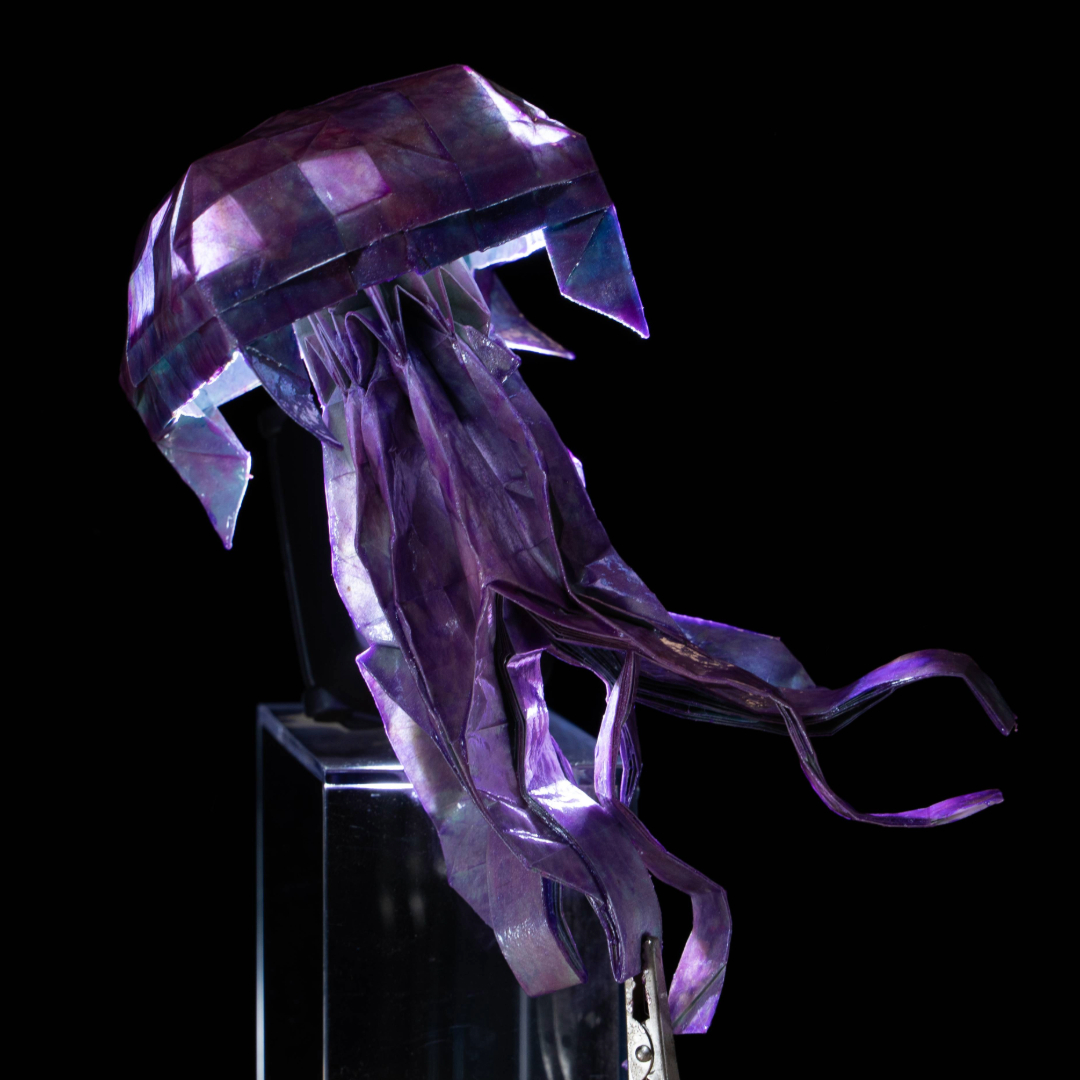
Jellyfish

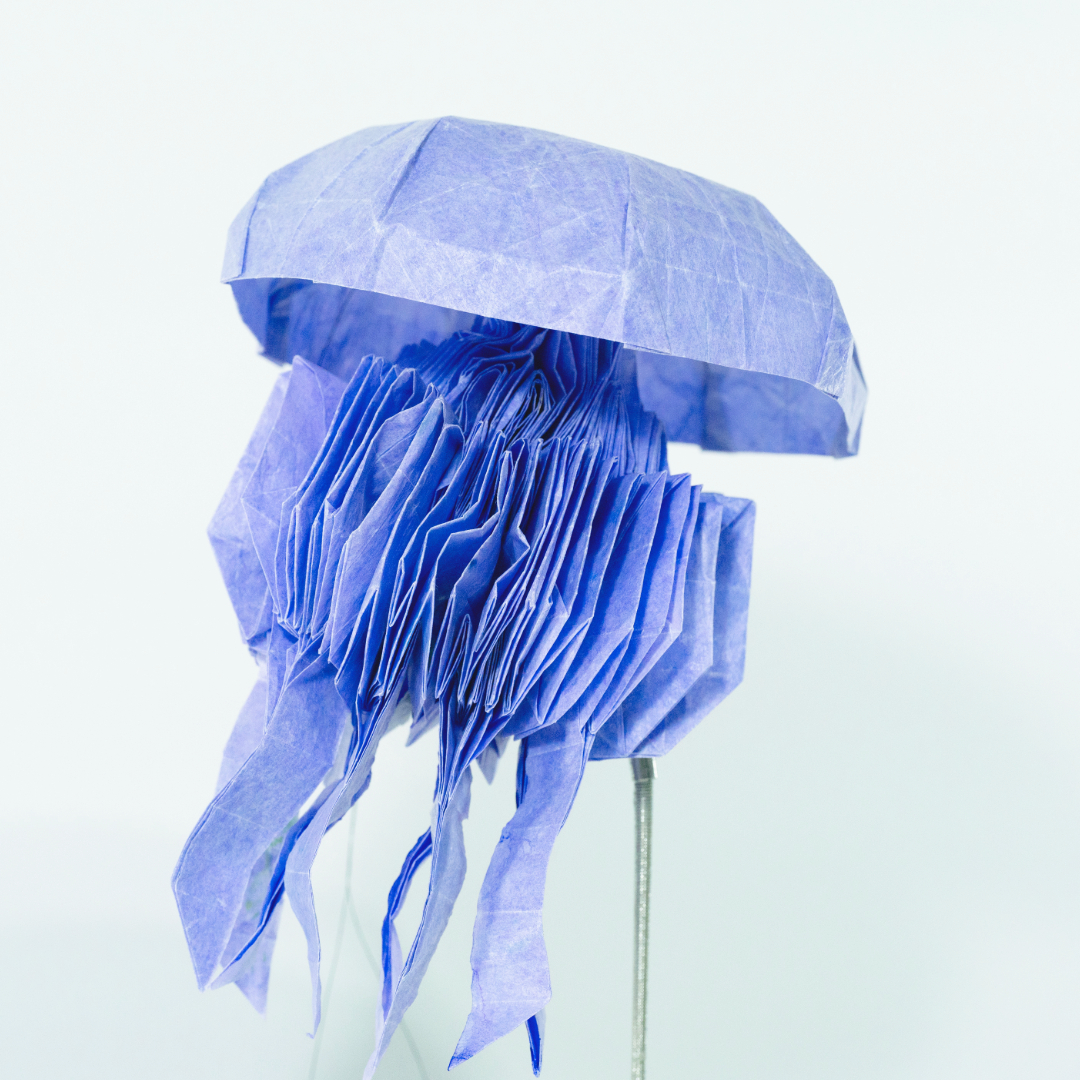
A three-dimensional jellyfish based on a cylindrical structure. By increasing the grid size, I refined it so the bell becomes a flatter, bowl-like shape and the oral arms become longer.

Jellyfish

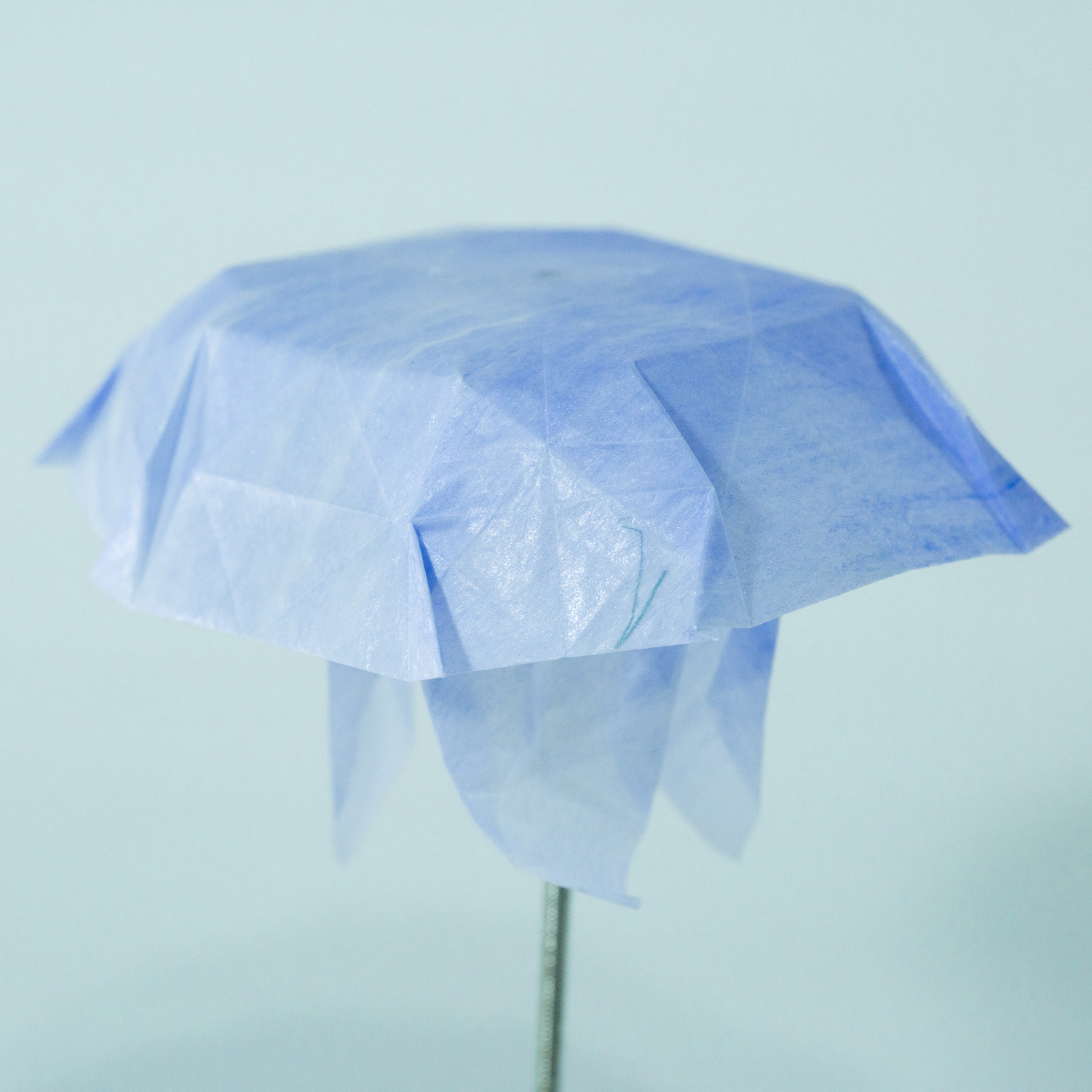
another design of a 3d jellyfish. (Color Jellyfish, 4 square structure)

Jellyfish

another design of a 3d jellyfish. (Spotted Jellyfish, 4 square structure)

Jellyfish

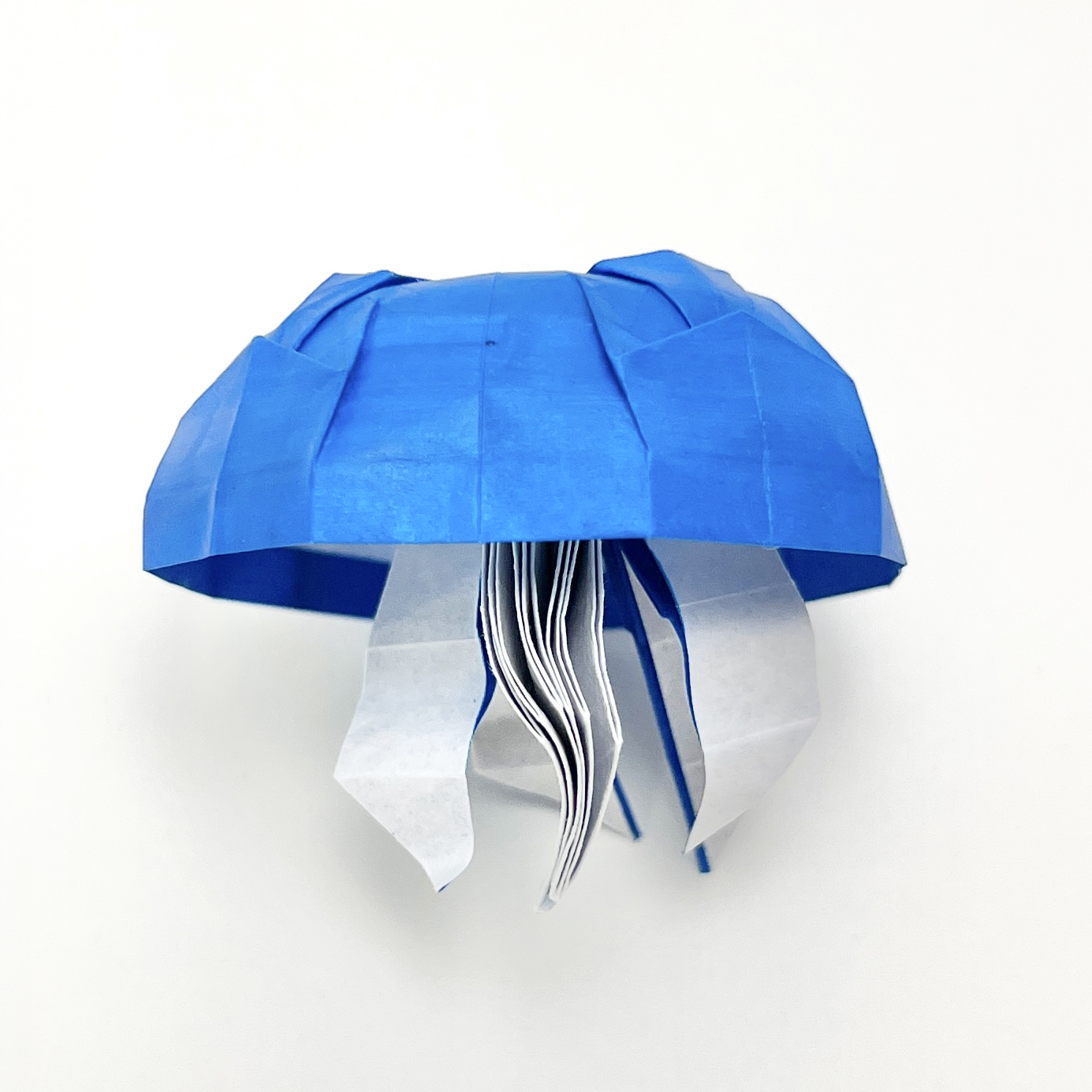
another design of a 3d jellyfish ( moon jellyfish, 16grid )

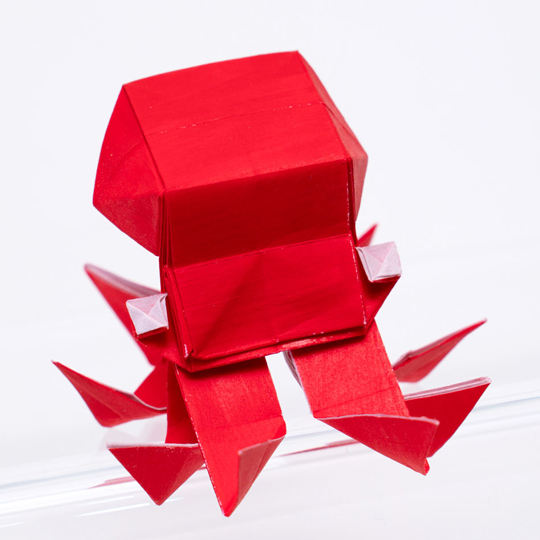
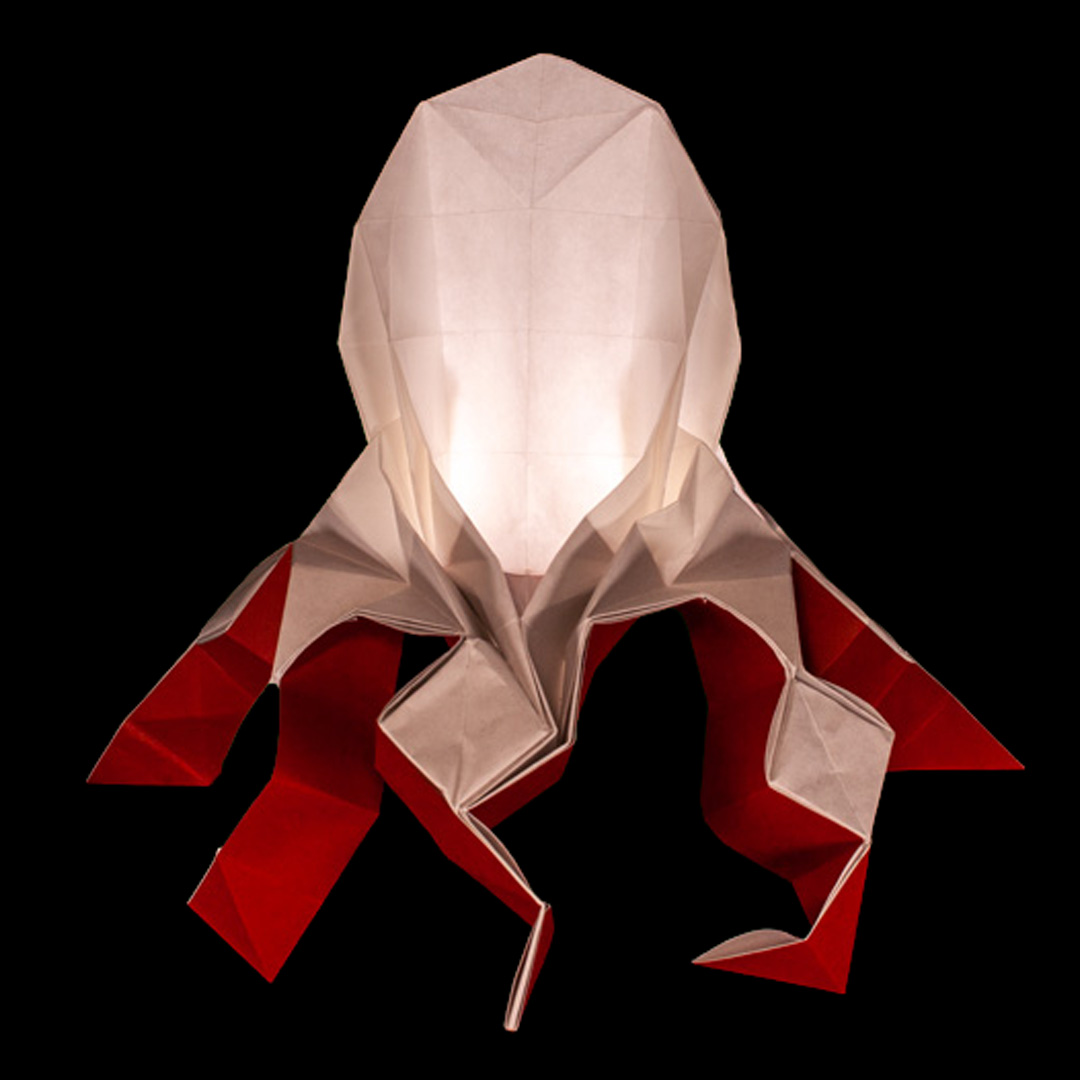
Octopus

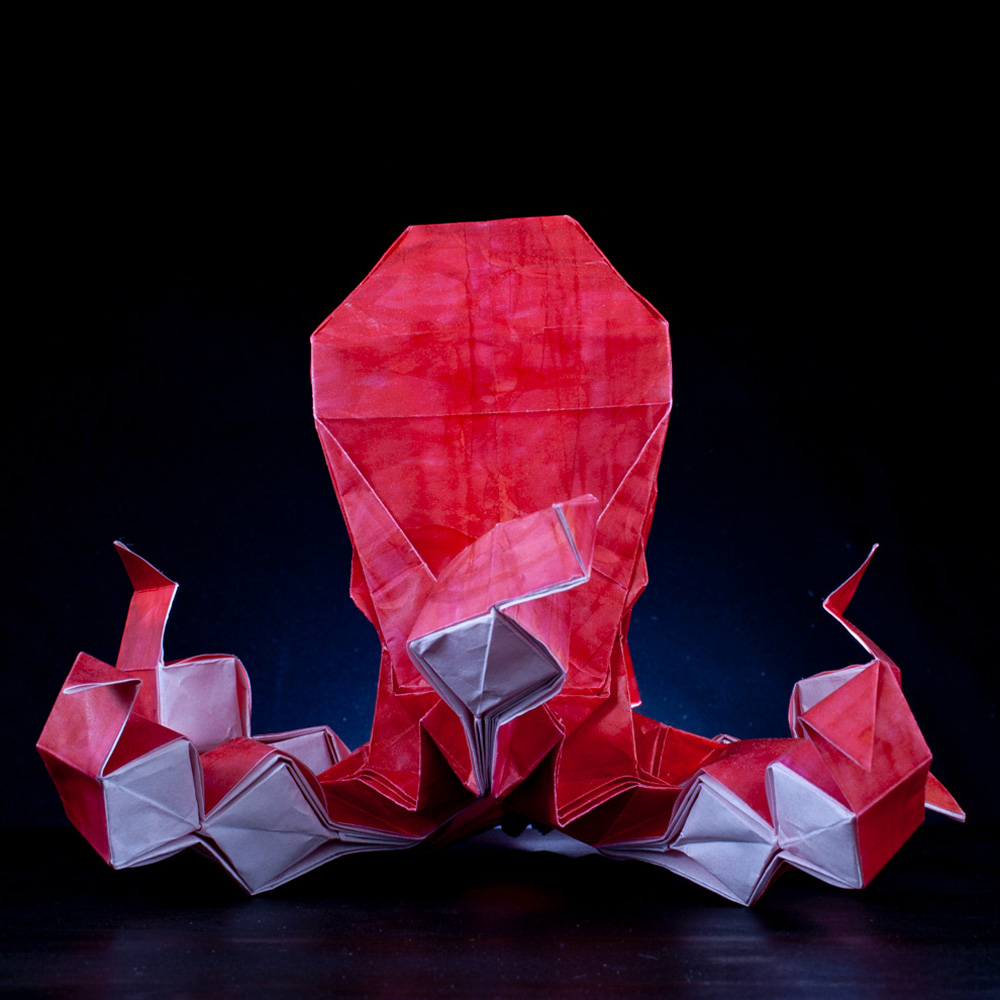
A lampshade in the shape of an octopus.

Starfish

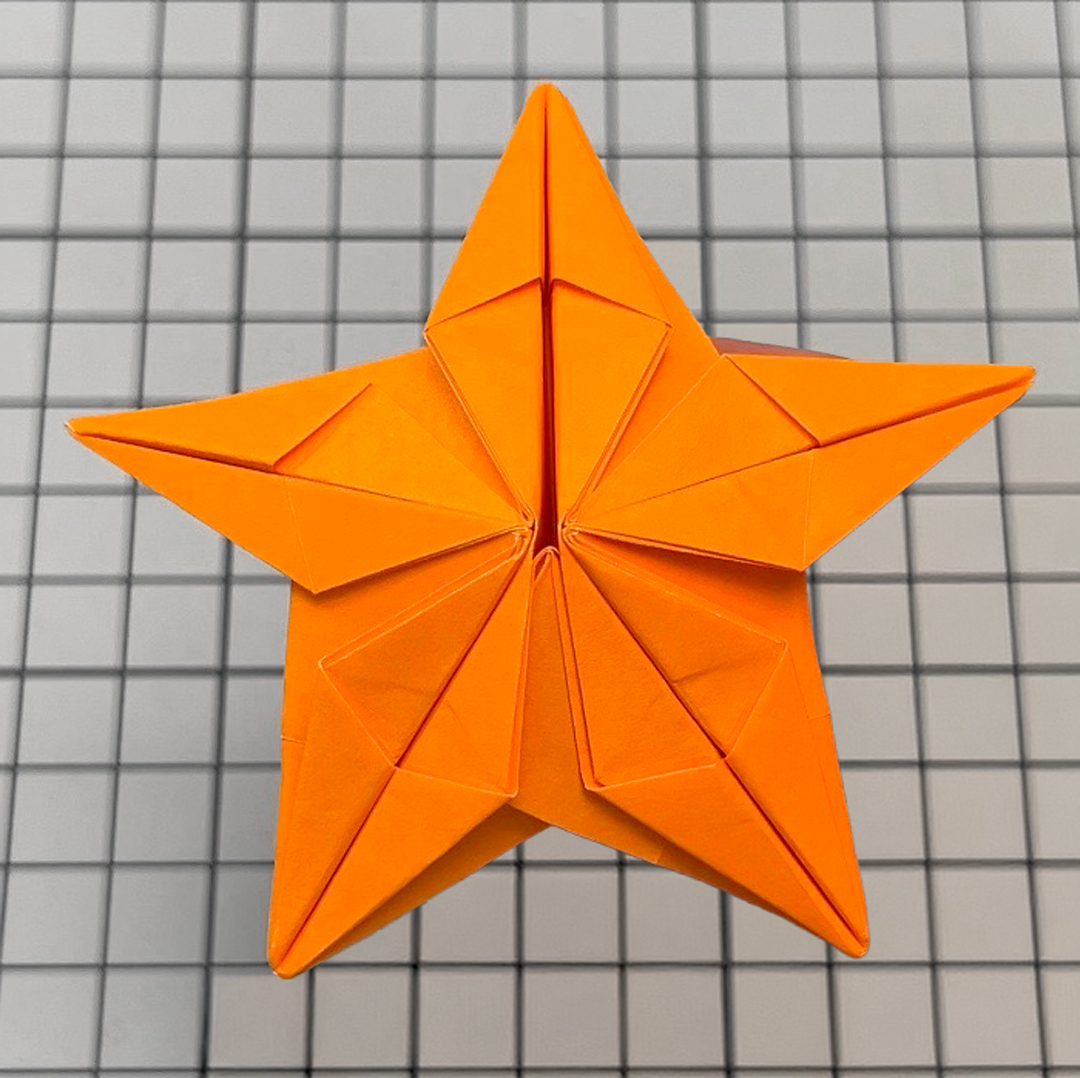
A three-dimensional starfish made from a single square sheet. It’s a piece with a curious structure that lets you neatly fold out five corners of equal length from a square piece of paper.

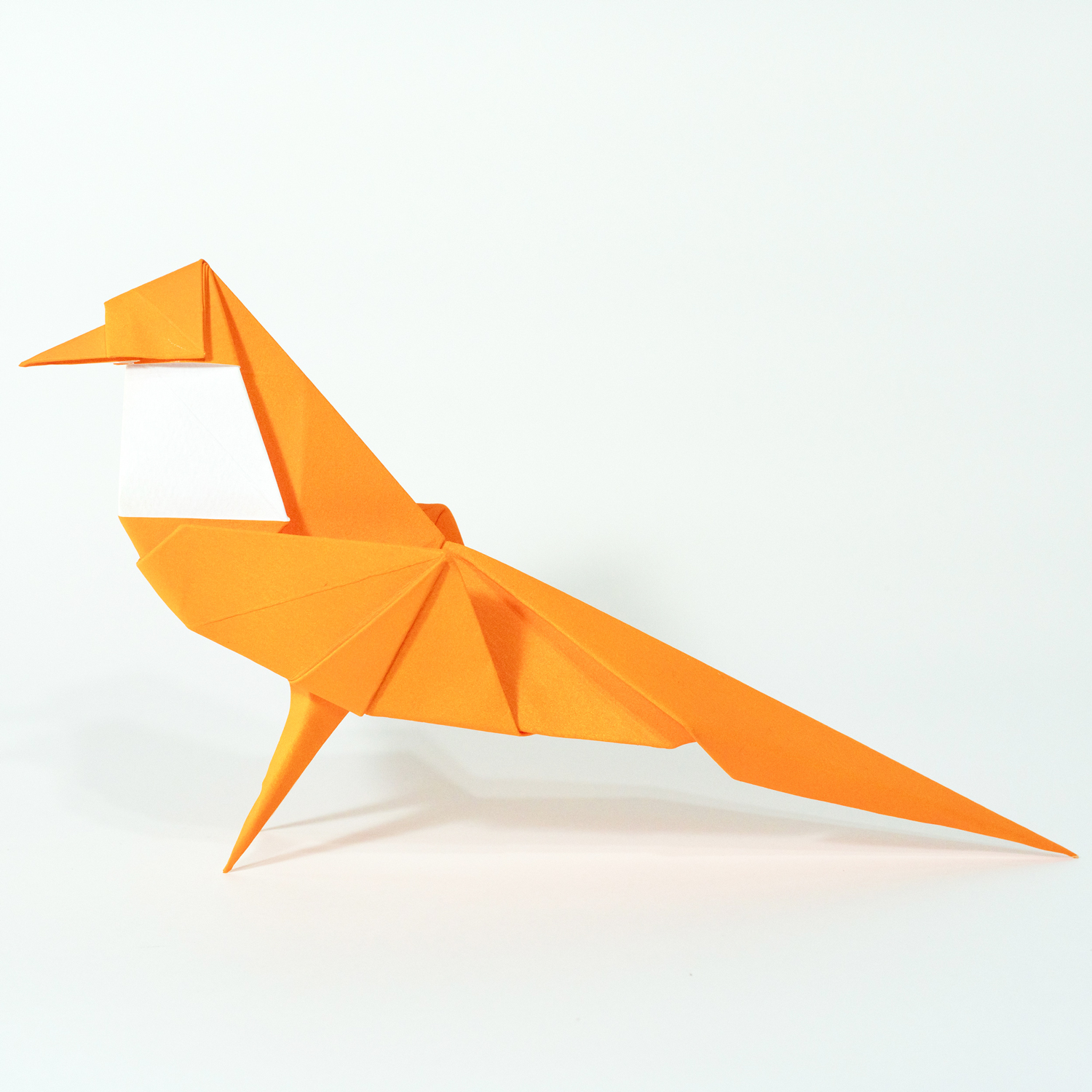
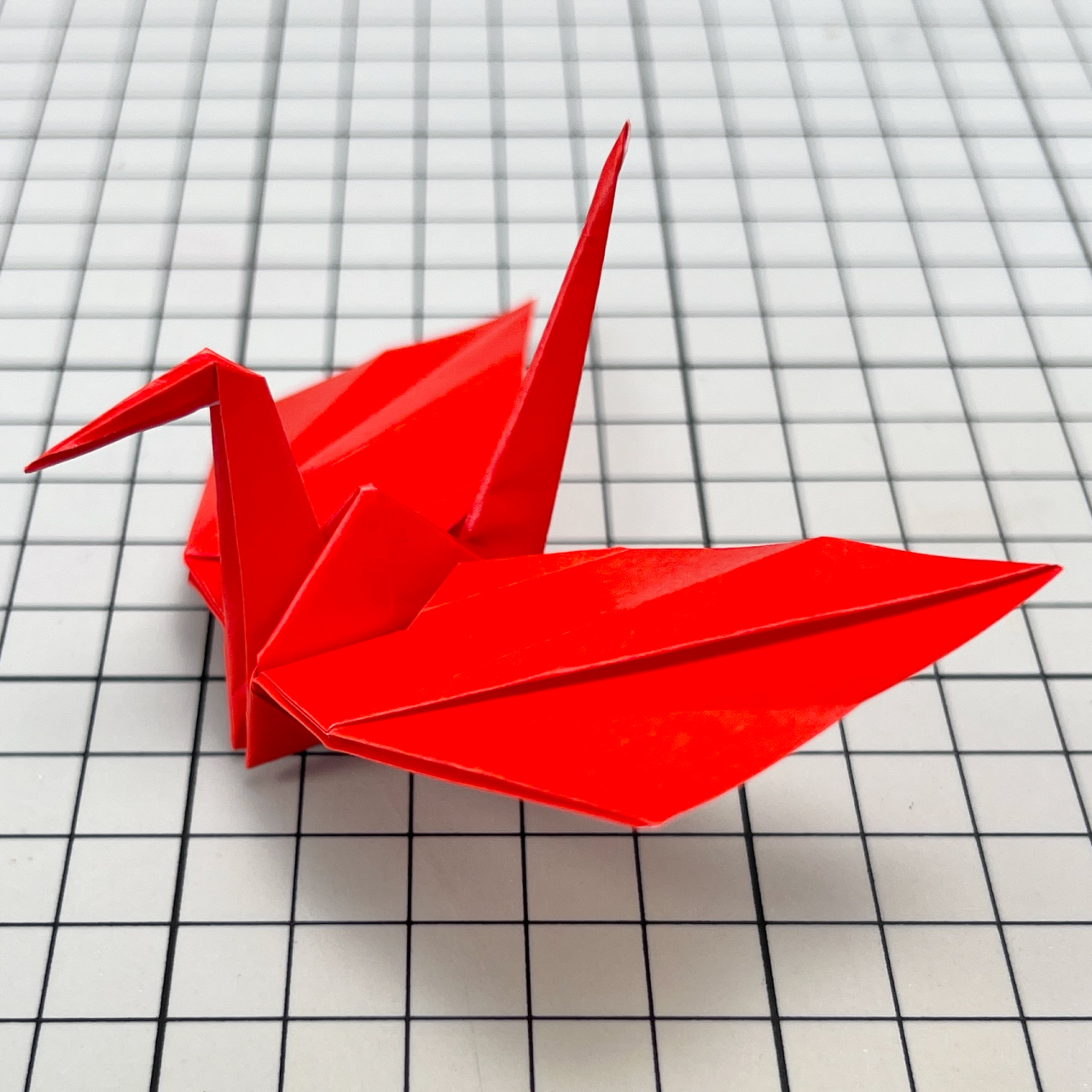
Flying Animals

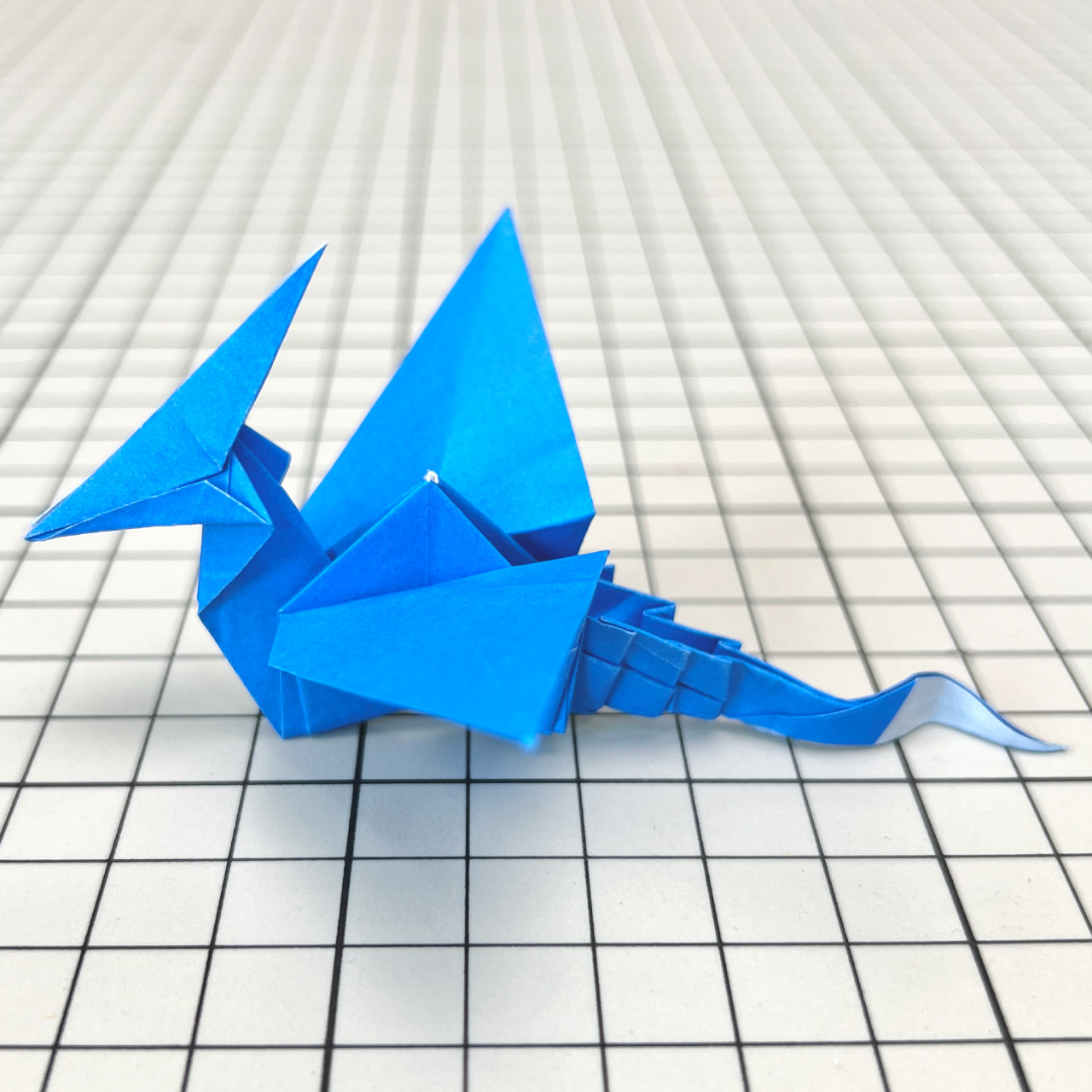
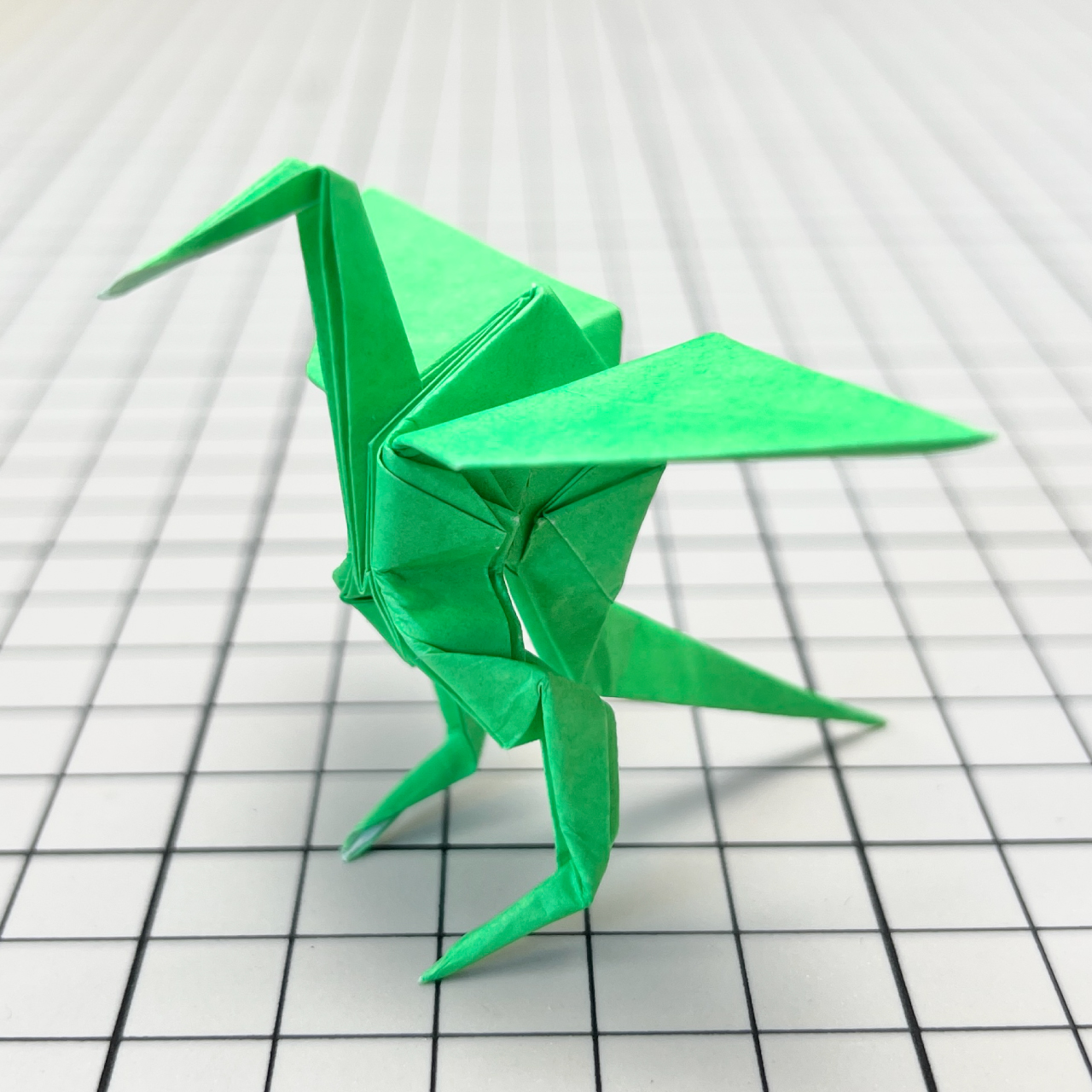
Dinosaurs

Vegetables & Fruits

Carrot

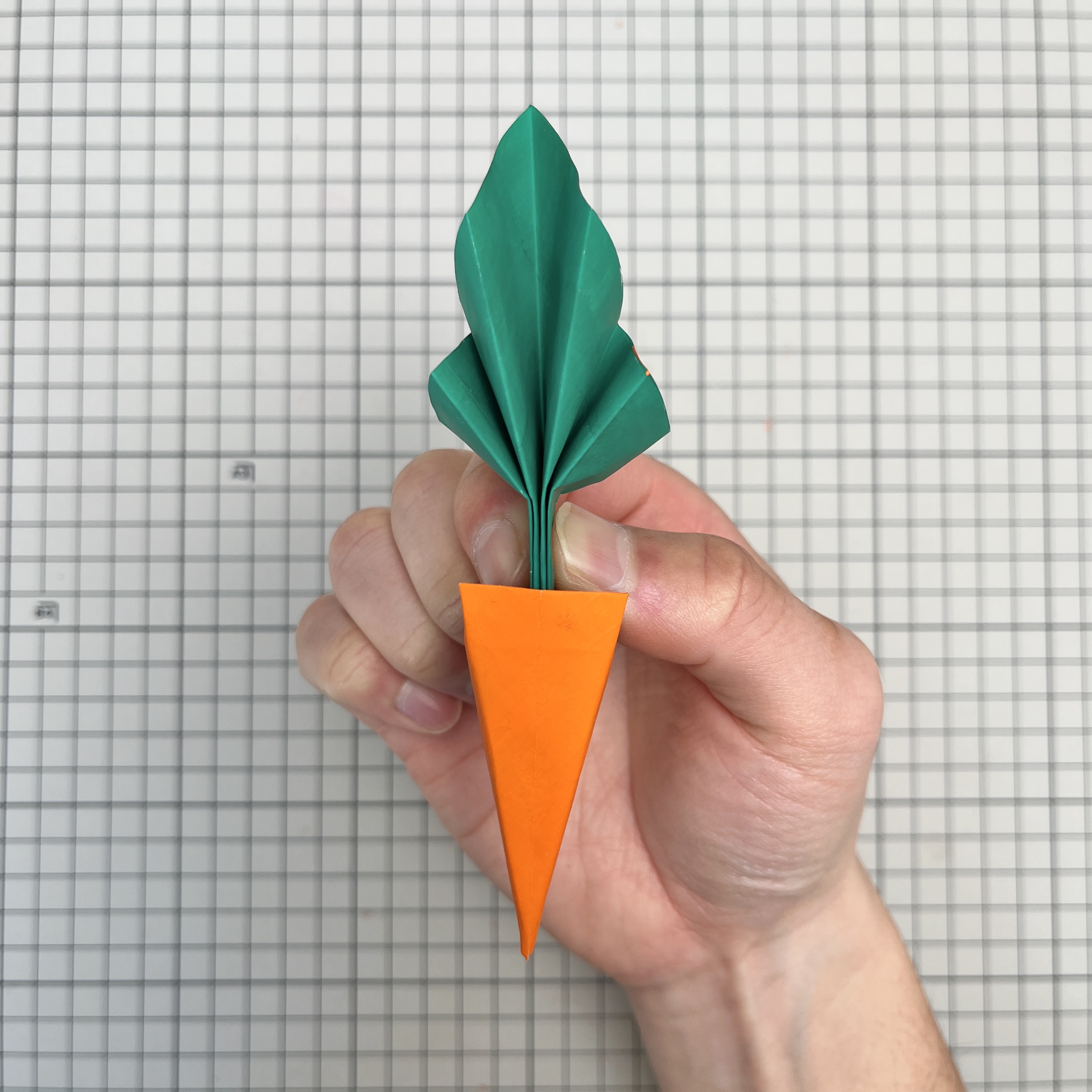
A simple, three-dimensional carrot. An inside-out design is used to express the color difference between the root and the leaves.

Lemon

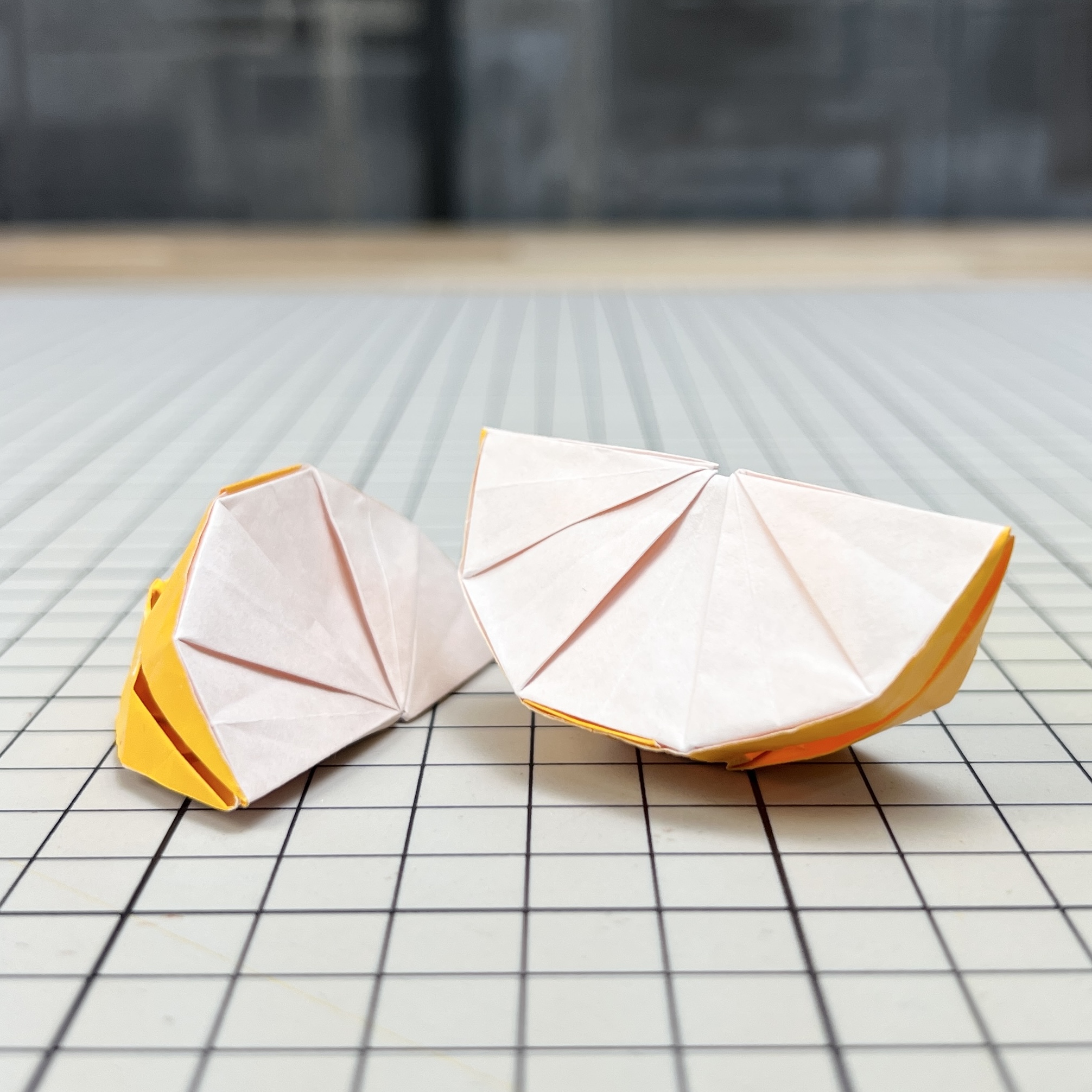
A three-dimensional lemon sliced into cross-sections. The color of the peel is expressed using an inside-out technique, while the layers of paper created by the volumetric structure are interpreted as the divisions between the segments.

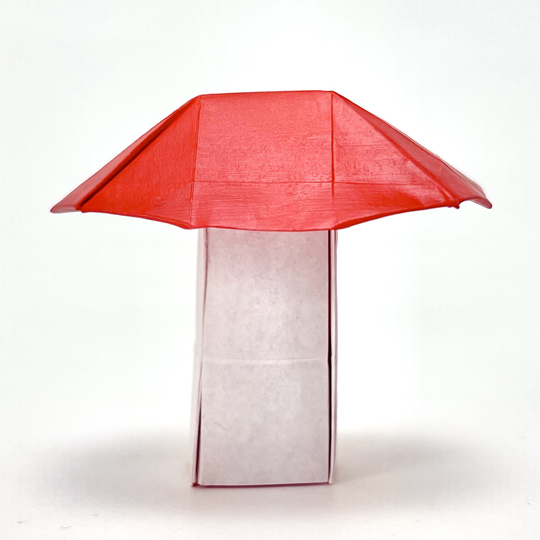
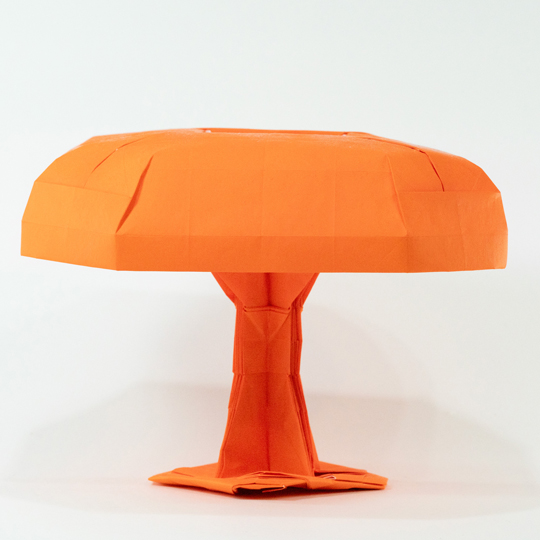
Mushroom

A three-dimensional mushroom whose cap color is expressed using an inside-out technique. By changing the grid count, the size of the cap and the length of the stem can be adjusted.

Accessories

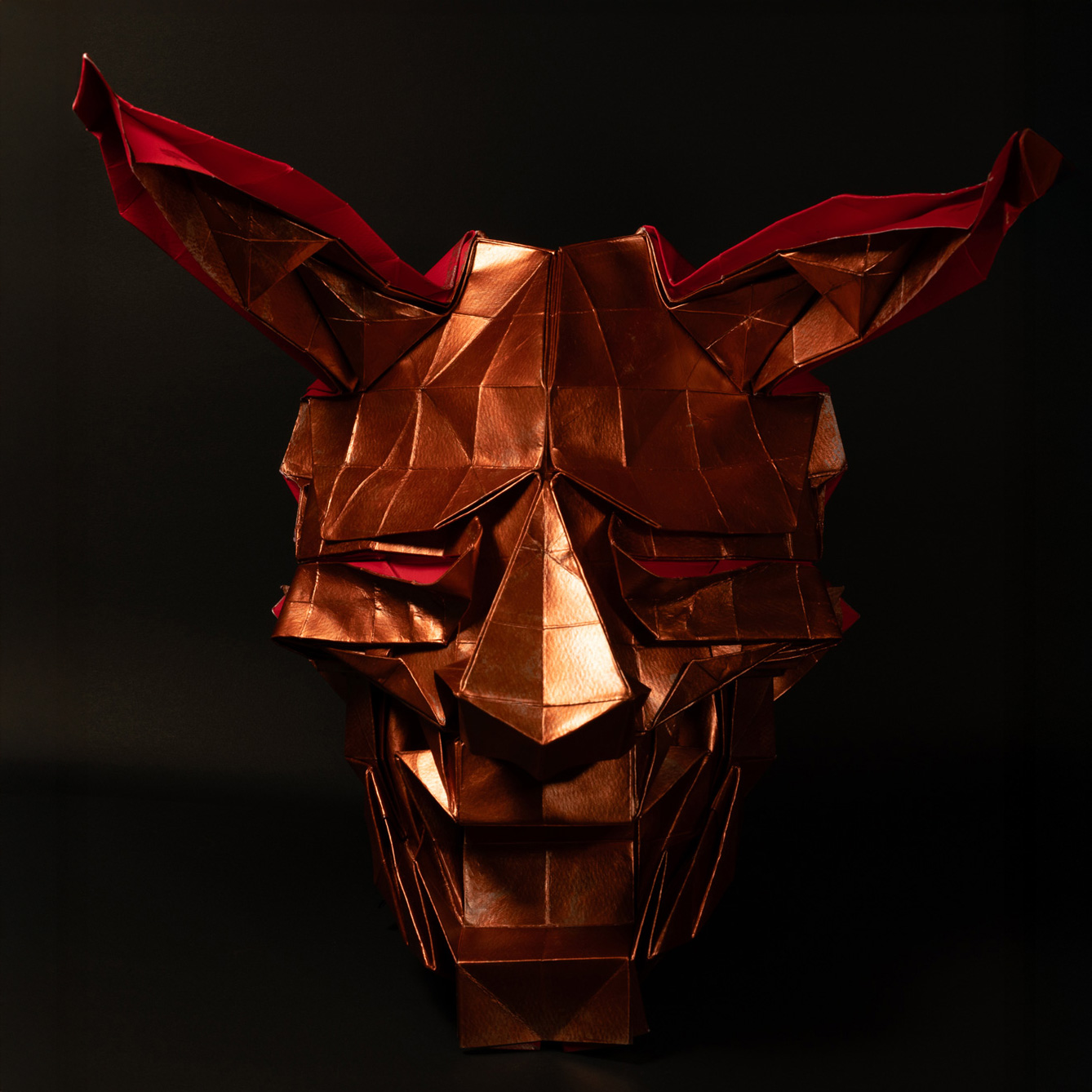
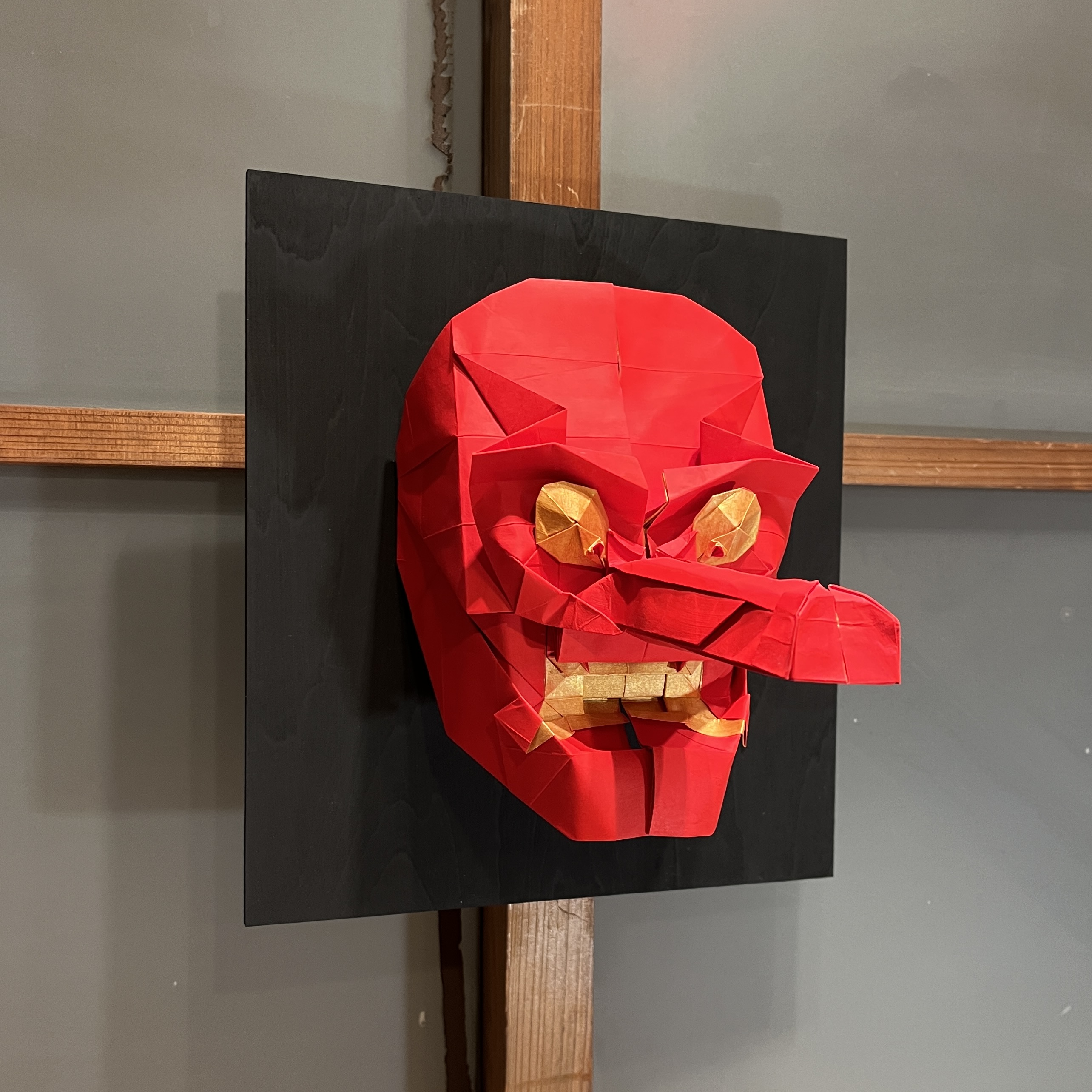
Hannya Mask

A three-dimensional Hannya mask constructed by combining polygon components. The eyes are expressed with an inside-out structure.

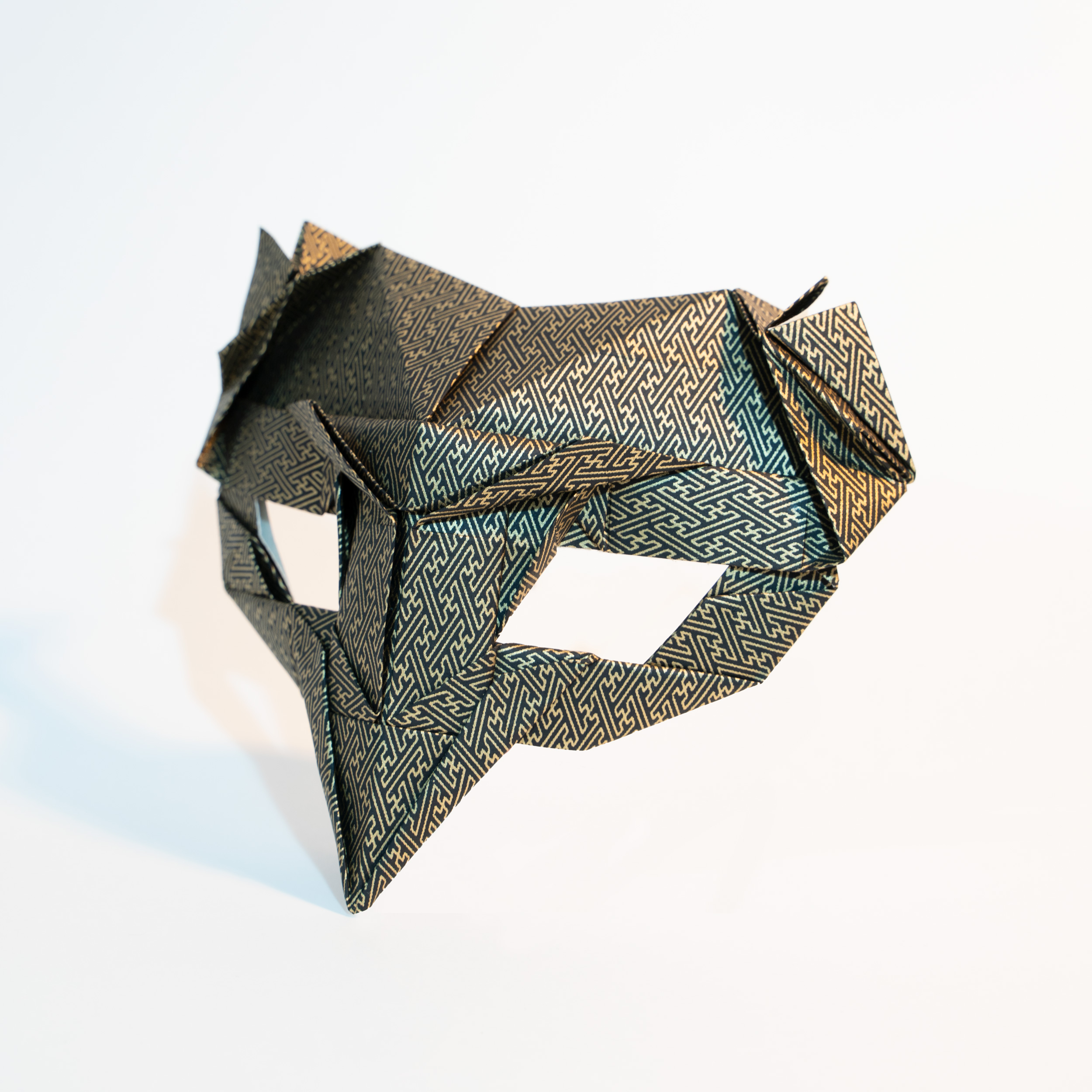
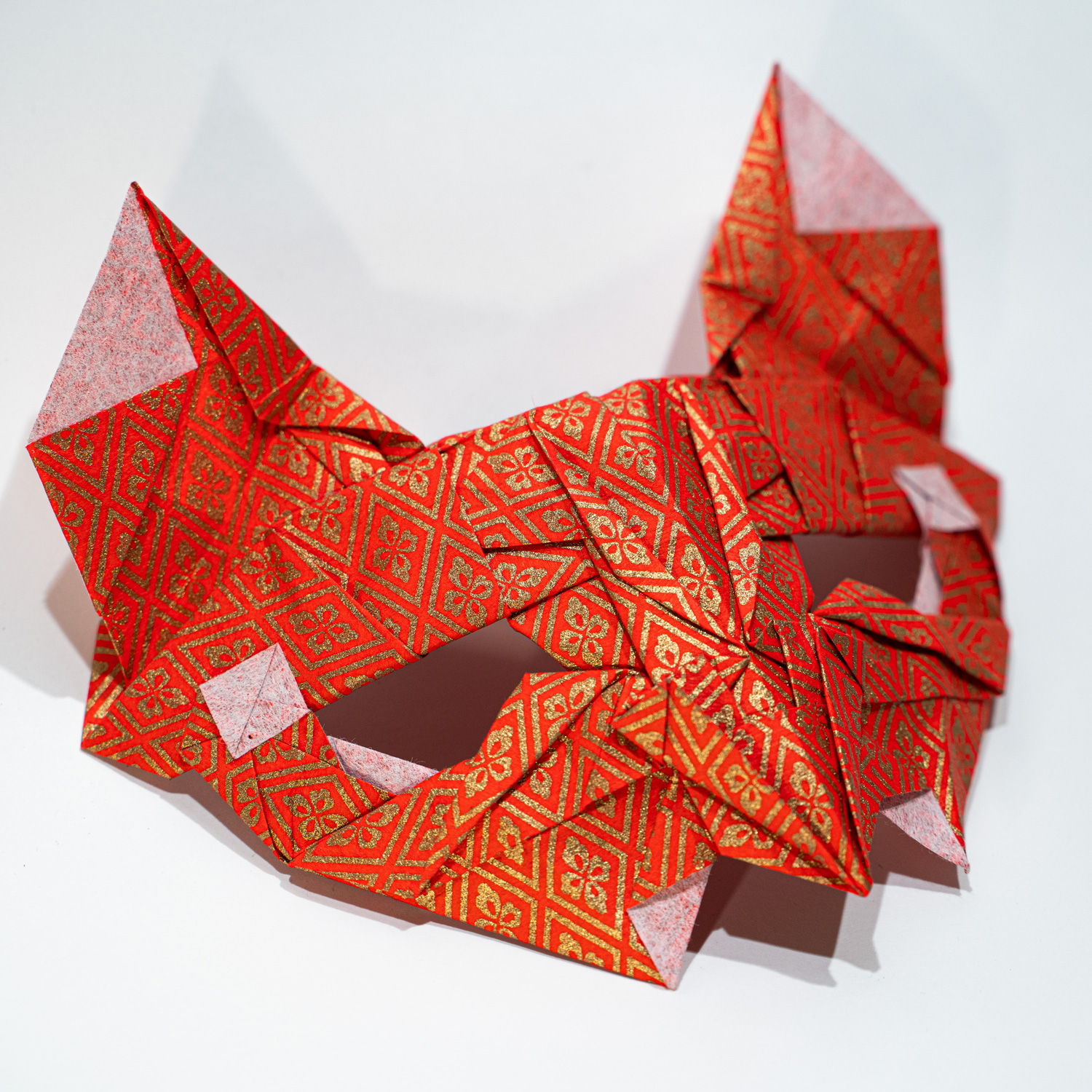
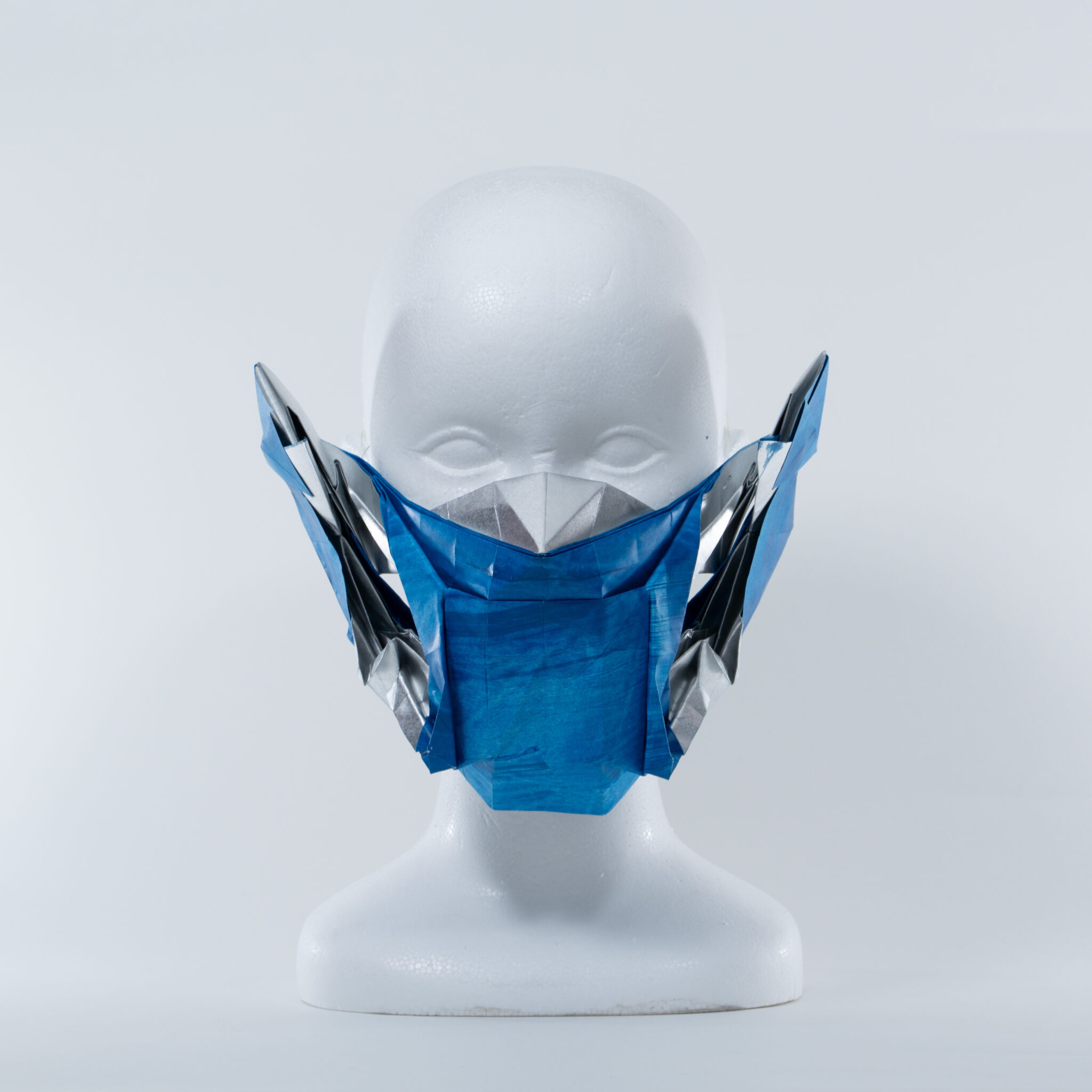
Half Mask

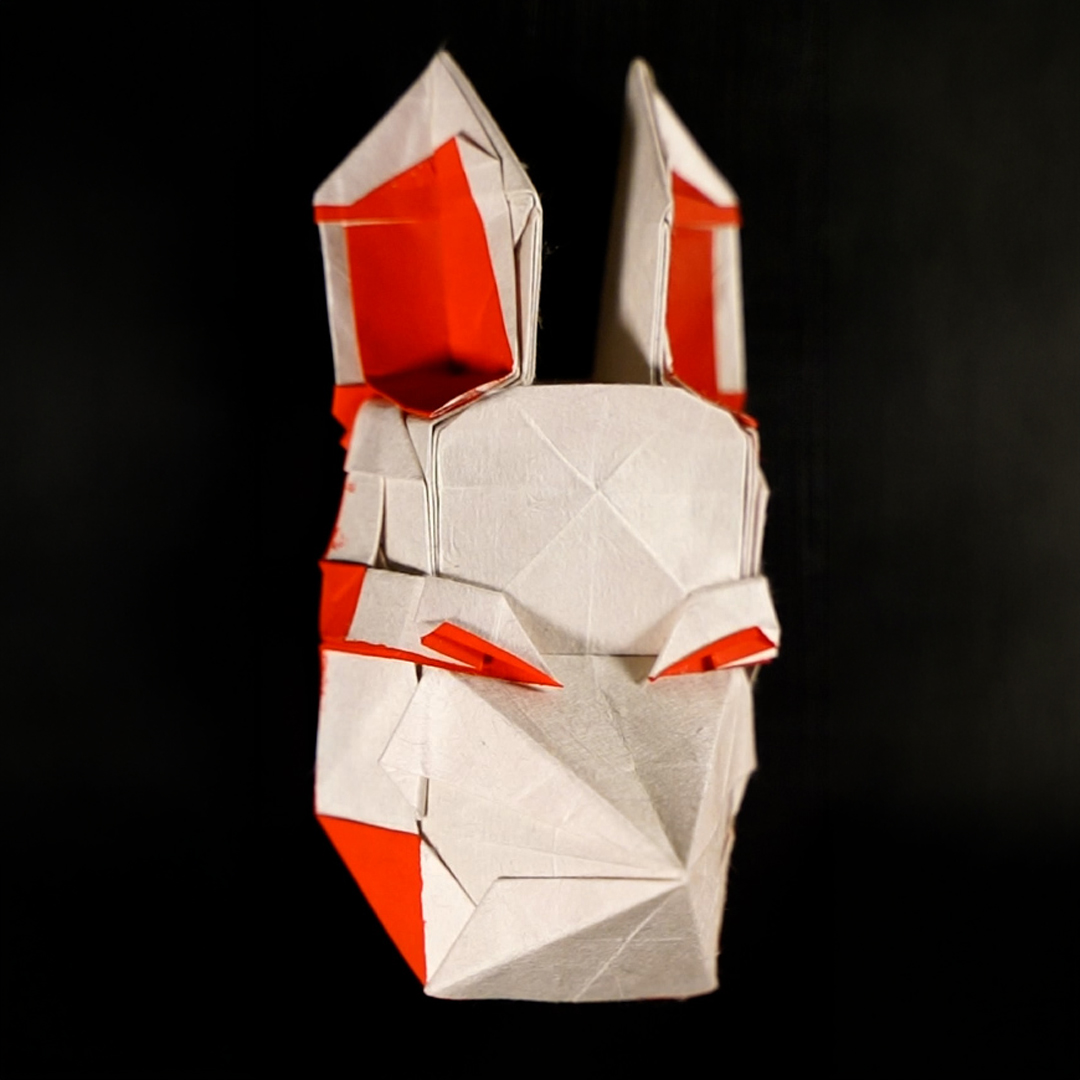
A mask with a mechanical, intricate form

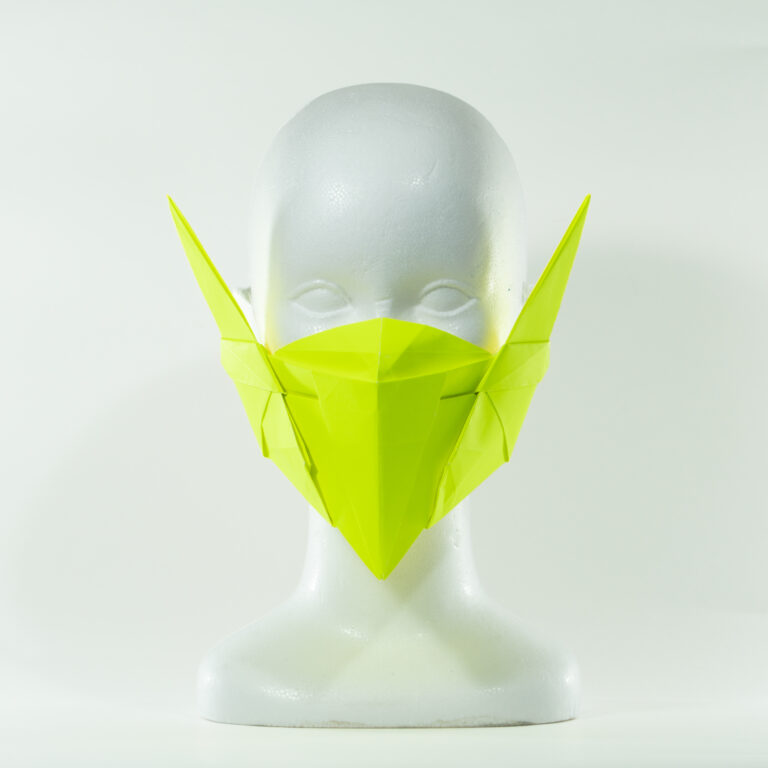
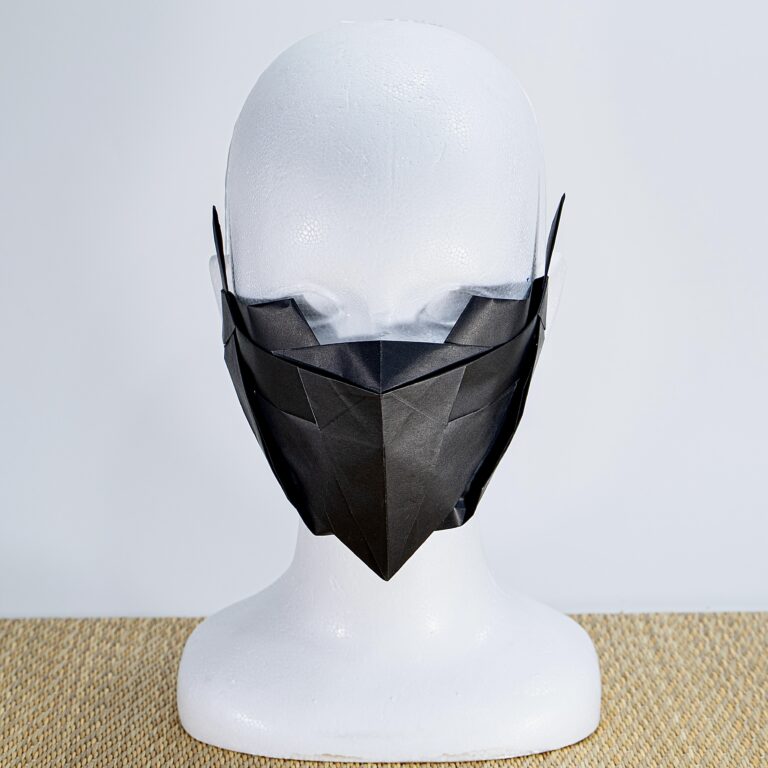
Half Mask

A cyberpunk-style mask with protrusions on both sides.

Home Decor

Light Bulb

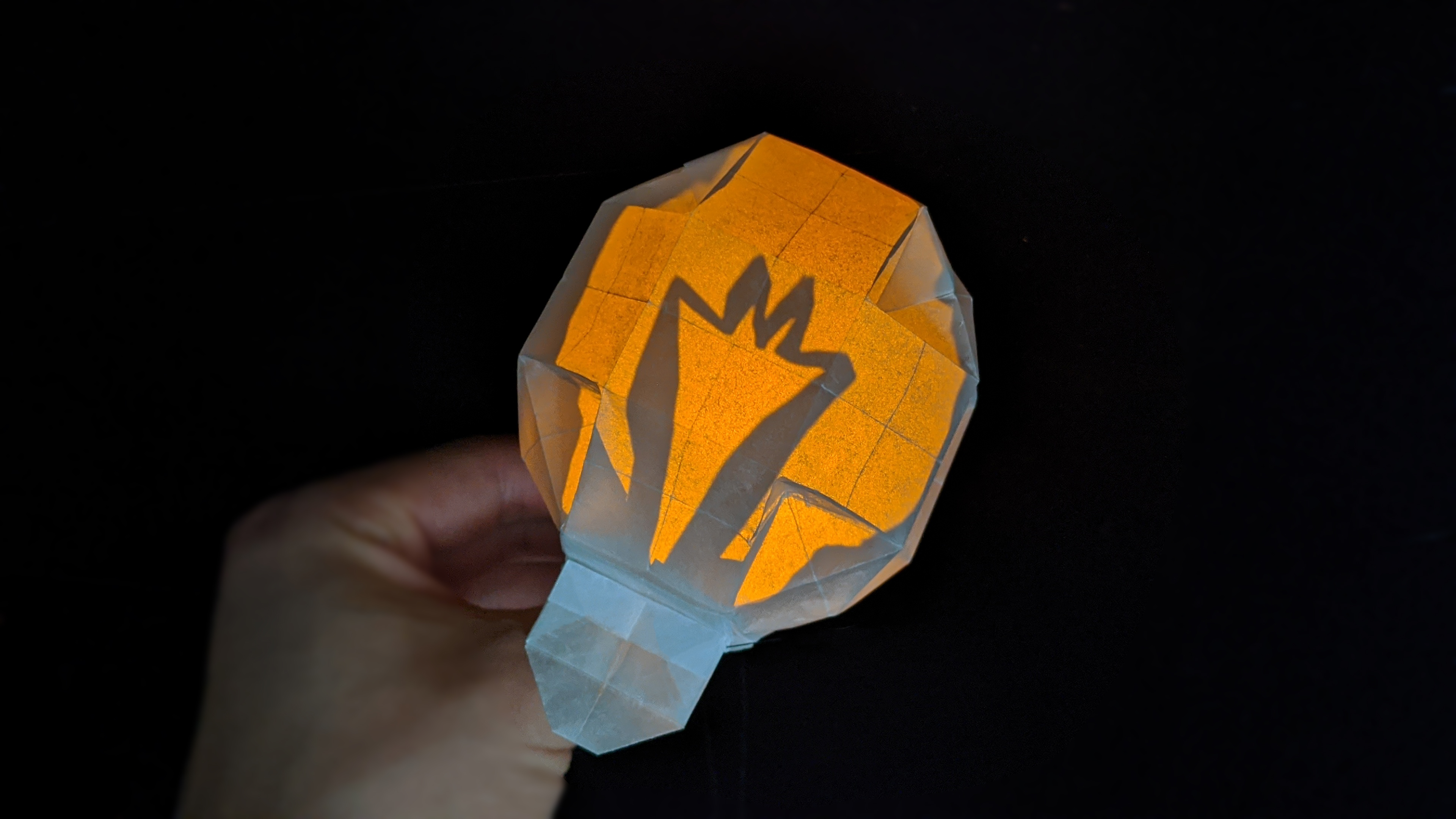
A three-dimensional light bulb. When held up to the light, the filament inside is visible.

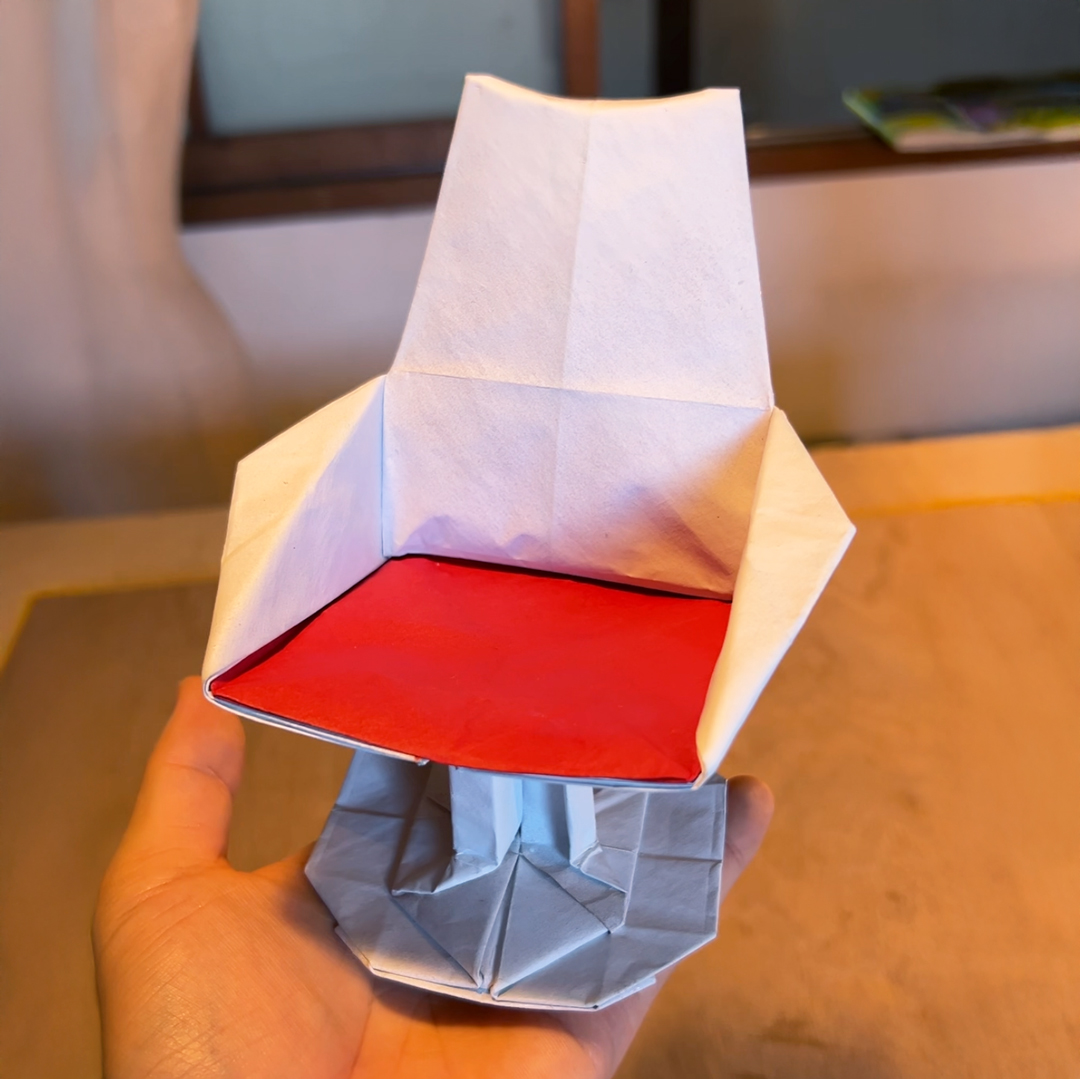
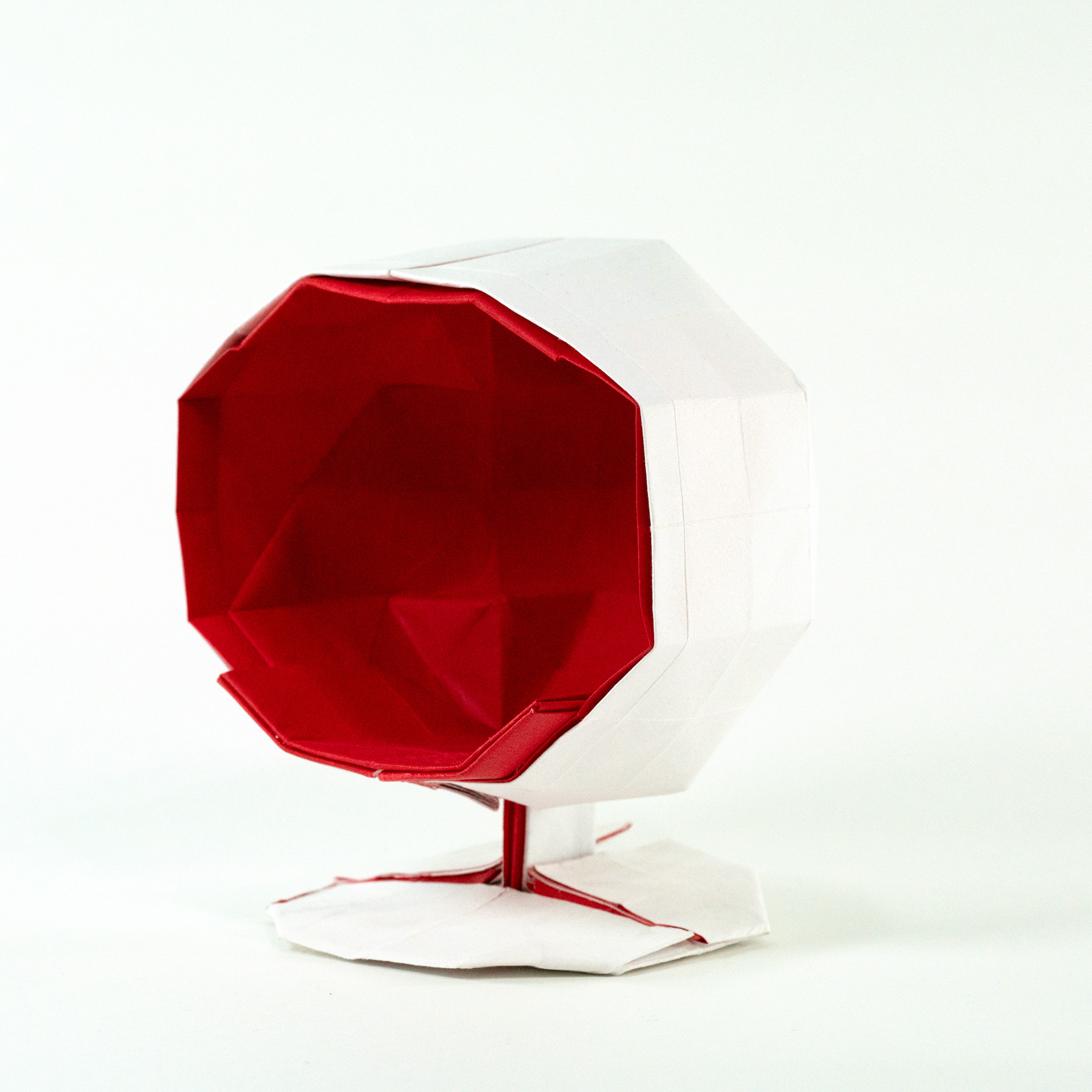
Tulip Chair

A mid-century Tulip chair, with the seat rendered in red using an inside-out design.

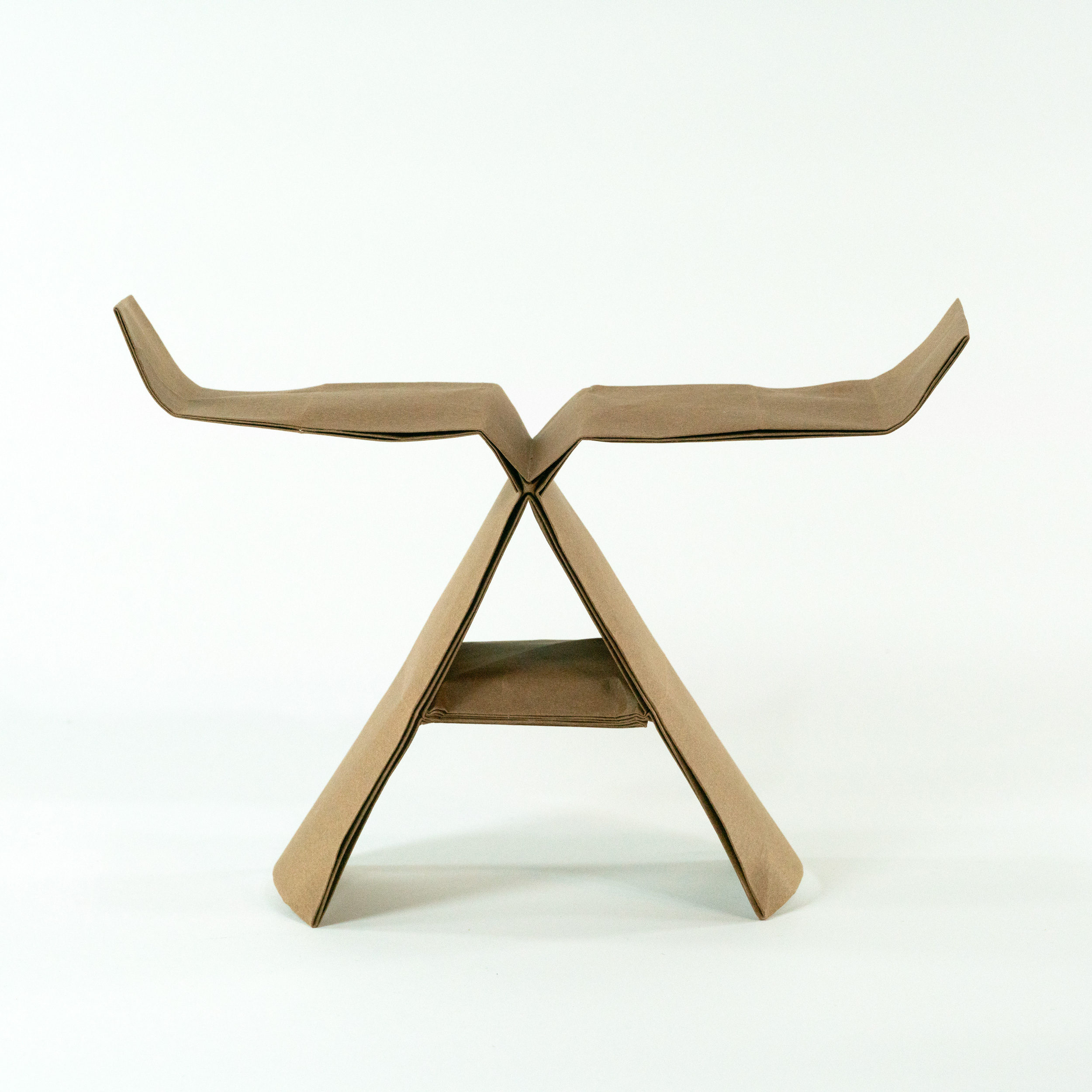
Butterfly Stool

A work that expresses the Butterfly Stool designed by Sori Yanagi in 1954 through origami. By joining two kado elements together, it forms an A-shaped structure at the base.

Table Lamp

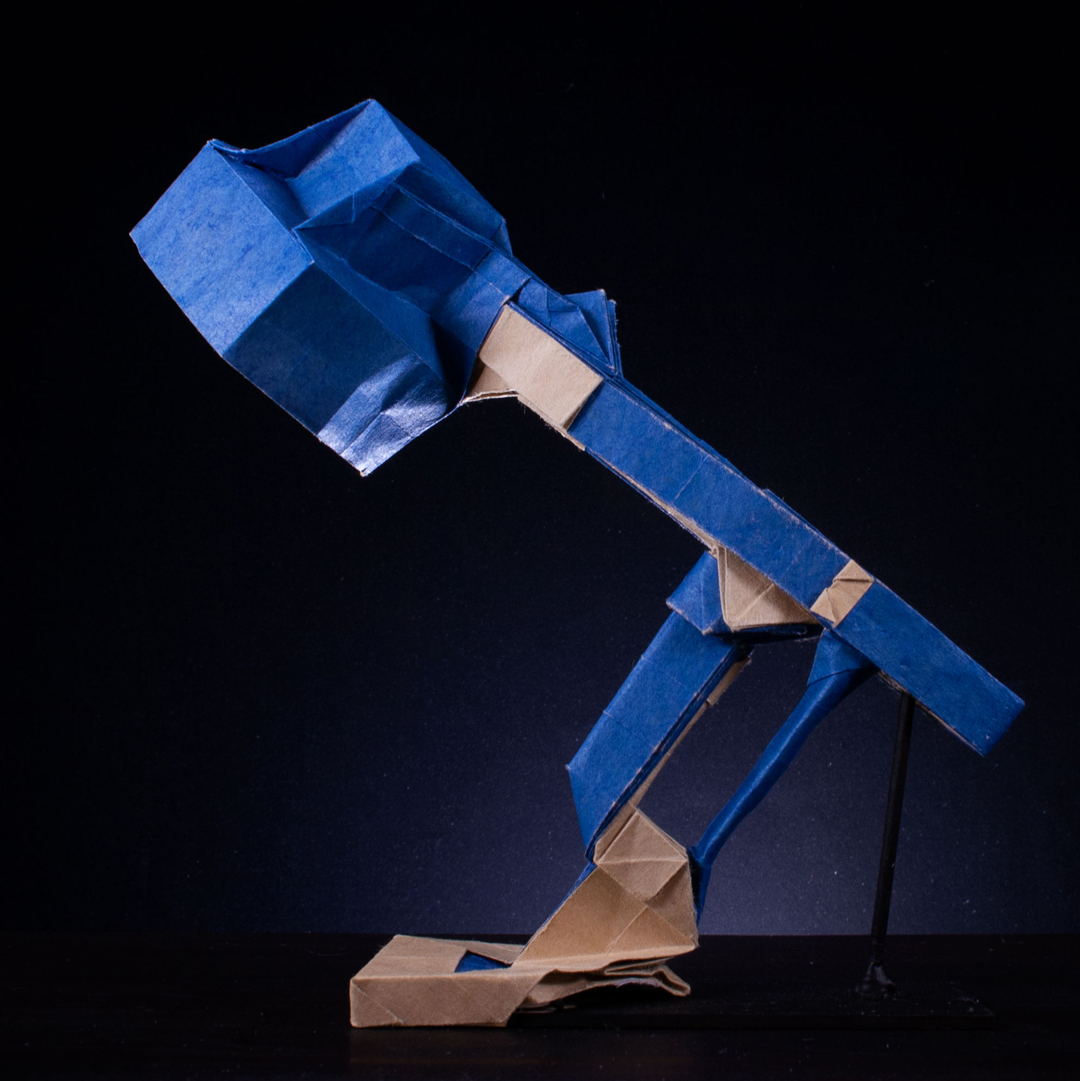
A three-dimensional table lamp. The fittings and buttons are recreated in an inside-out structure. Built on a 32-grid.

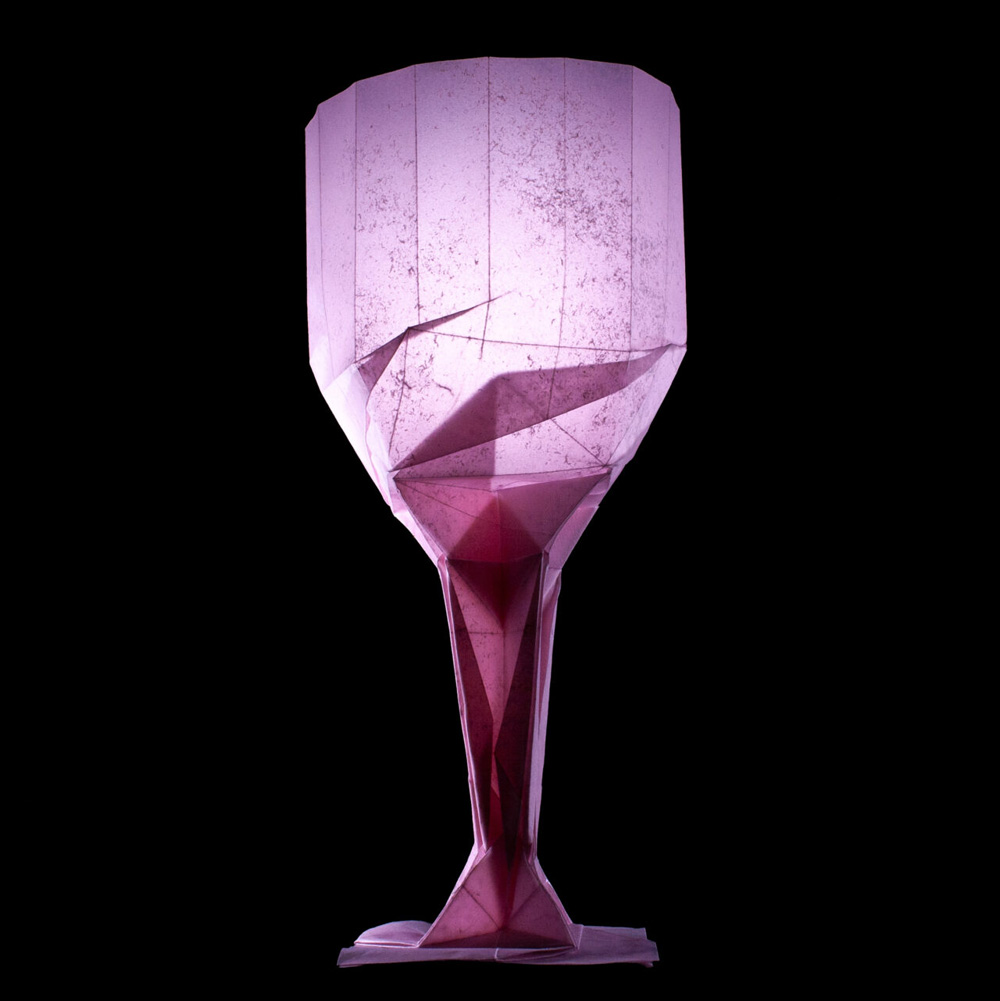
Wine Glass

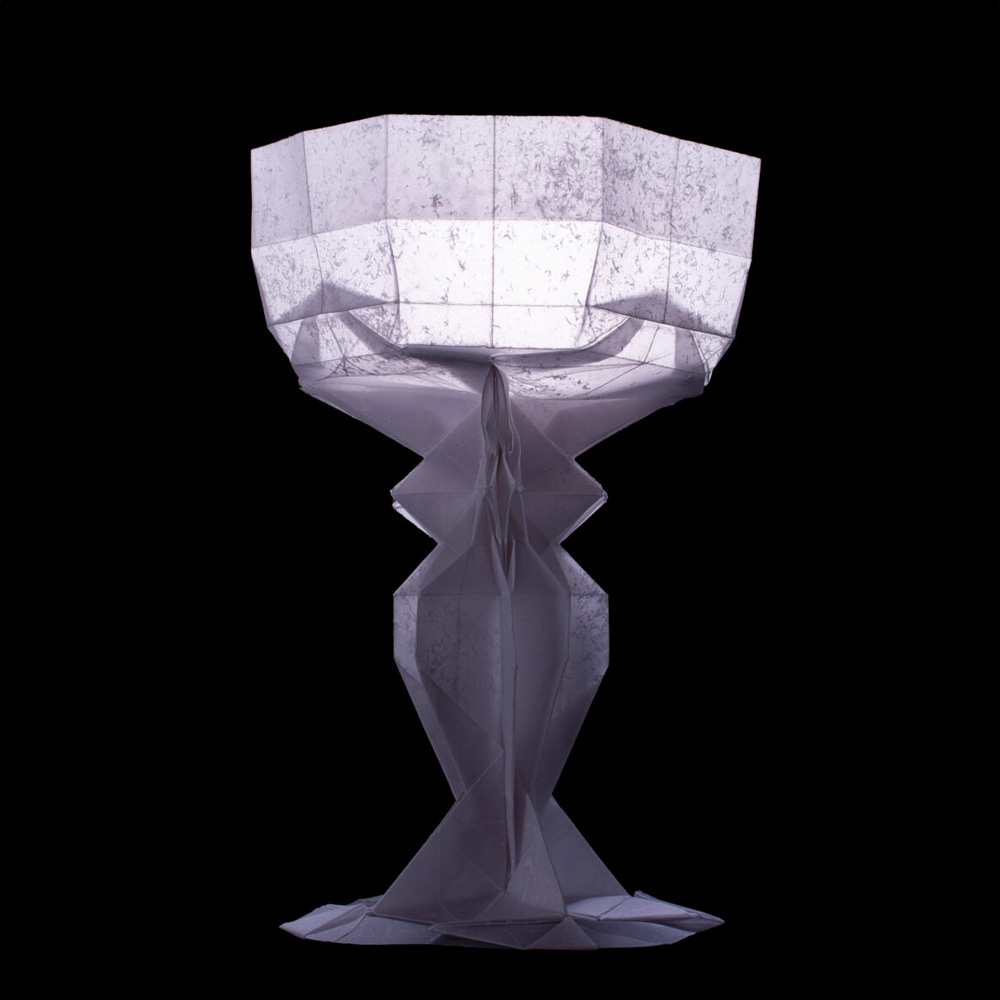
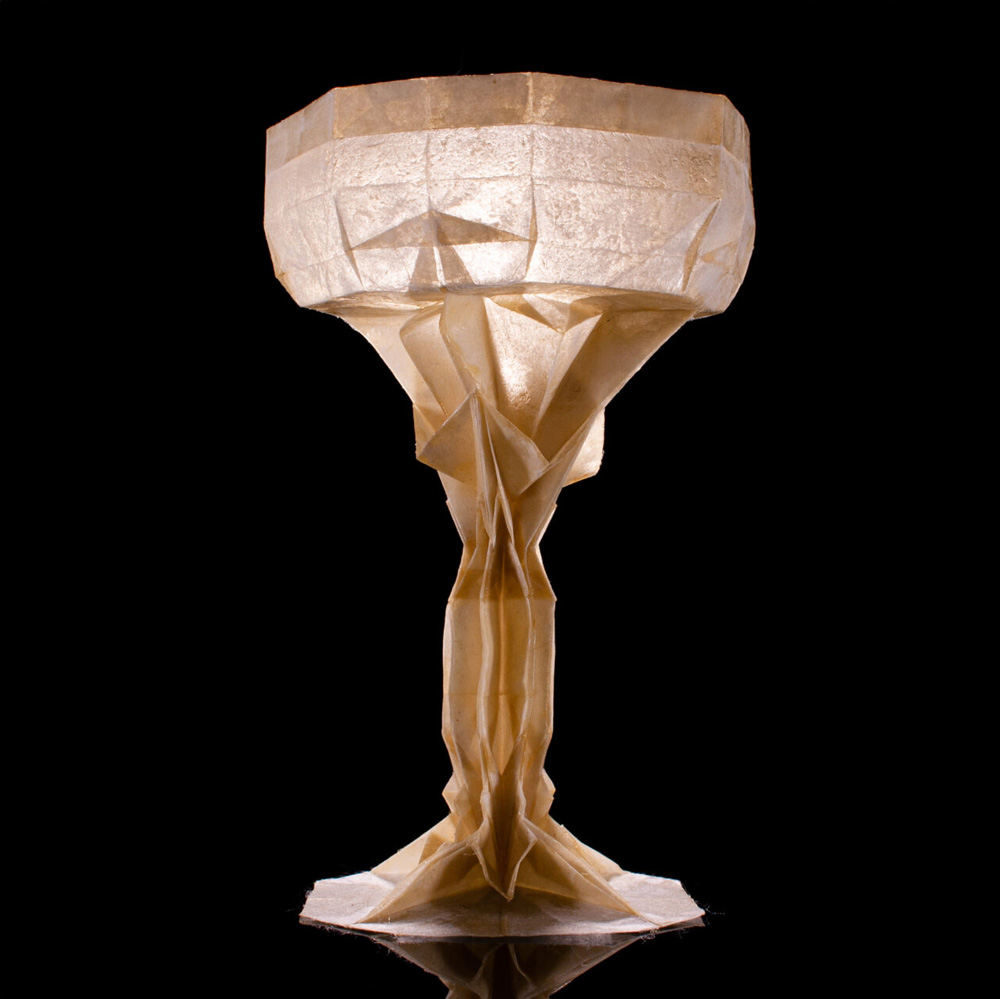
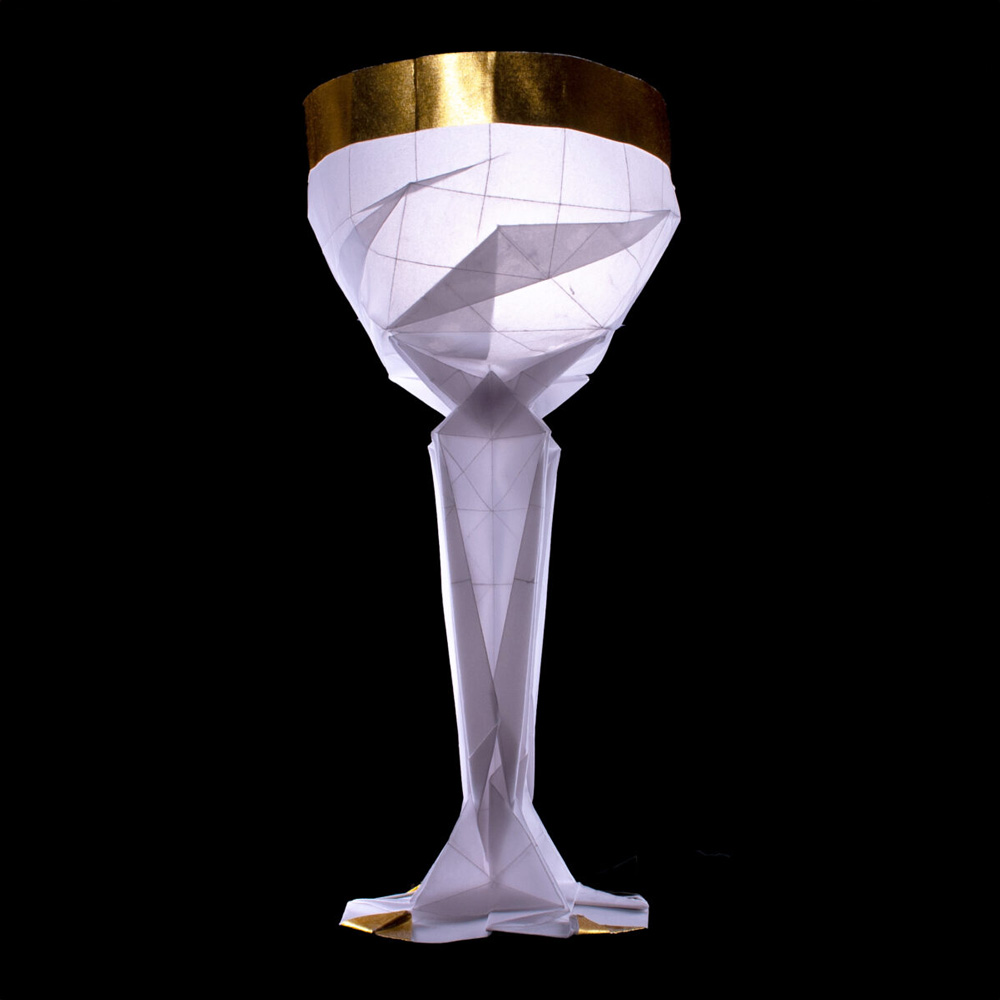
A crystal wine glass with intricate detailing.

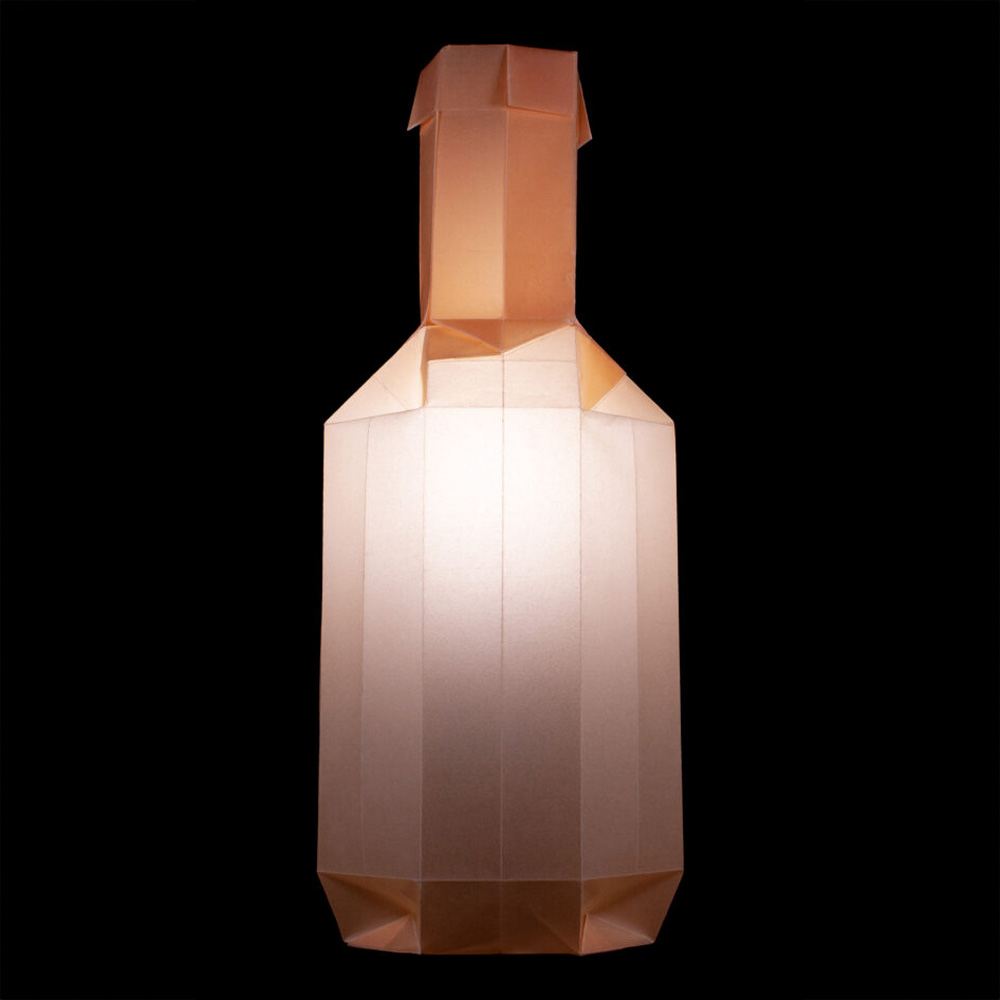
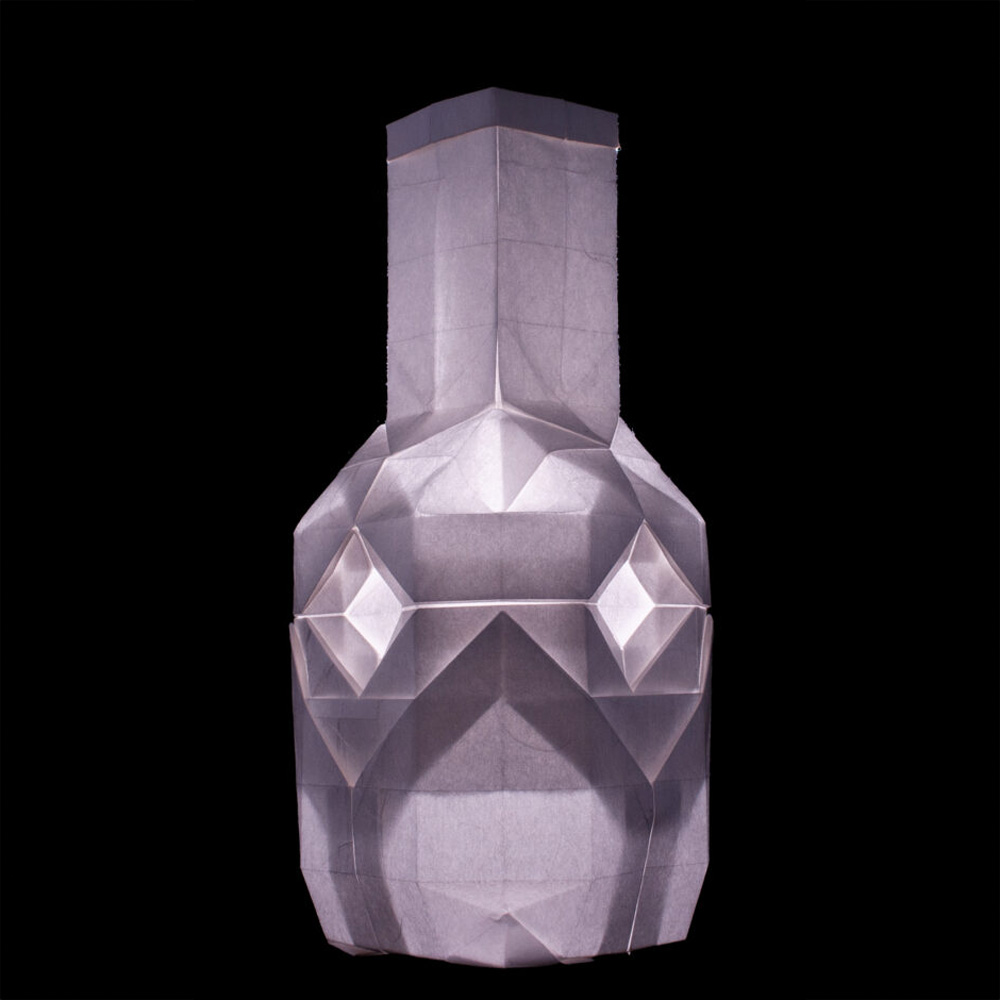
Wine Bottle

A three-dimensional, low-poly wine bottle with decorative details.

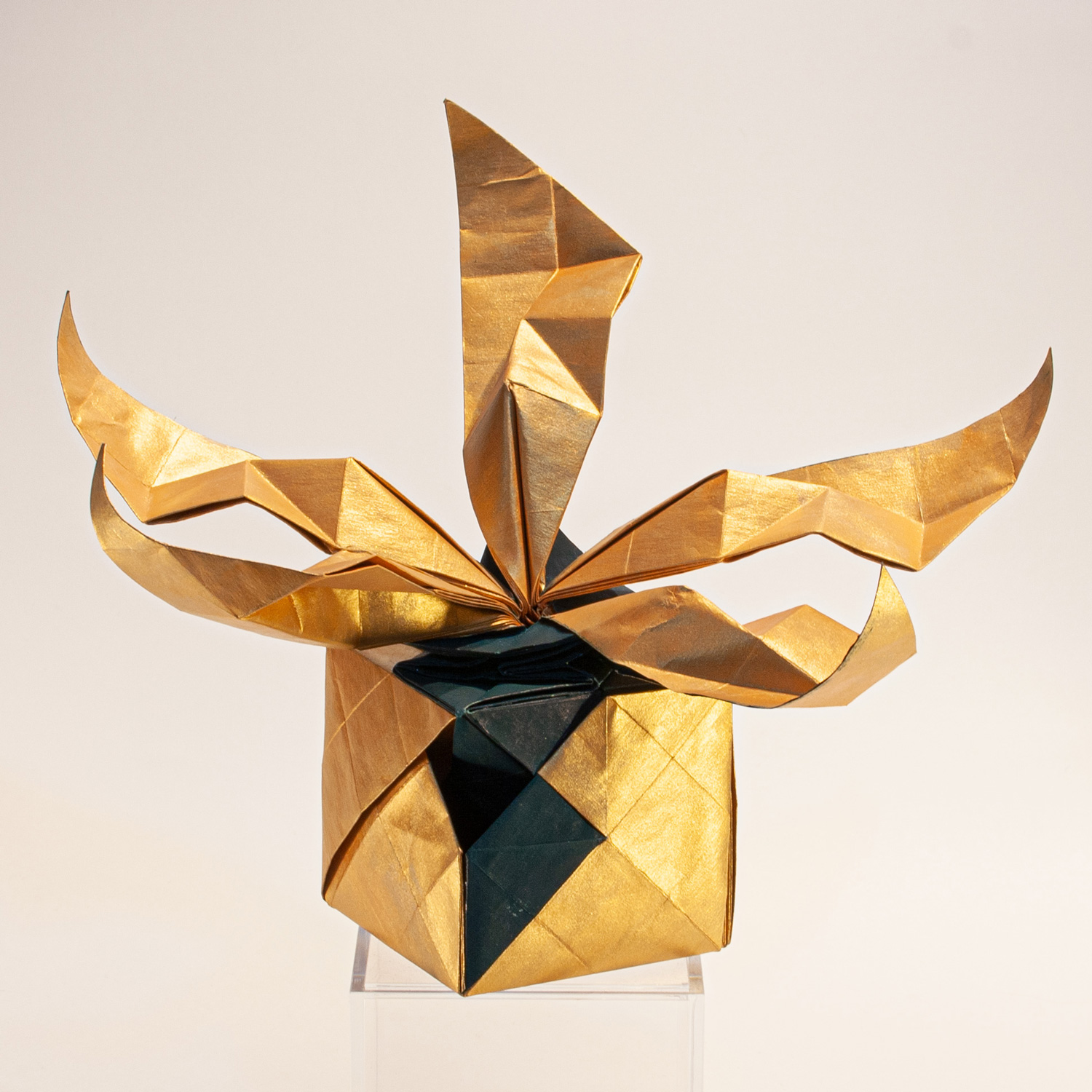
Plant

An abstract plant with five long, slender leaves

Plant
ver1.0
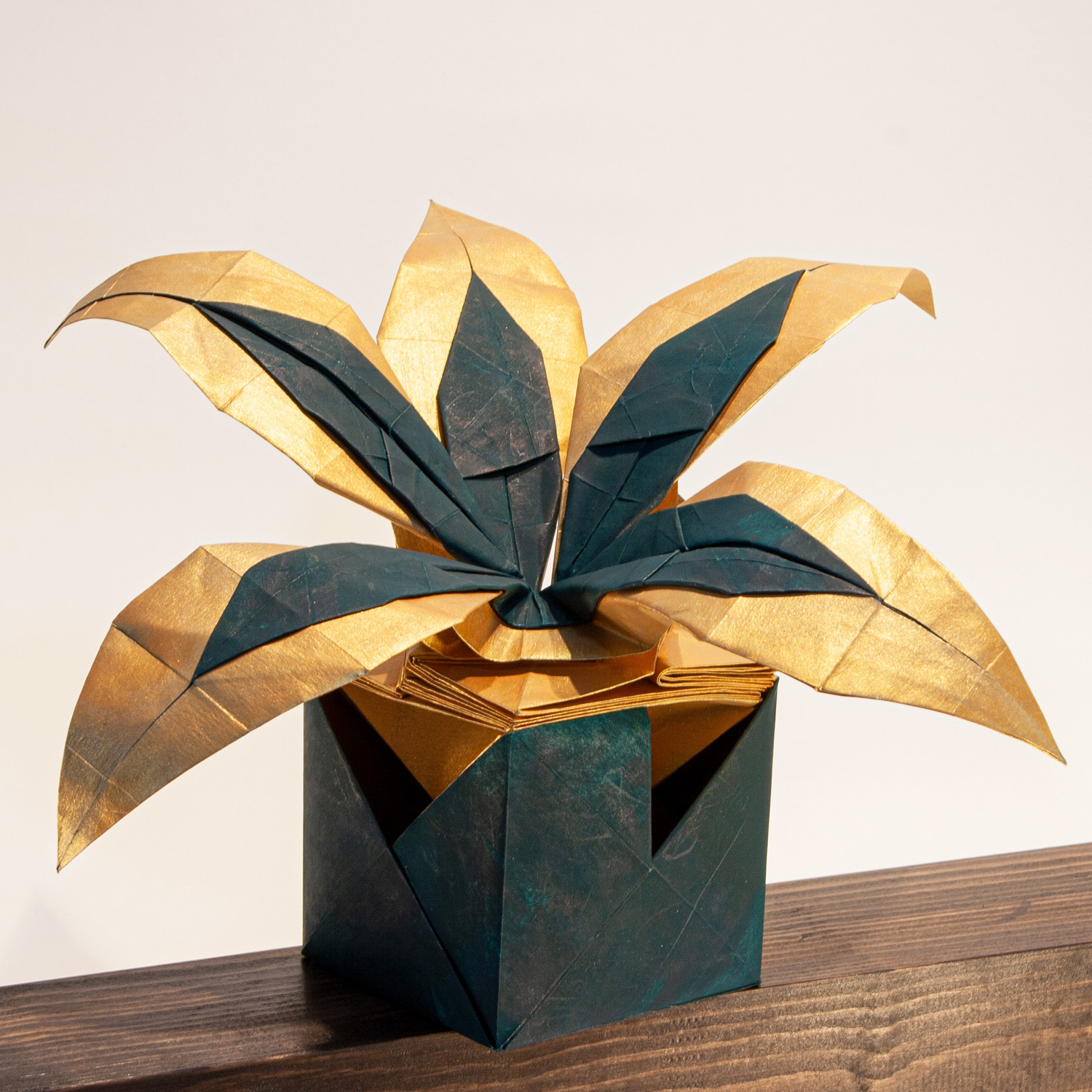
Plant

An abstract plant with leaves in two contrasting colors.

Plant
ver1.1
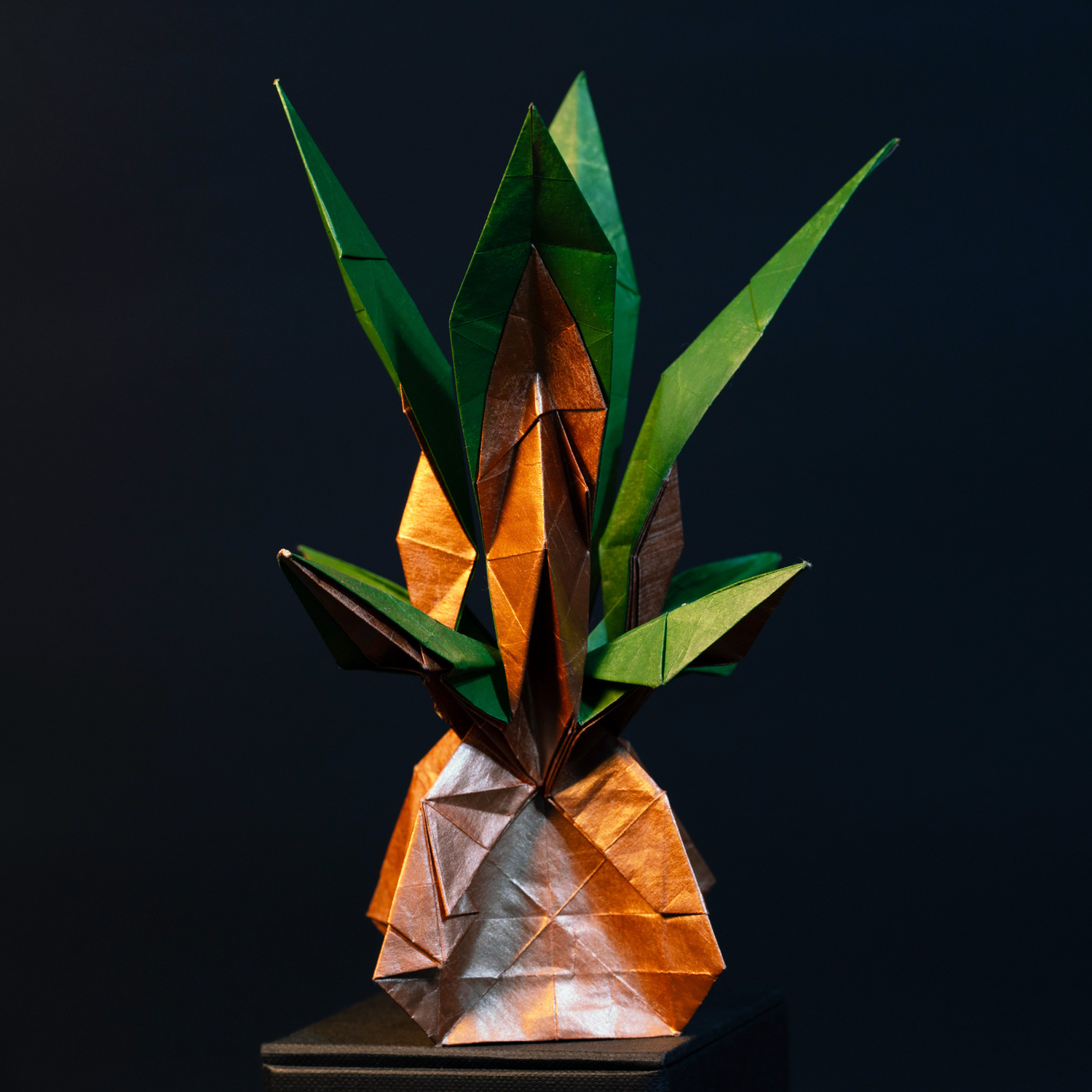
Plant

An abstract plant with a mix of long and short leaves.

Plant
ver1.2
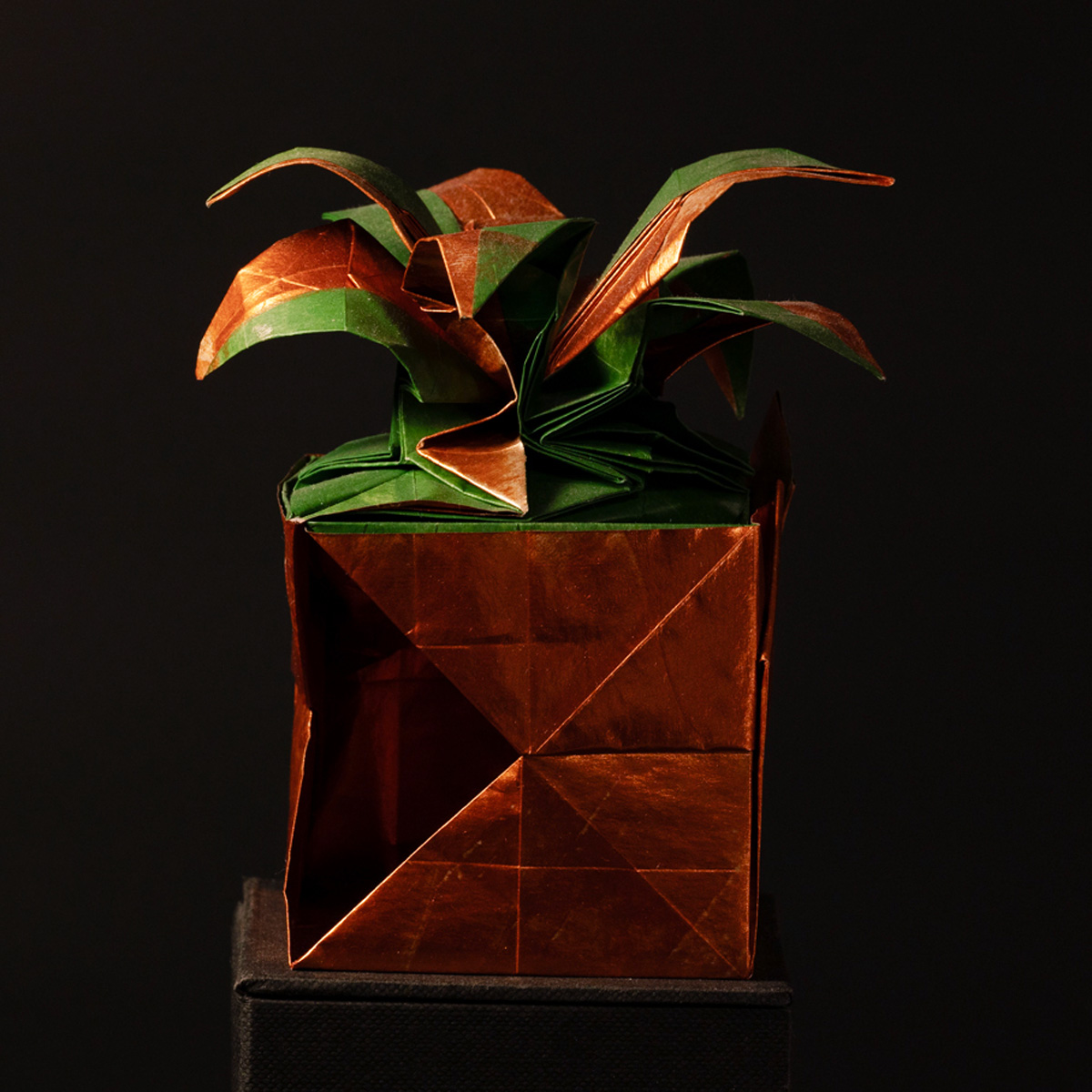
Plant

An abstract plant covered with many small leaves.

Plant
ver1.3
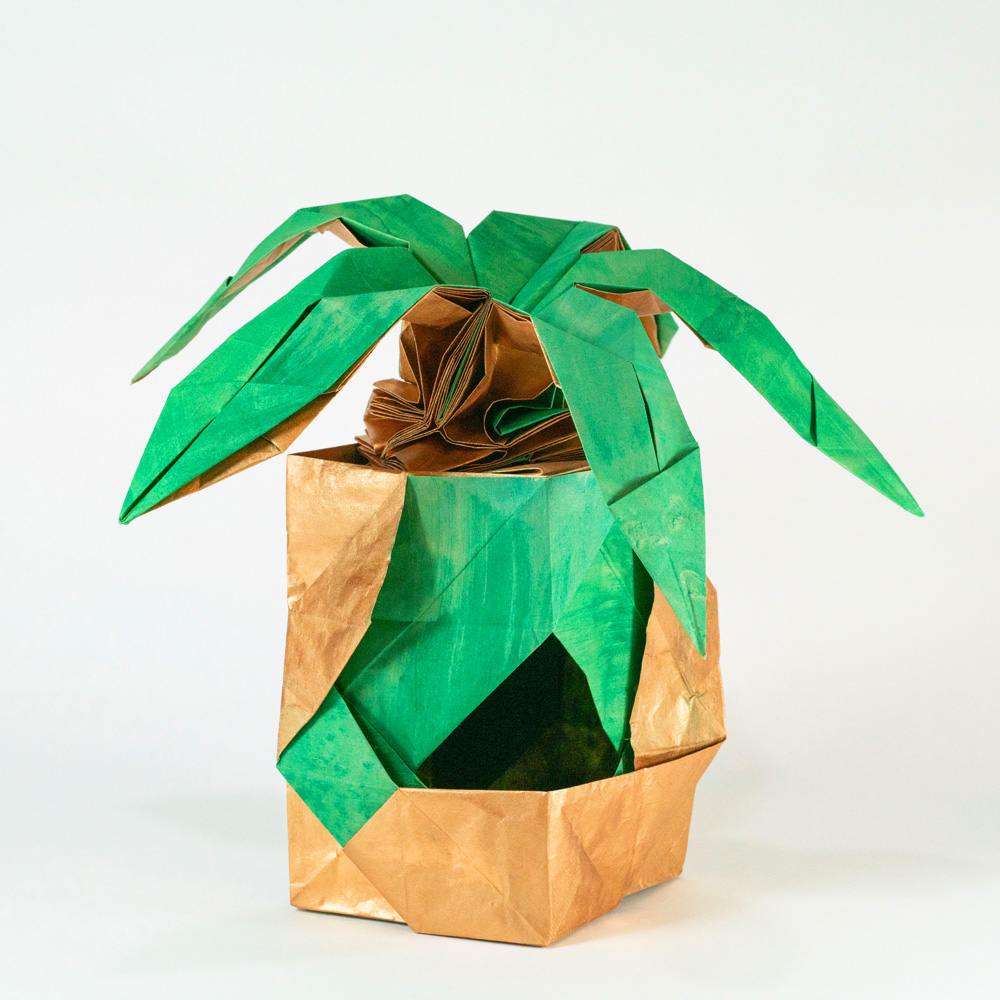
Plant

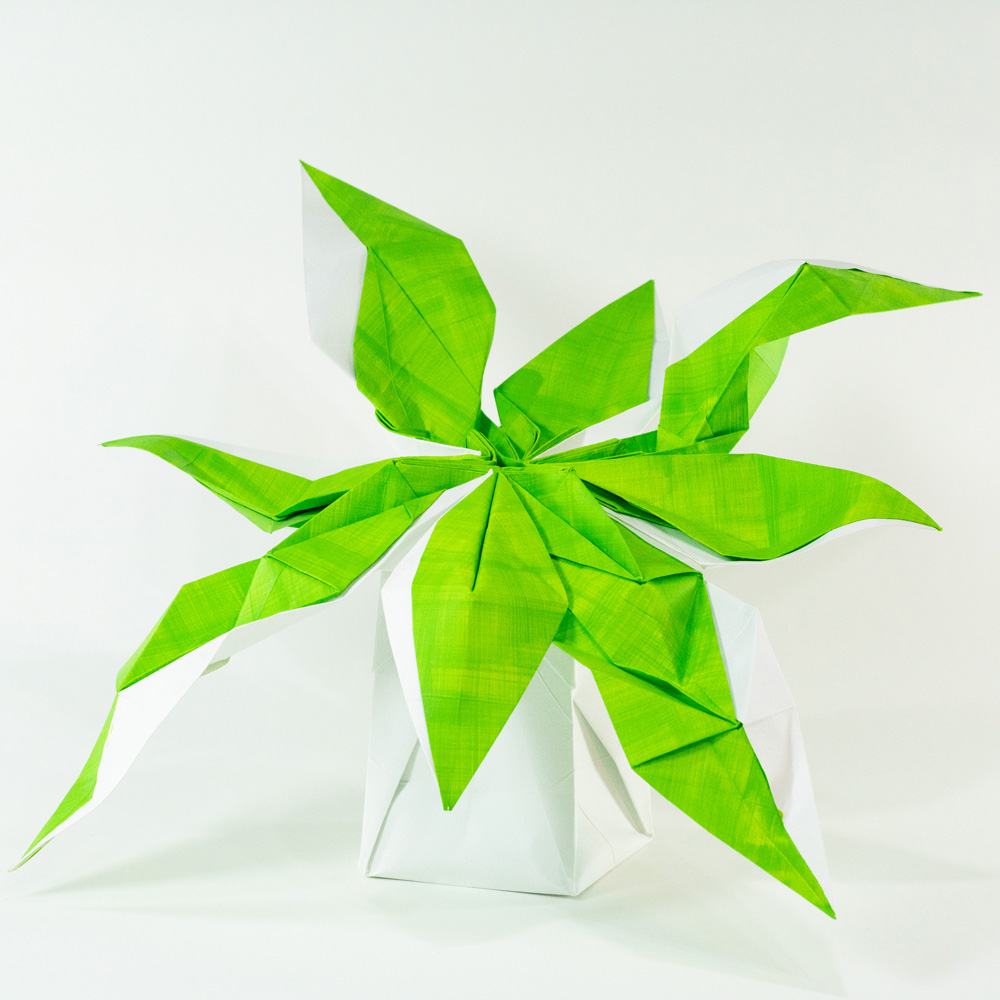
An abstract plant with eight large two-colored leaves spread outward.

Plant
ver1.5

Polygon Component

Cube

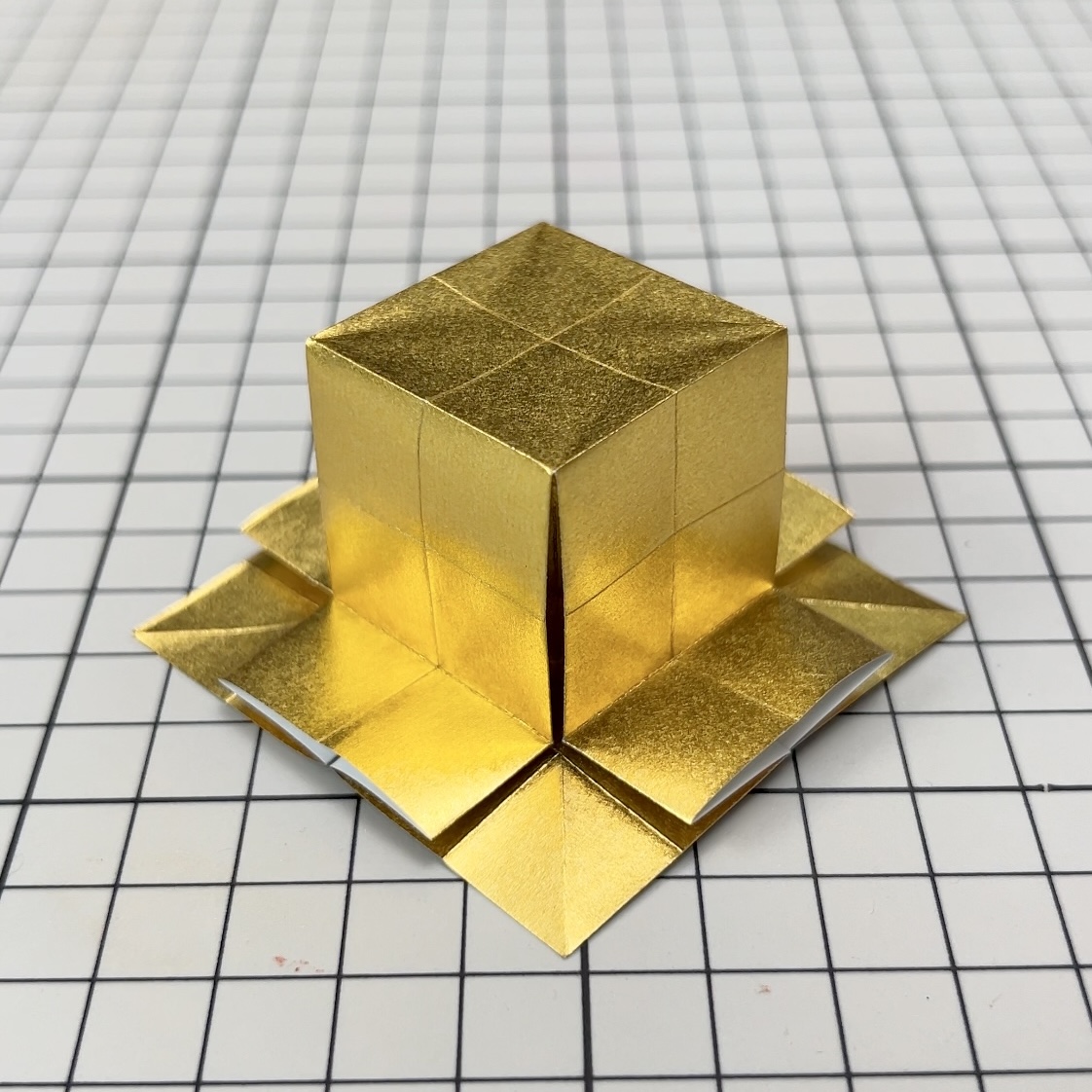
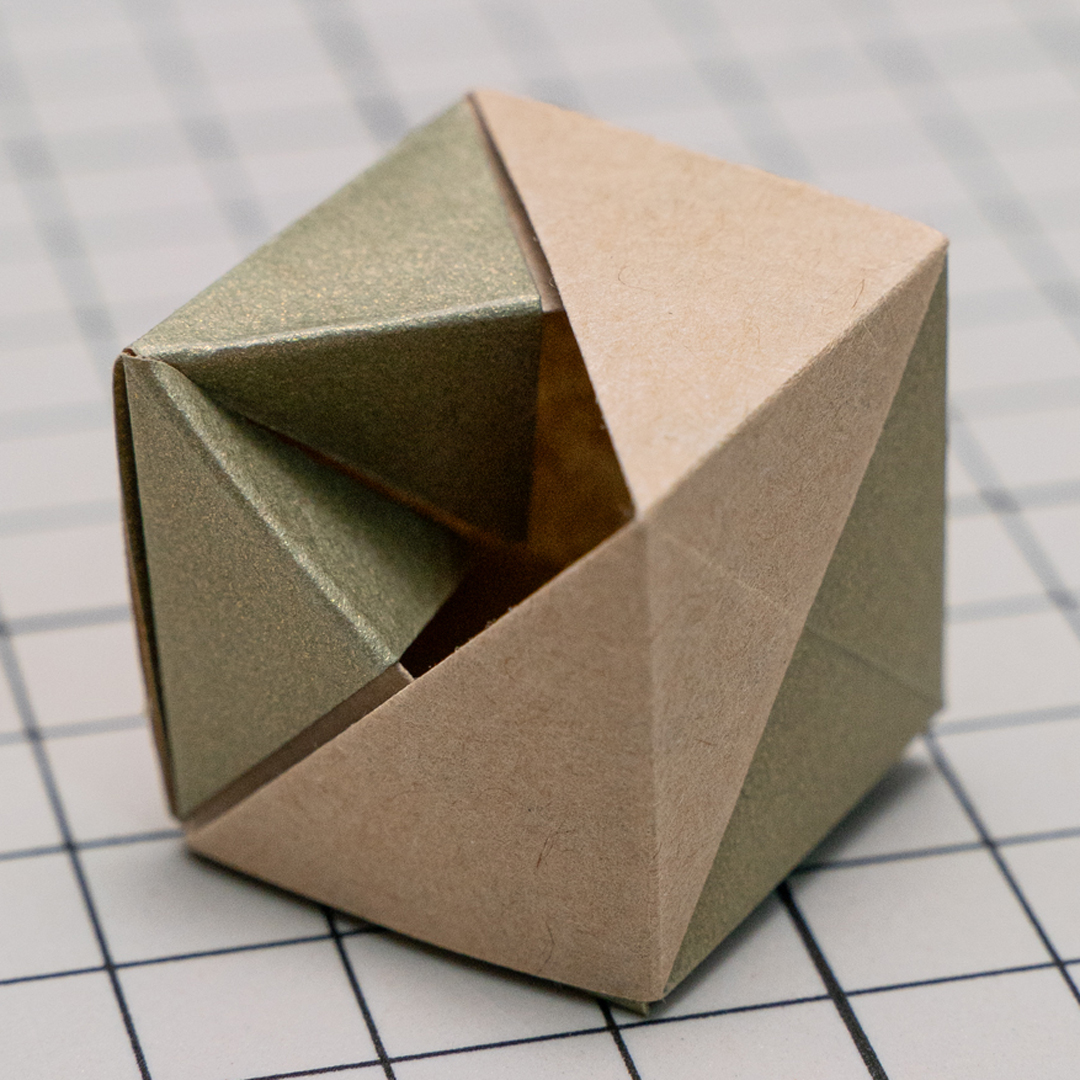
A structure created by turning the internal structure of the basic cube outward. It allows for decorative expressions in which triangular prisms surround the cube.

Cube

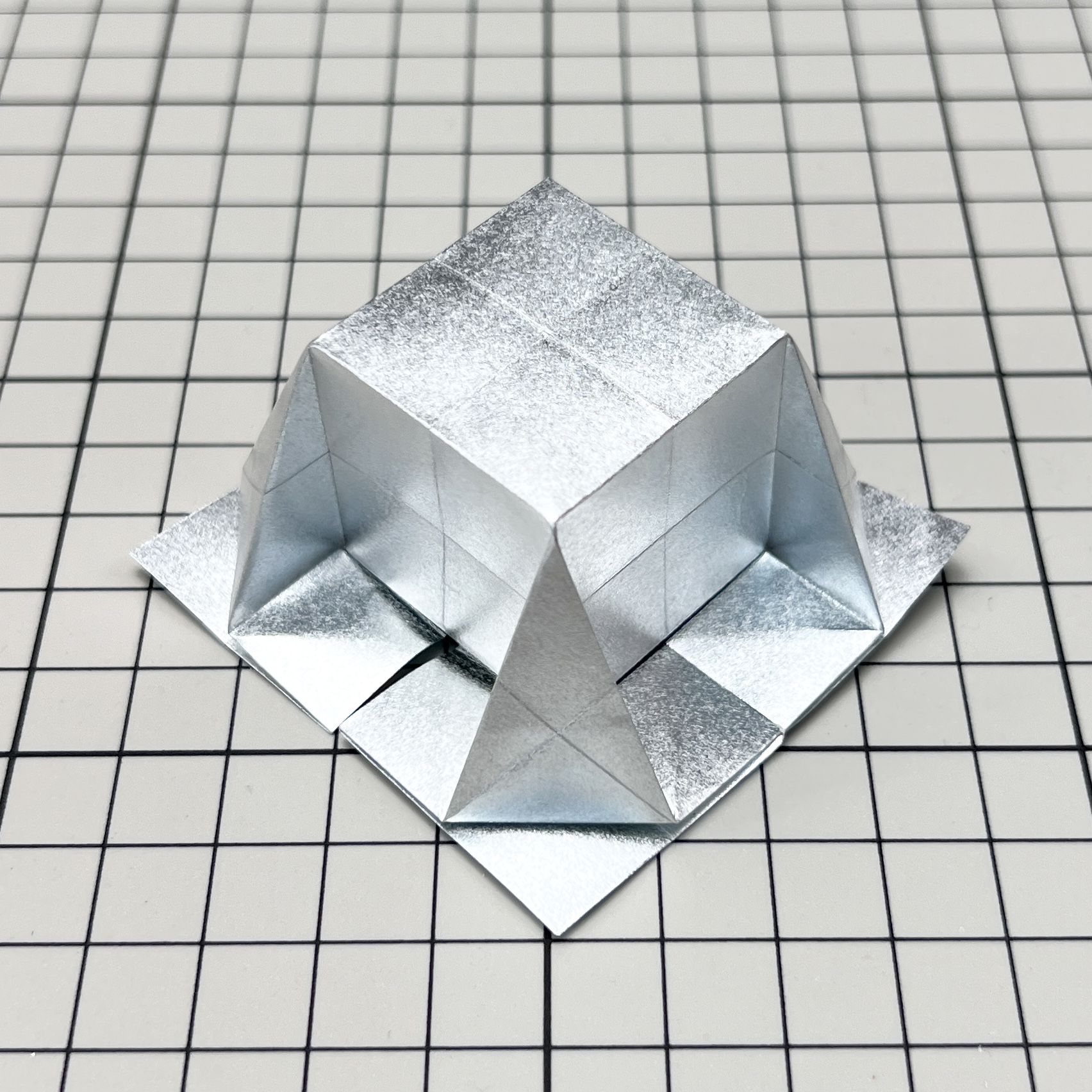
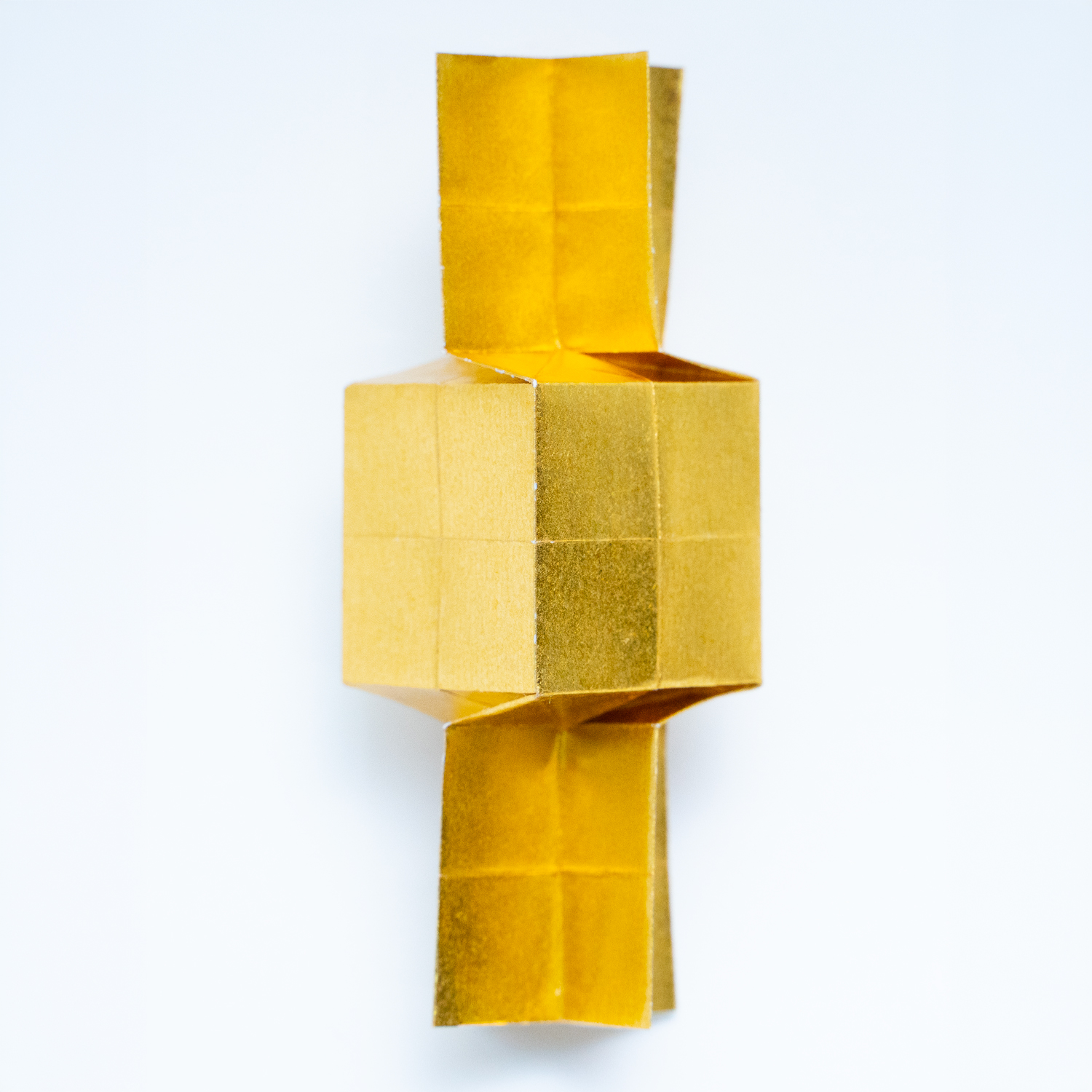
A cube with a band-like structure around its perimeter, serving as a structural isotope of the basic cube. Because its volumetric structure appears on the surface and remains movable, it can be easily transformed into other shapes.

Cube

A structure in which vertices are cut off from a banded cube while introducing distortion to the faces. It serves as a bridge to organic and biological forms.

Cube

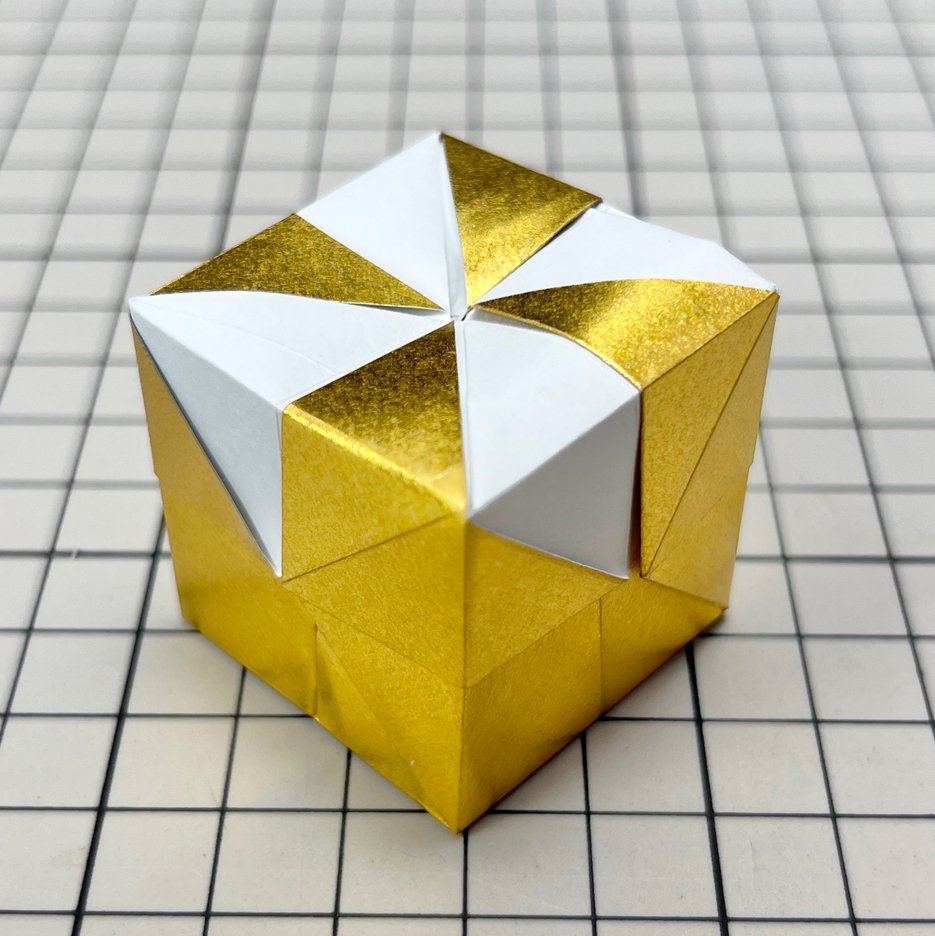
A cube constructed using a grid composed of lines parallel to the diagonal direction (45-degree direction), rather than to the edges of the paper. A defining feature of this structure is that the reverse side of the paper appears on the top surface, creating a visible pattern.

Cube

A cube constructed using a diagonal grid. Patterns appear across all surfaces, and openings are formed in certain areas. It combines easily with other structures, making it well suited for creating forms such as plants.

Cuboctahedron

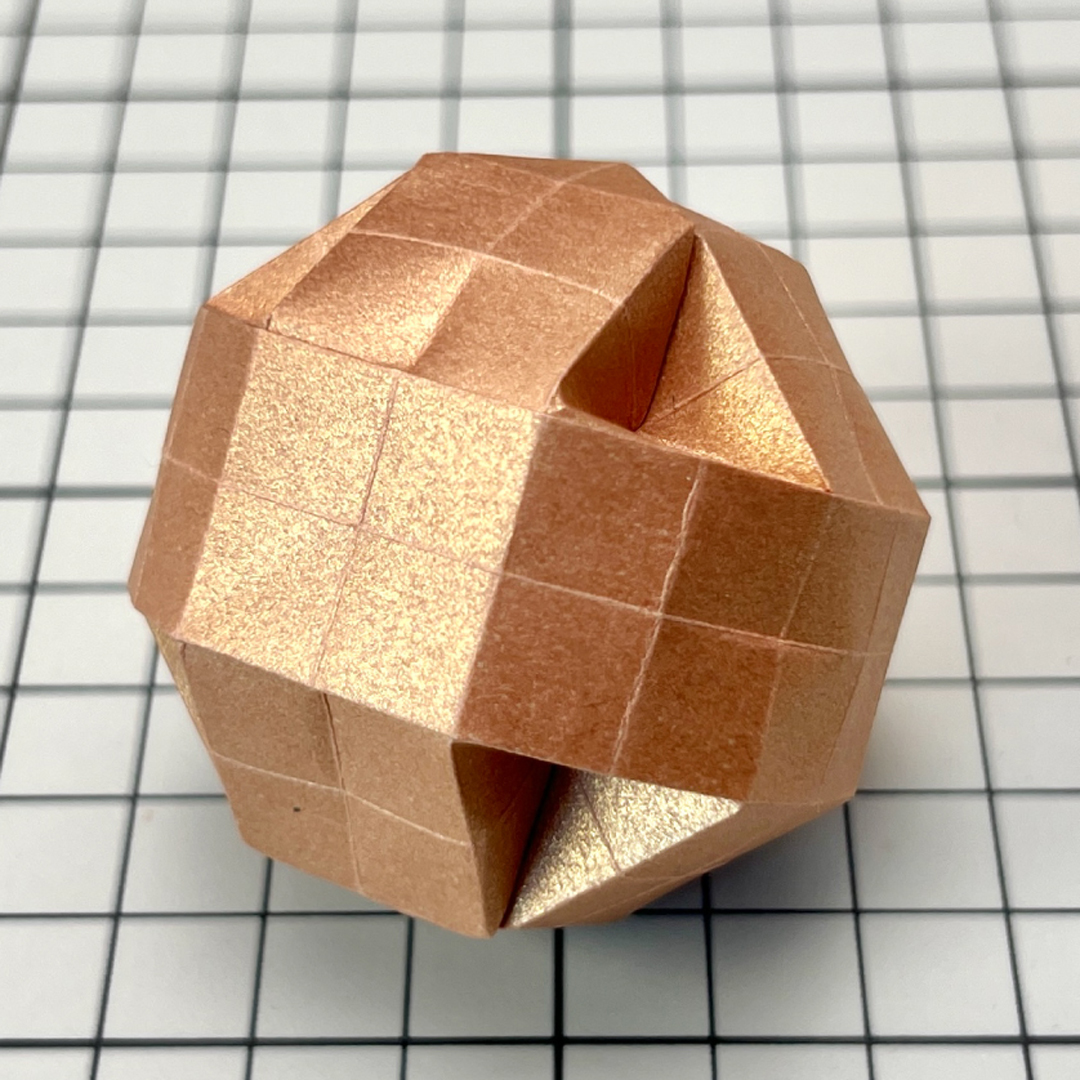
A cuboctahedron formed by applying three-dimensional sink folds to each vertex of a cube. It is well suited for approximating a sphere when creating structures such as light bulbs.

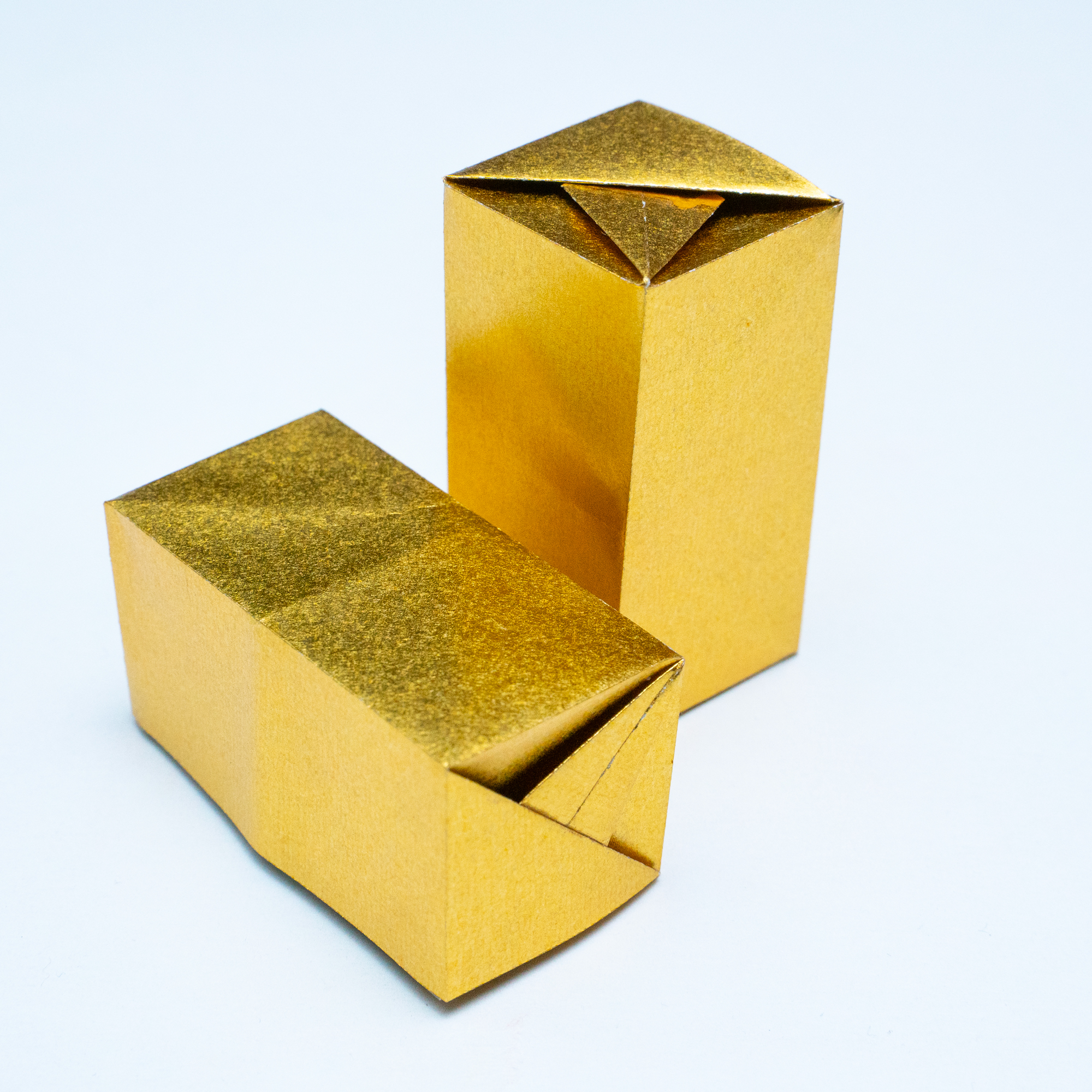
Pyramid

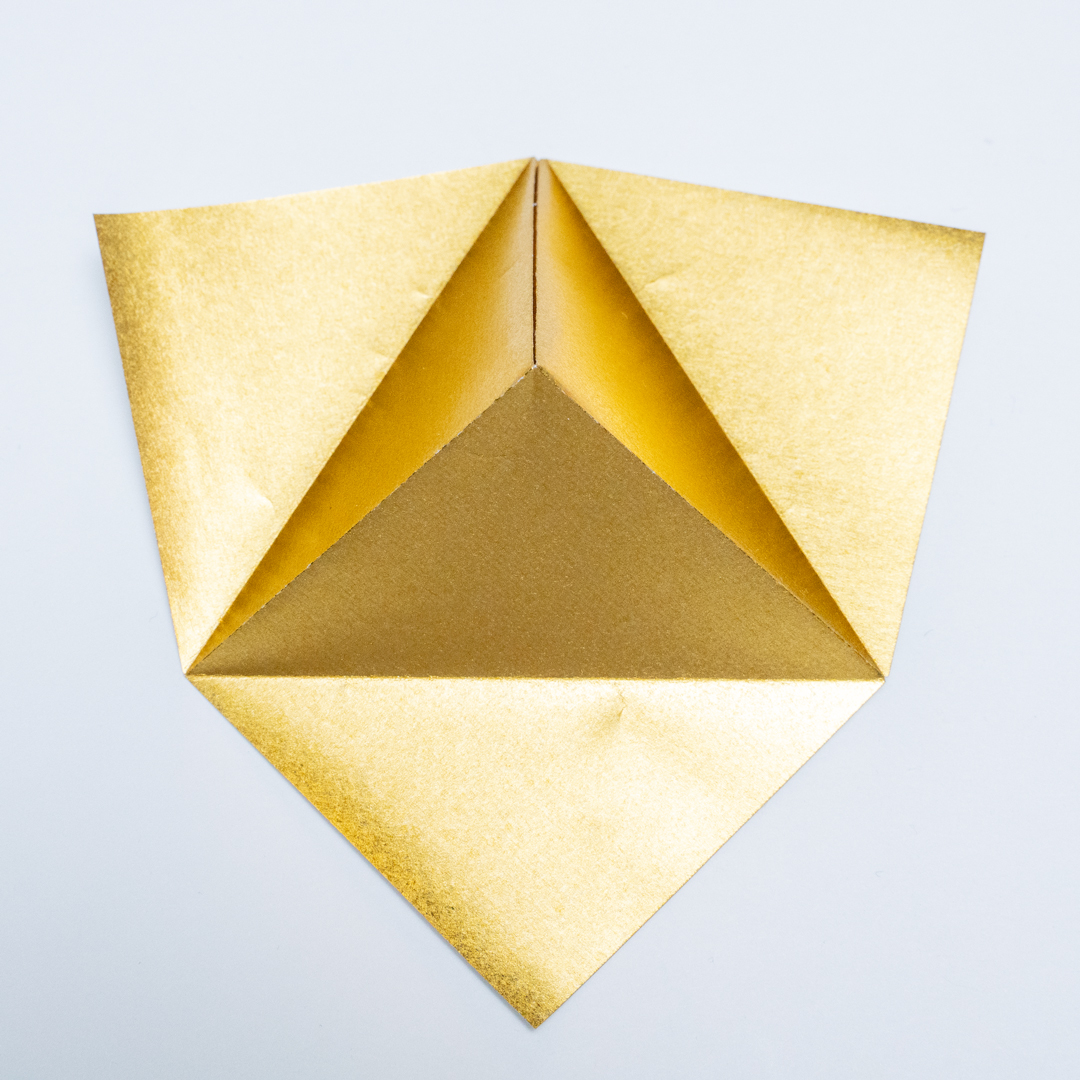
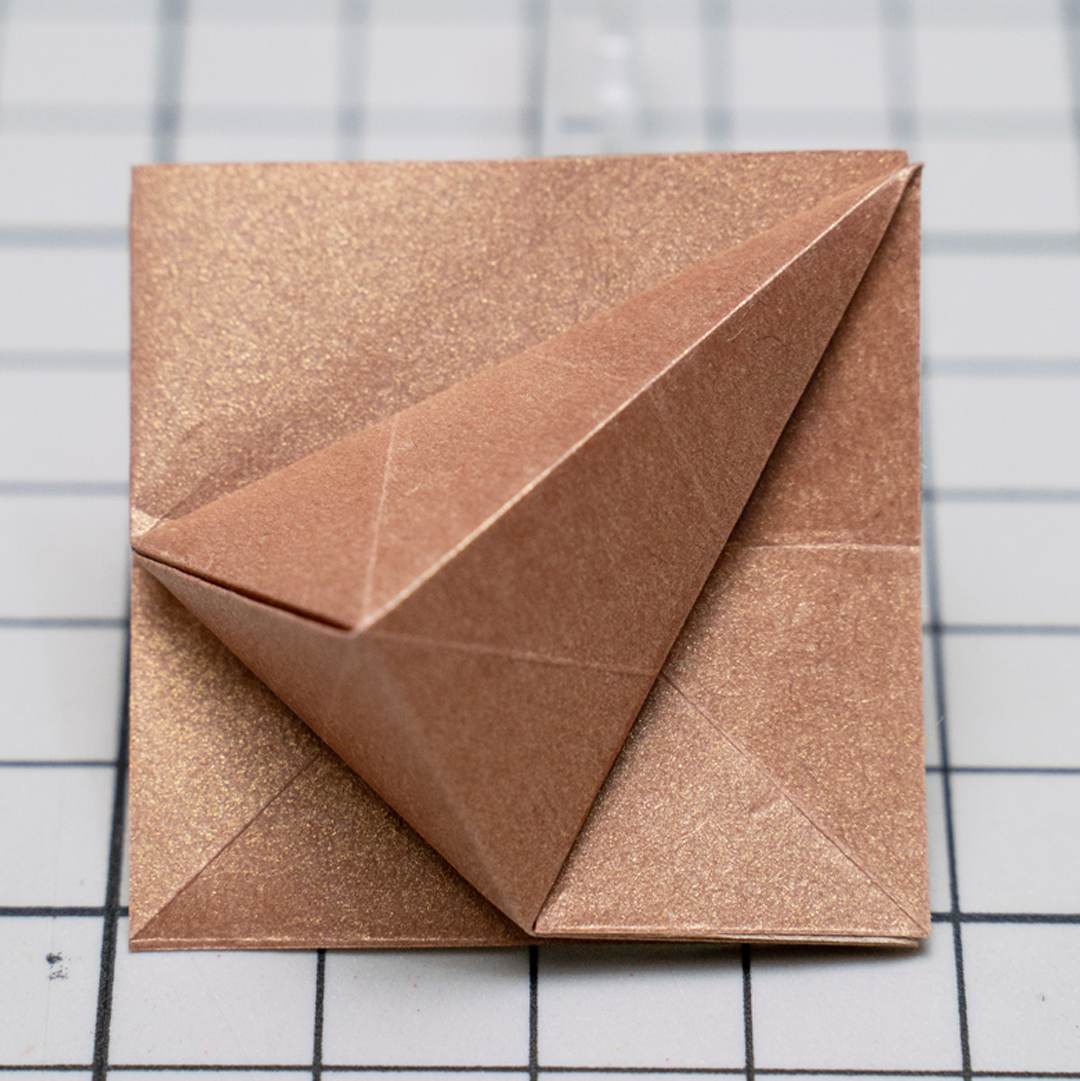
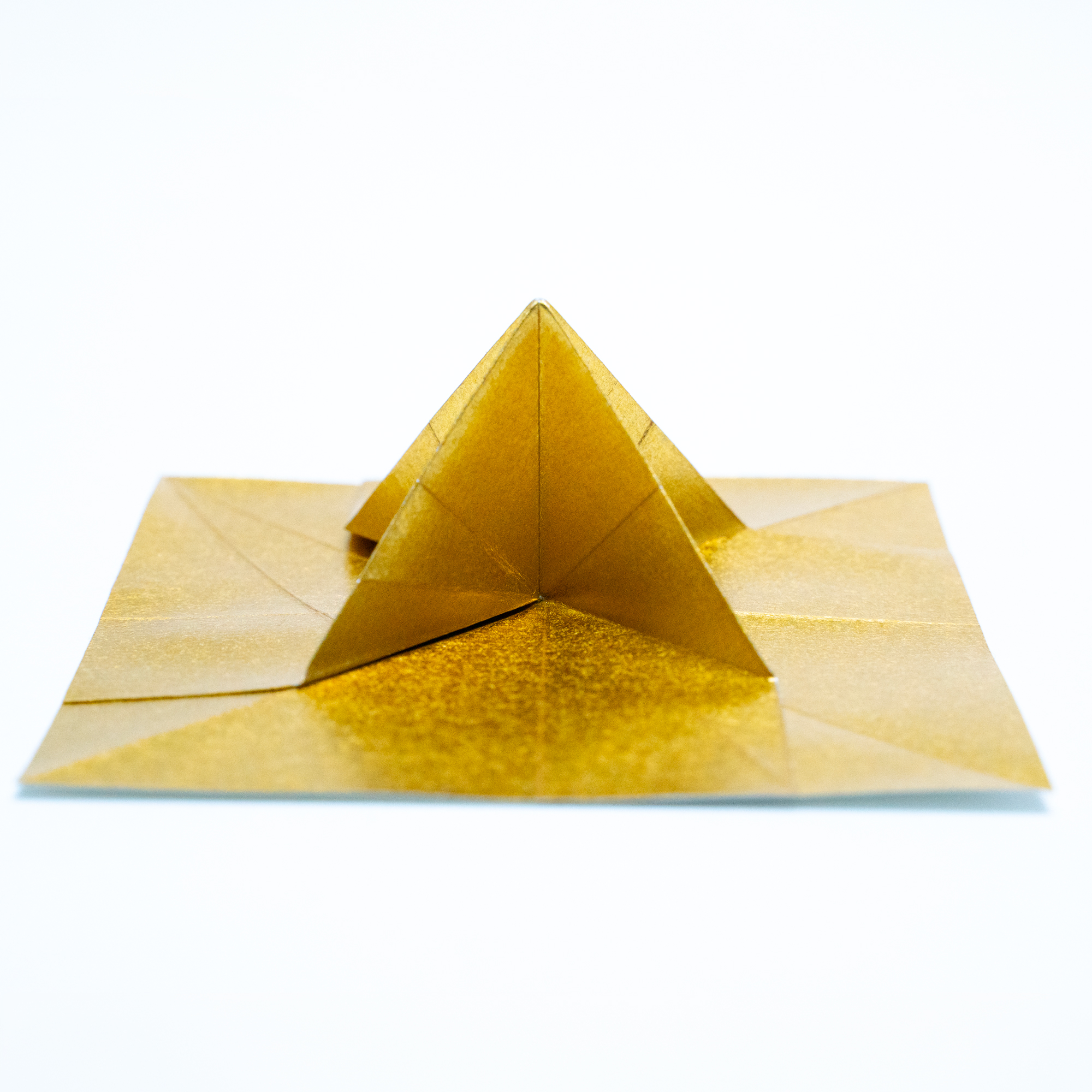
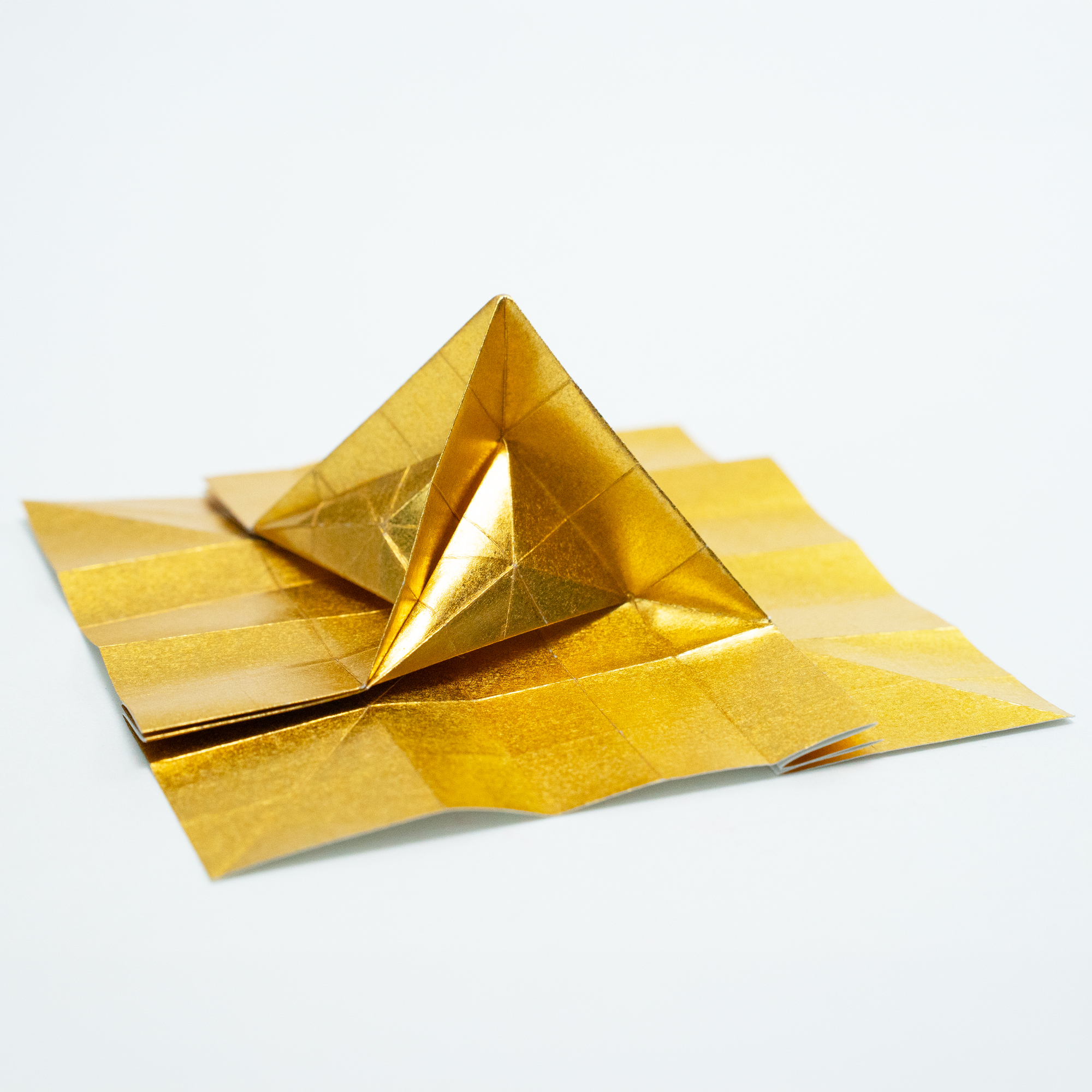
A flattened triangular pyramid whose apex solid angles are all 90 degrees. It is used as a fundamental element for forming the vertices of cubes and rectangular prisms.

Pyramid

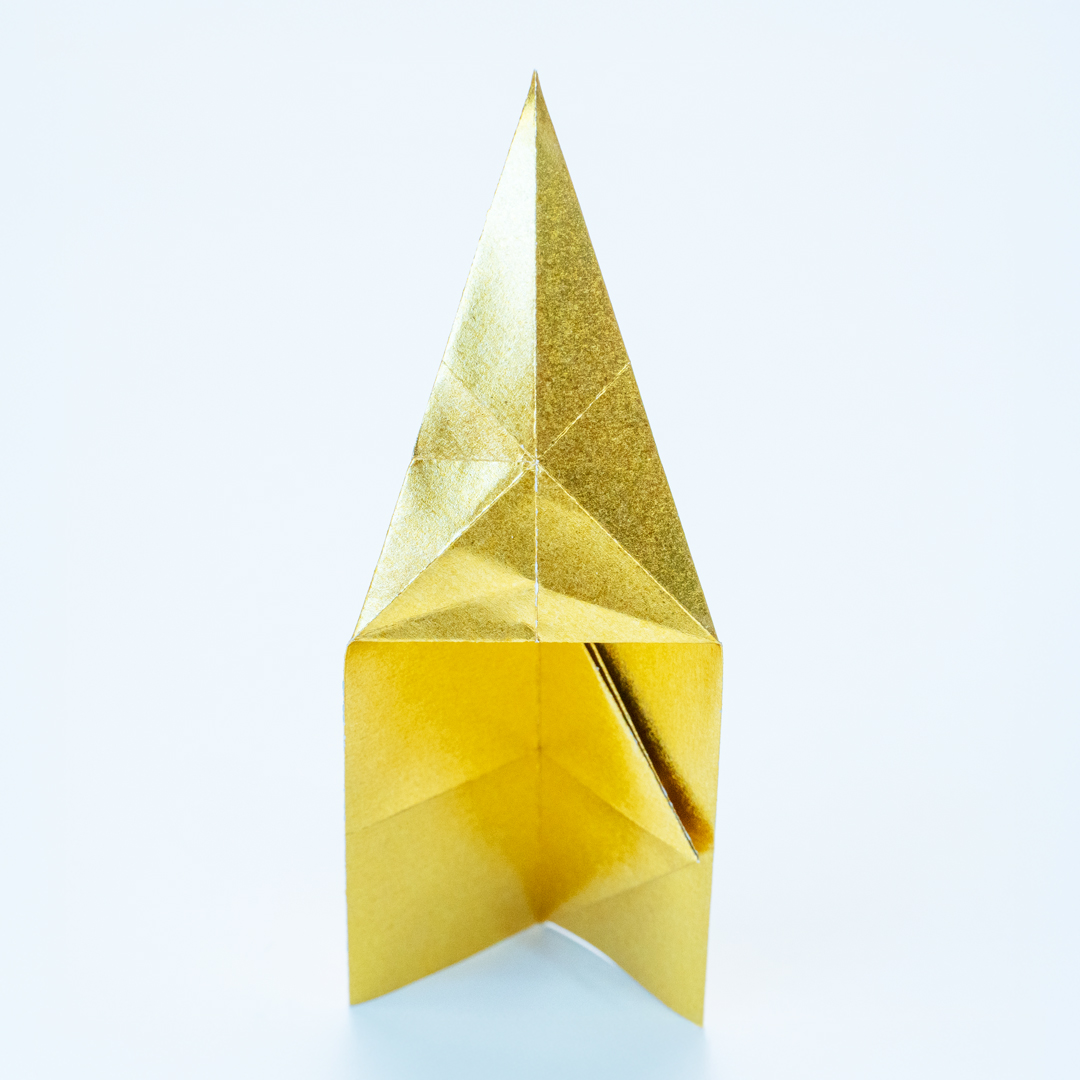
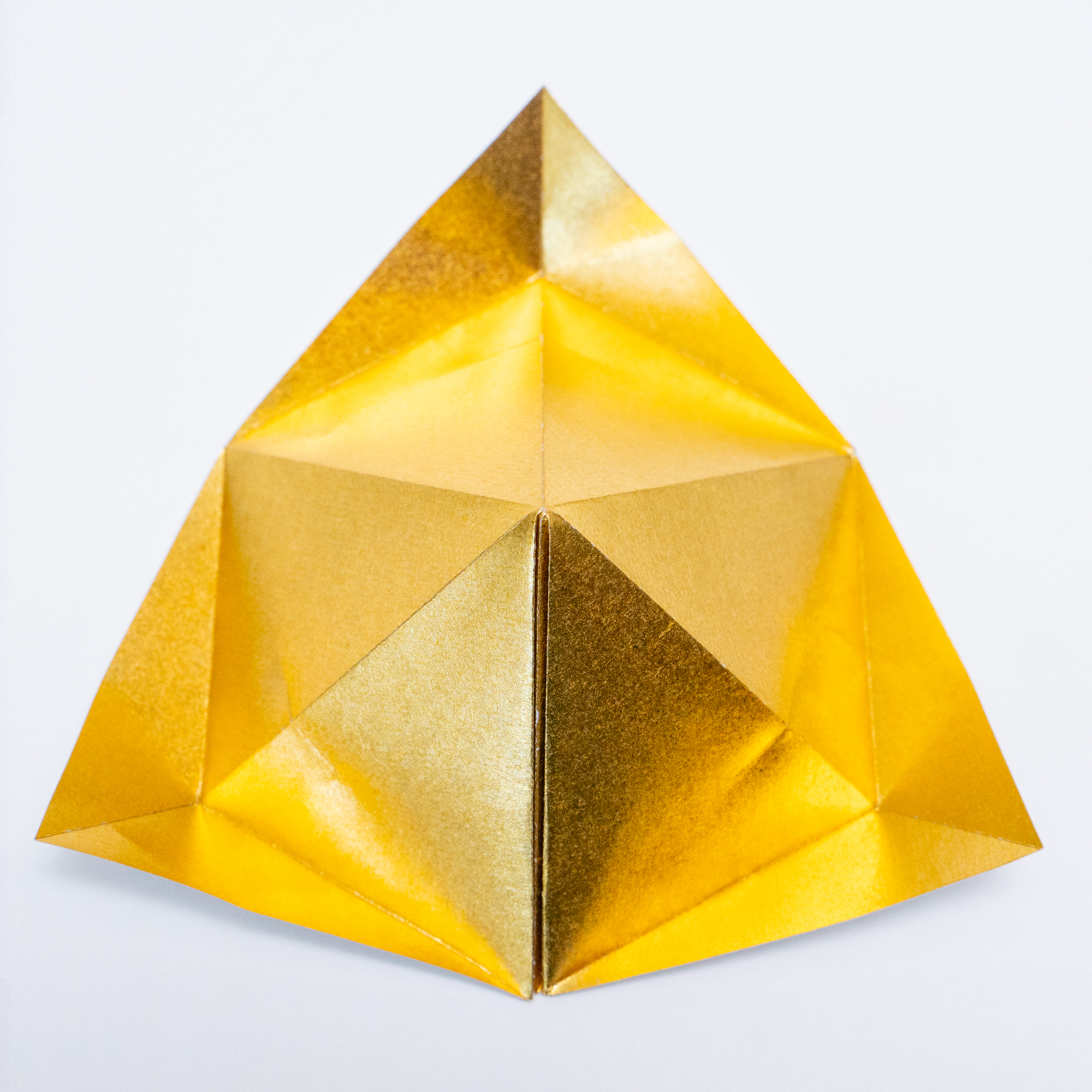
A slender triangular pyramid with a sharply elongated apex, offering strong structural stability. On its own, it is well suited for creating horn-like forms. By combining multiple units, it can be extended into solid structures such as cubes and square pyramids, making it a highly versatile structural element.

Pyramid

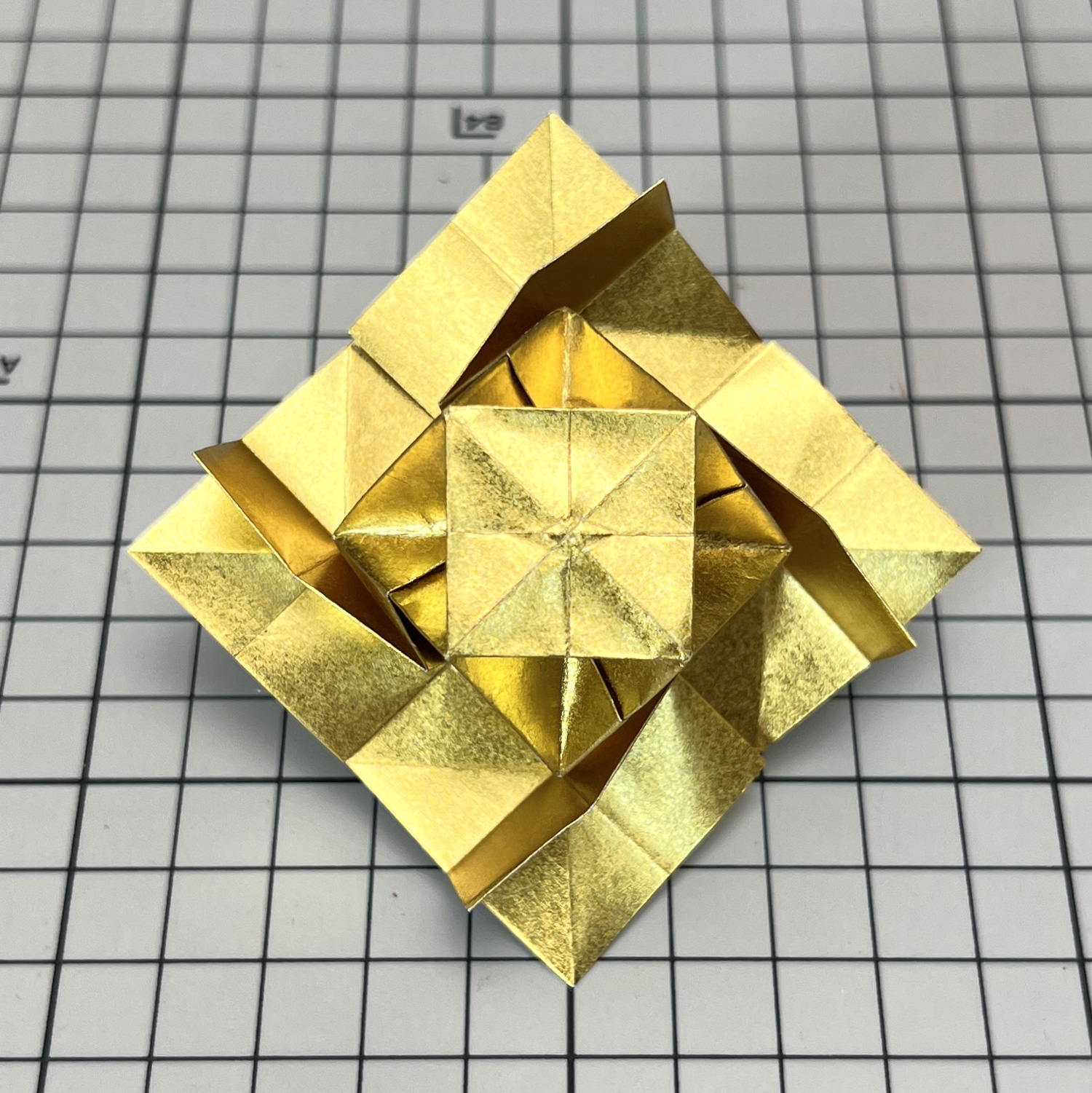
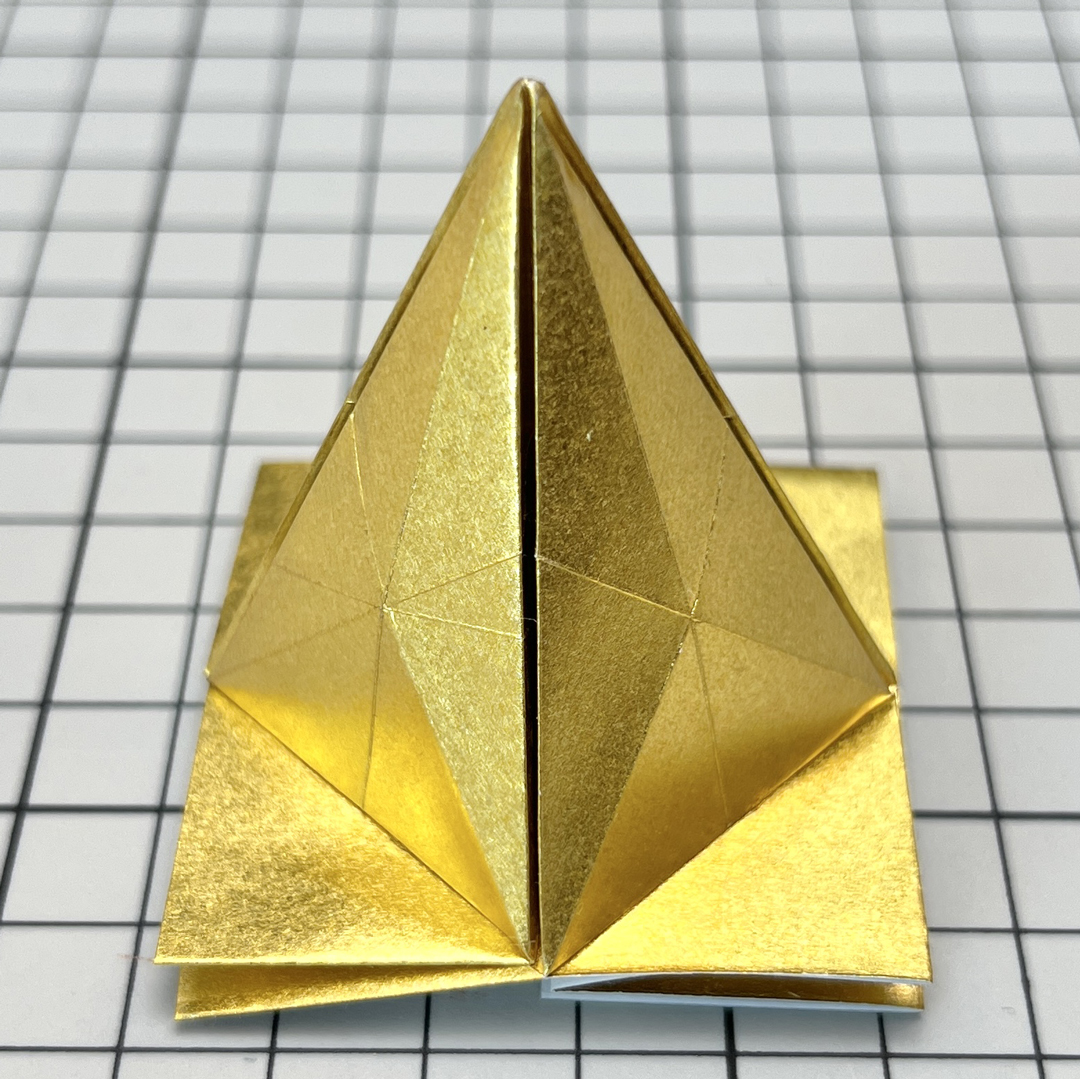
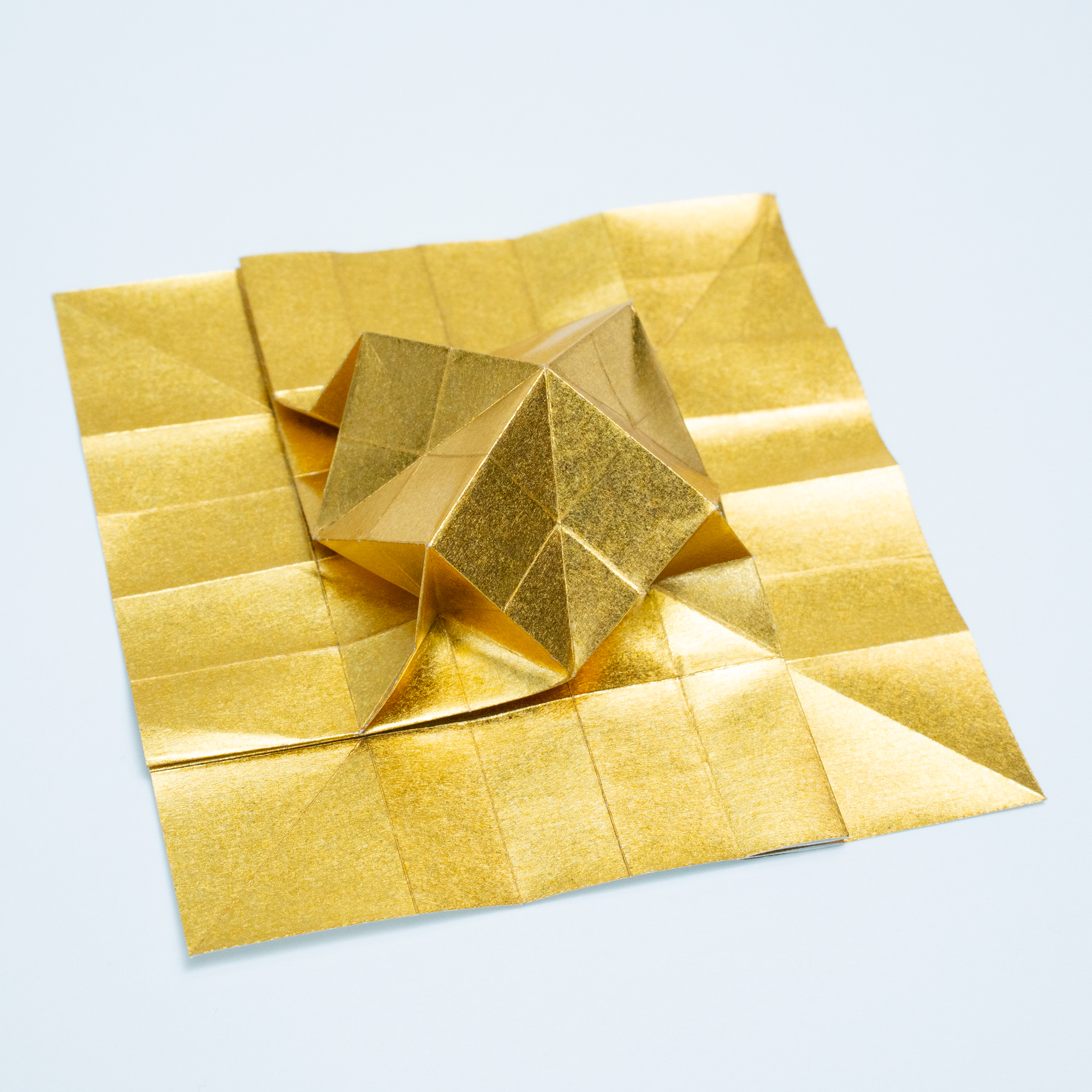
A square pyramid with a sharply pointed apex. It can be constructed by combining four triangular pyramid units using a twisting fold. A frame-like structure forms inside the shape, giving it high structural strength.

Pyramid

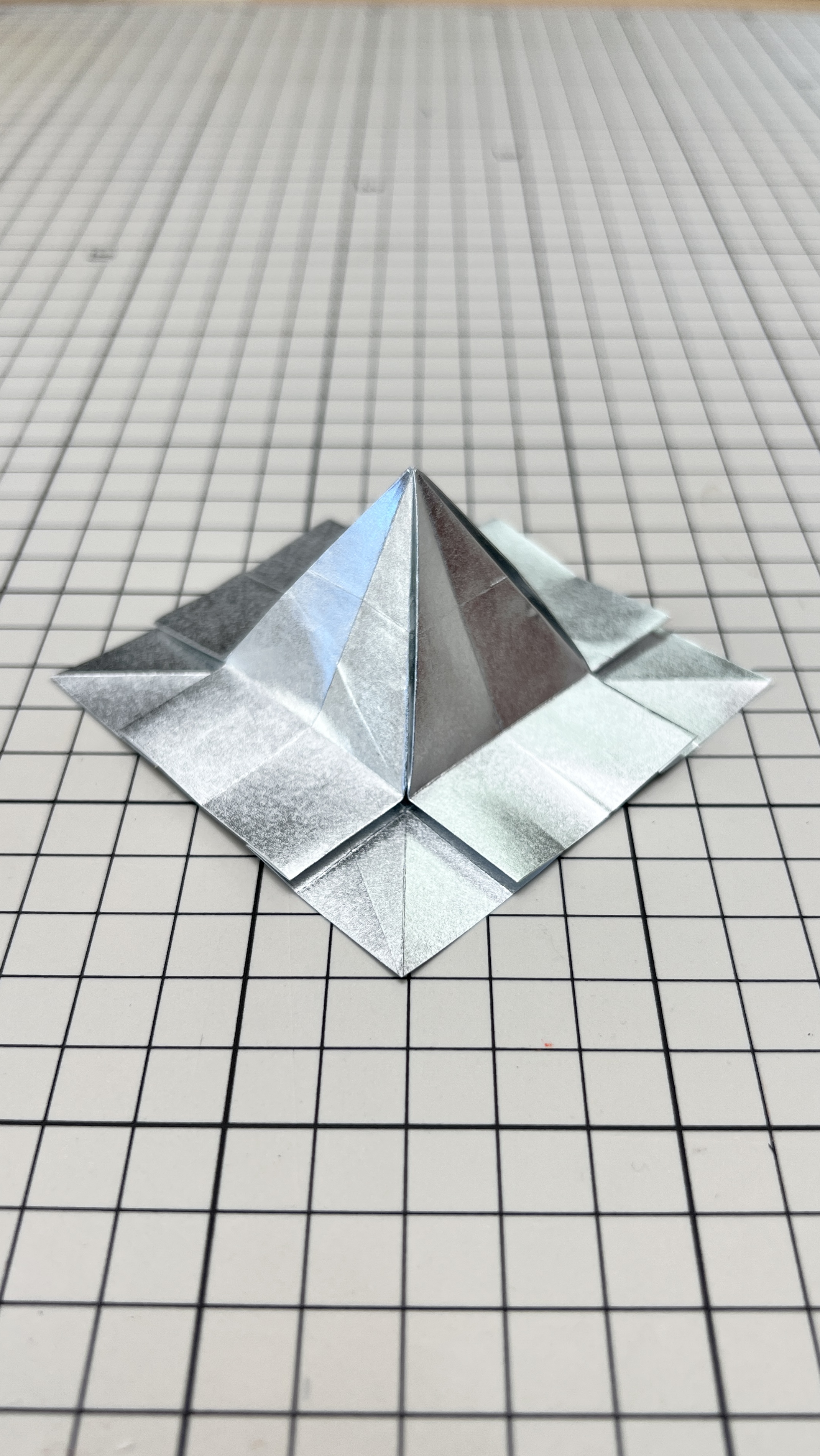
A square pyramid with a hollow interior. Its height can be adjusted by changing the amount of paper used.

Pyramid

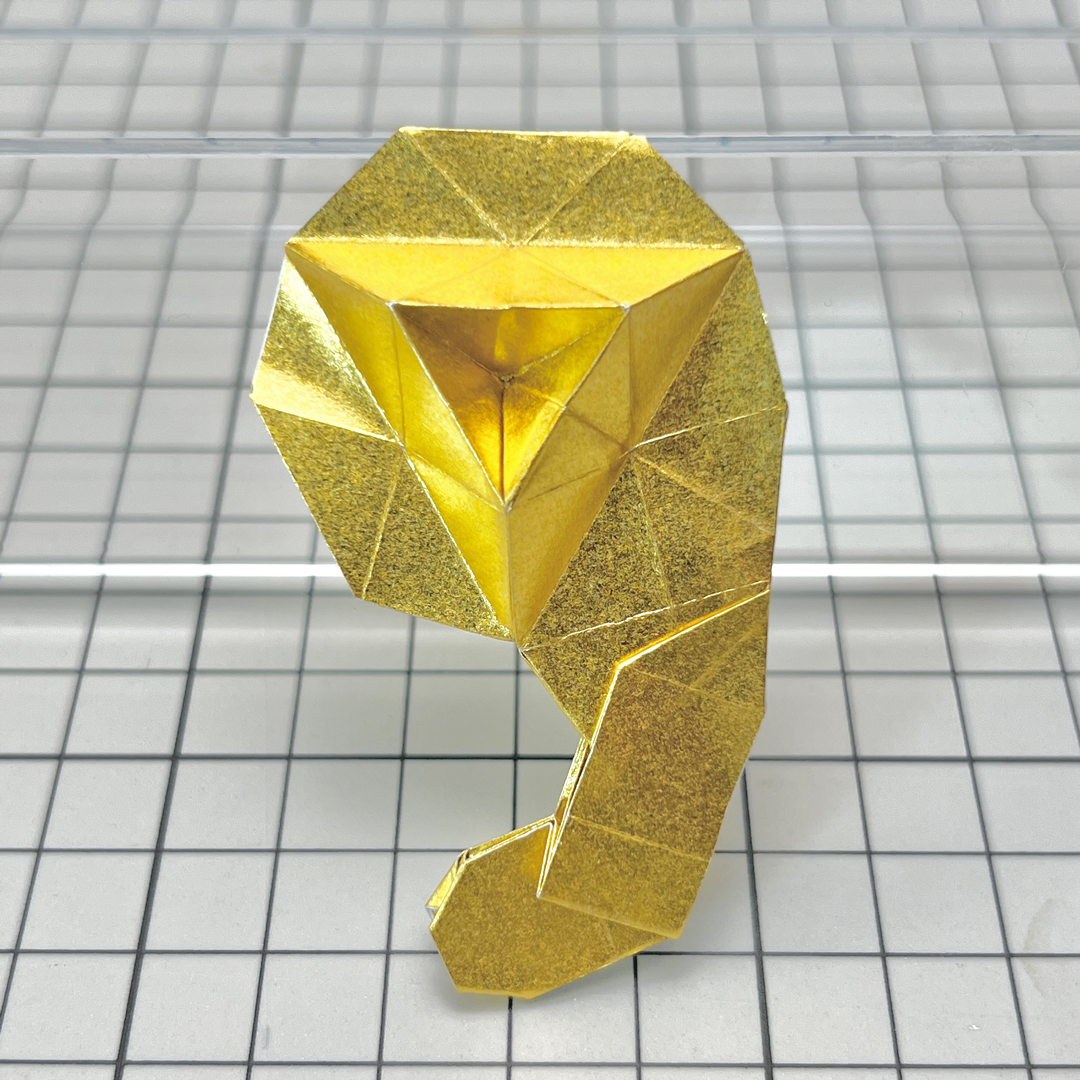
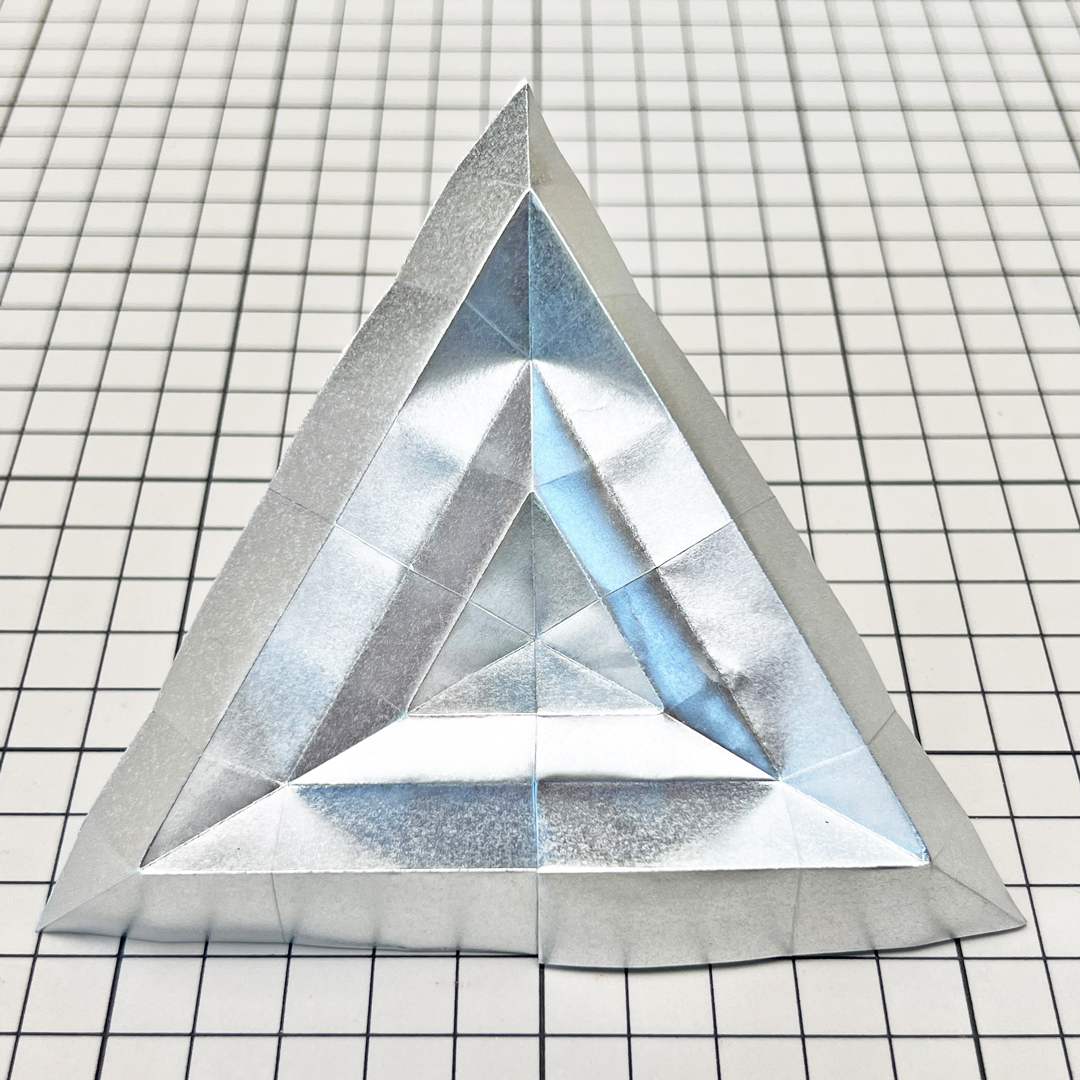
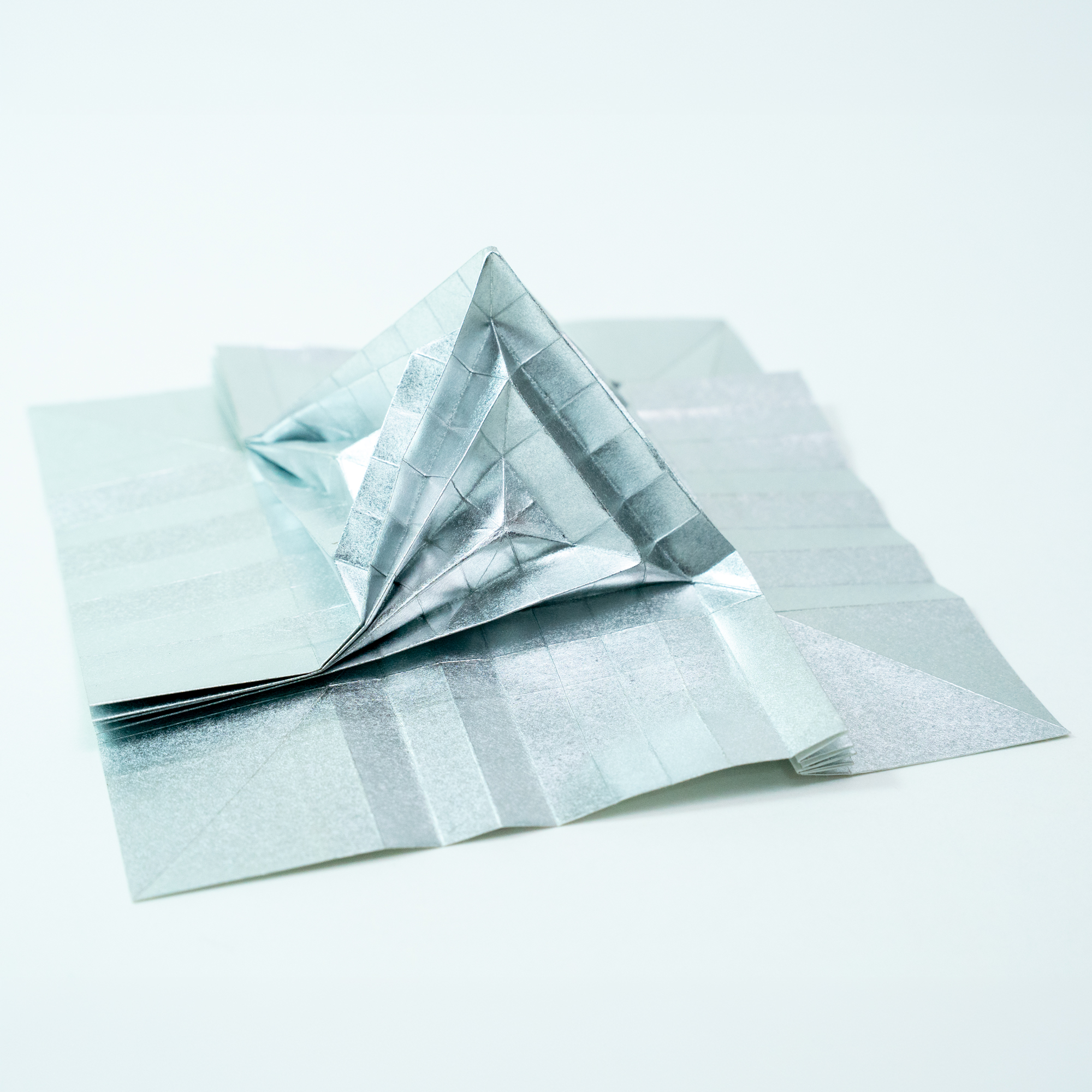
A structure formed by vertically compressing an obtuse triangular pyramid using a three-dimensional sink-fold technique. The three-dimensional sink fold becomes a locked fold, resulting in a stable structure.

Pyramid

A triangular pyramid formed by deforming an obtuse triangular pyramid using a three-dimensional twisting fold. Its defining feature is a left–right asymmetric structure.

Pyramid

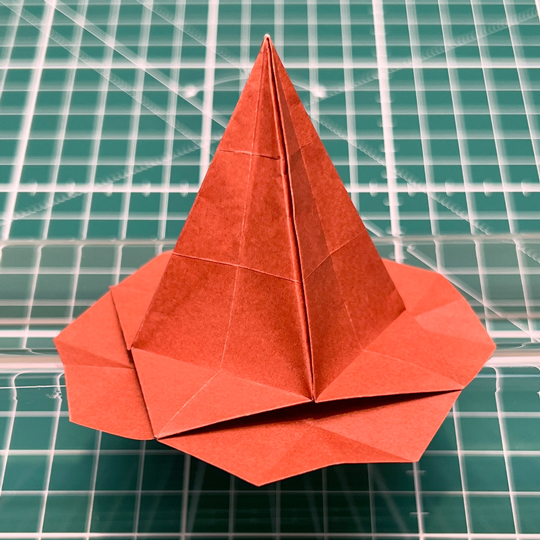
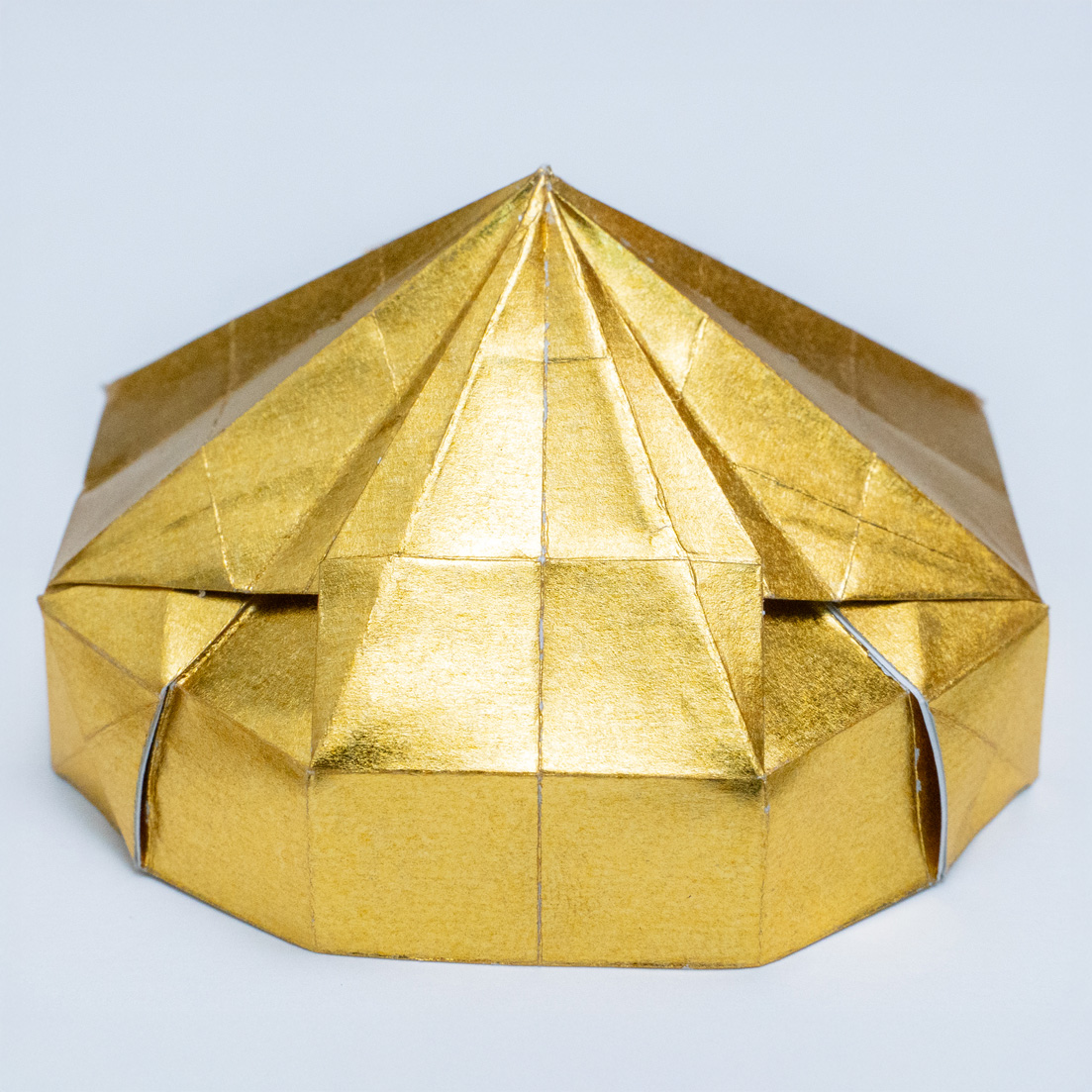
A hollow pyramidal structure with a regular octagonal base. By adjusting the finishing folds, the apex angle can be narrowed, allowing the tip to become sharper.

Cross

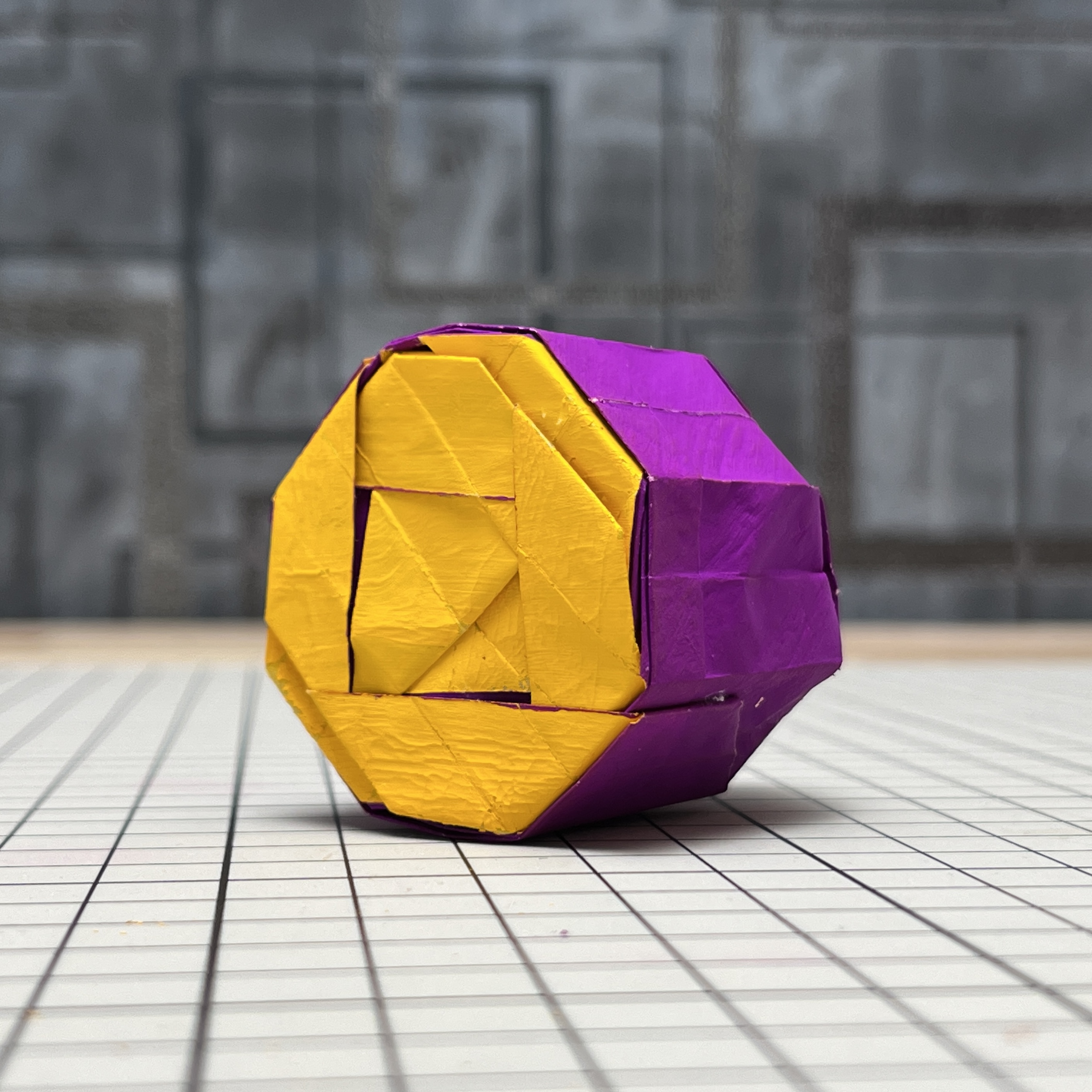
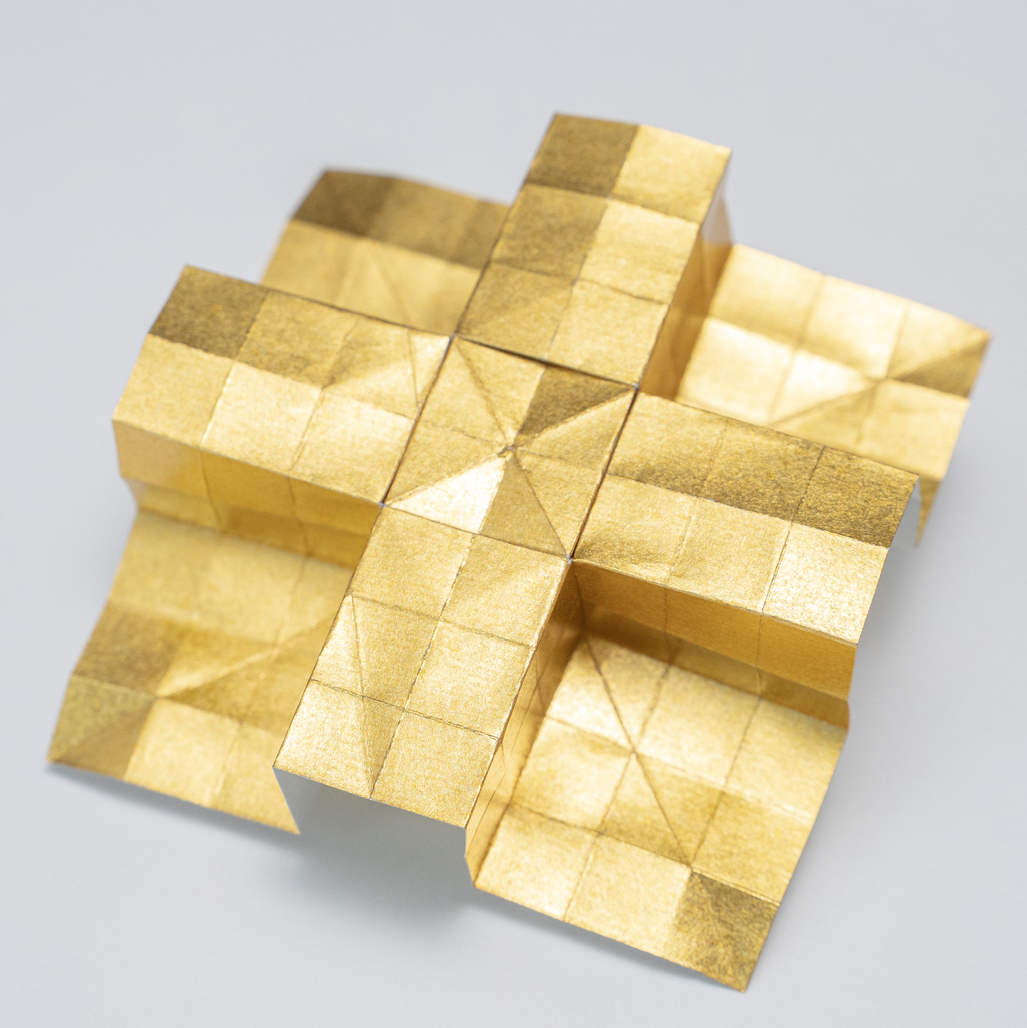
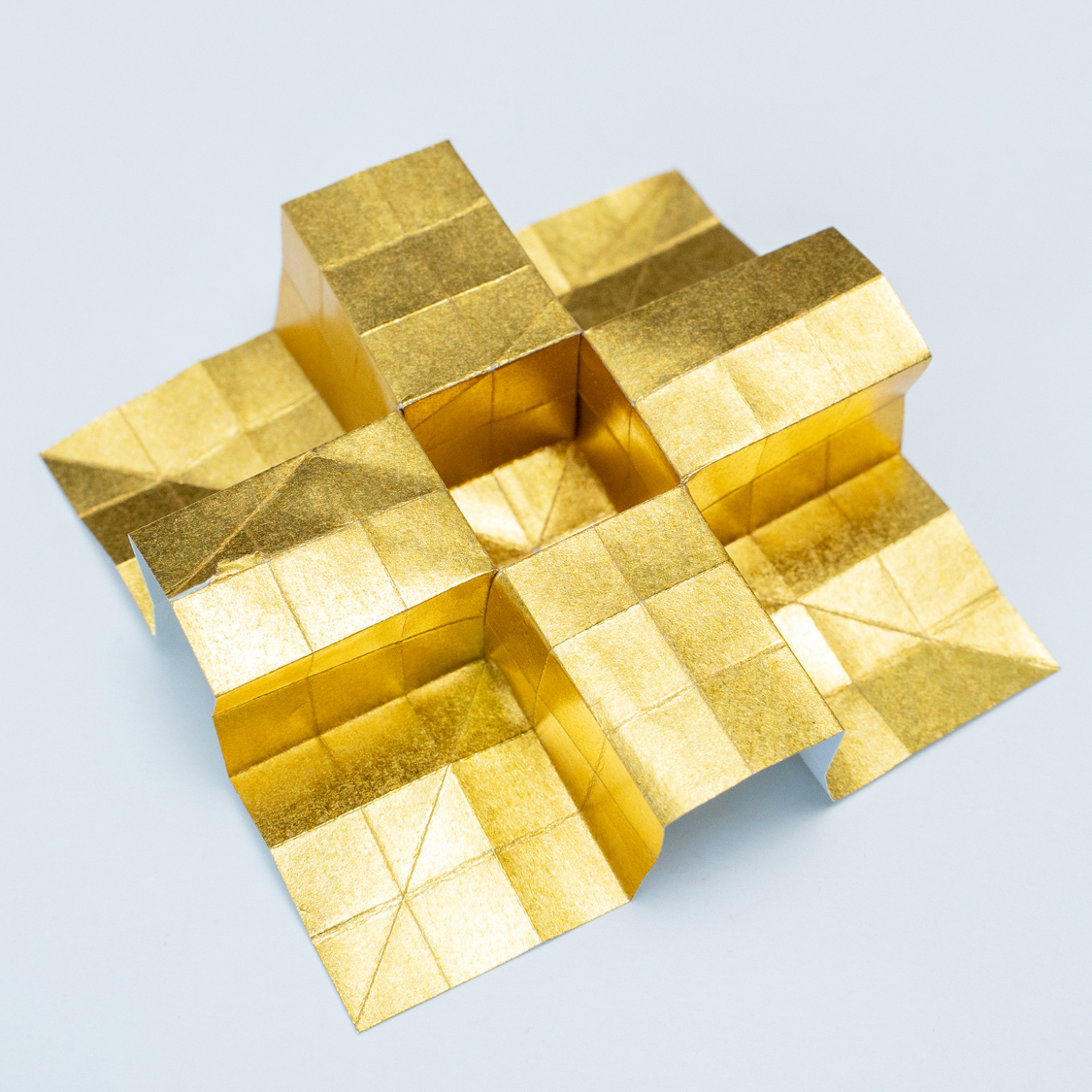
A relief cross structure with a recessed center, created by combining multiple banded cube units.

Truncated pyramid

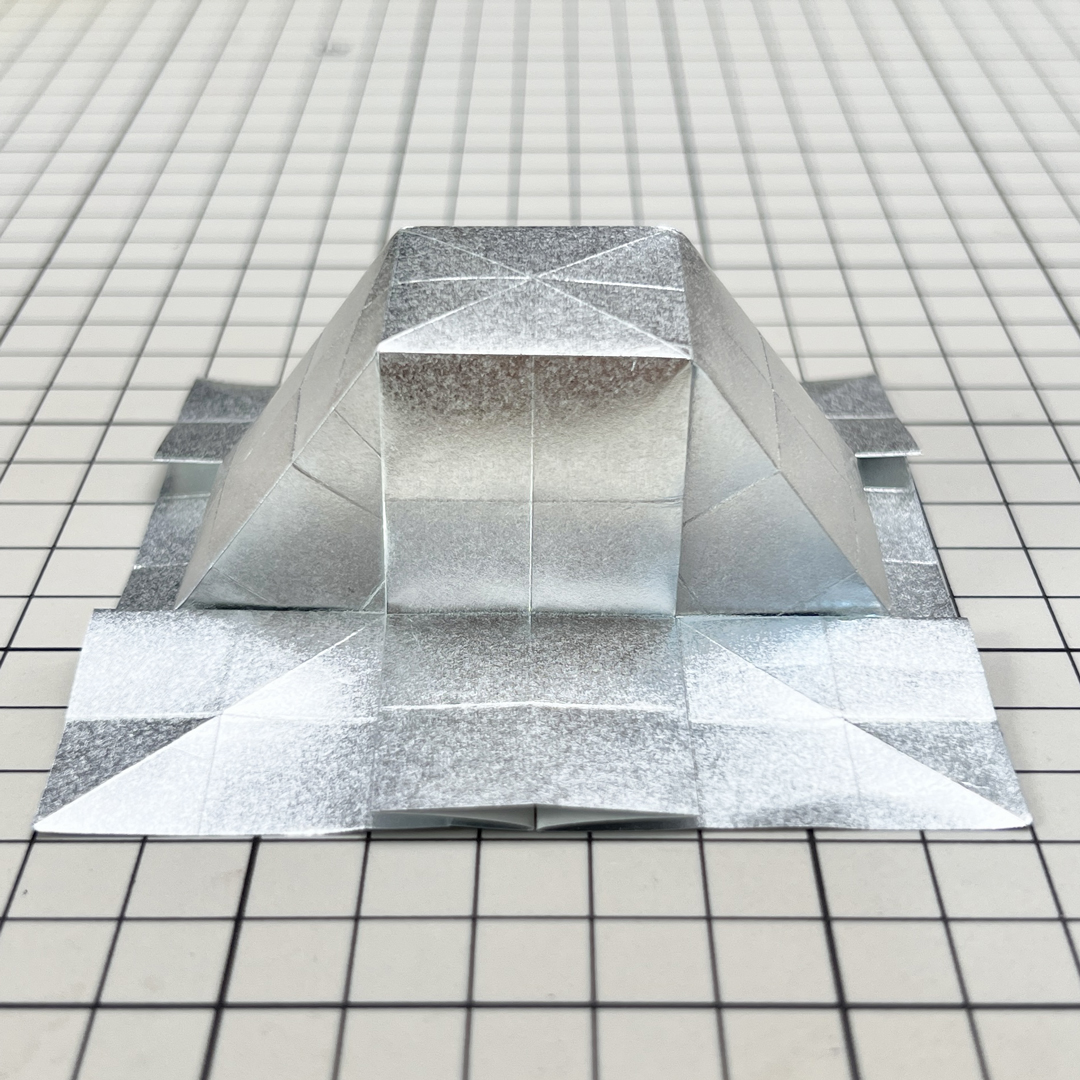
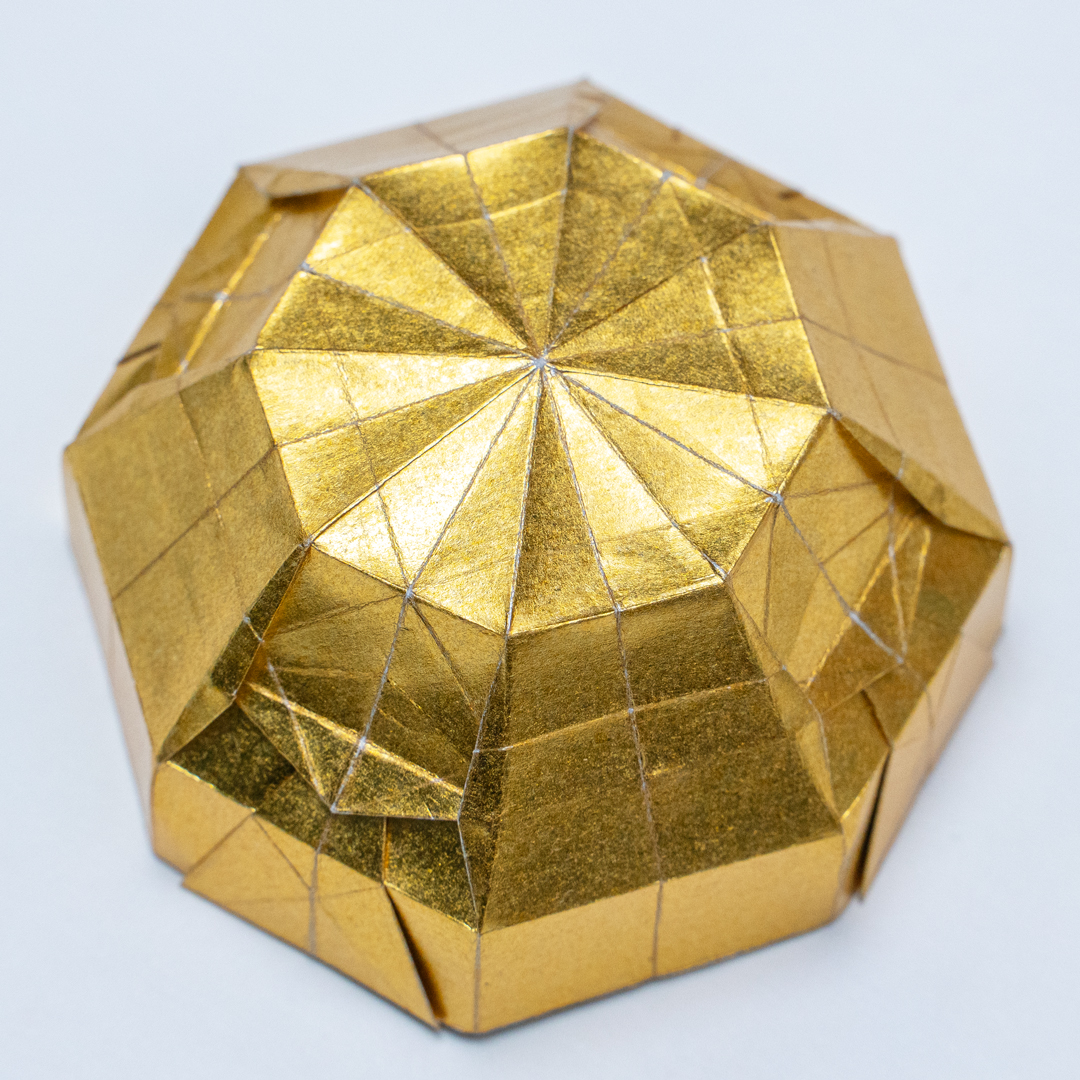
A bowl-shaped structure resembling an octagonal pyramid with its top cut off. It is well suited for approximating curved surfaces such as the cup of a wine glass or the caps of jellyfish and mushrooms.

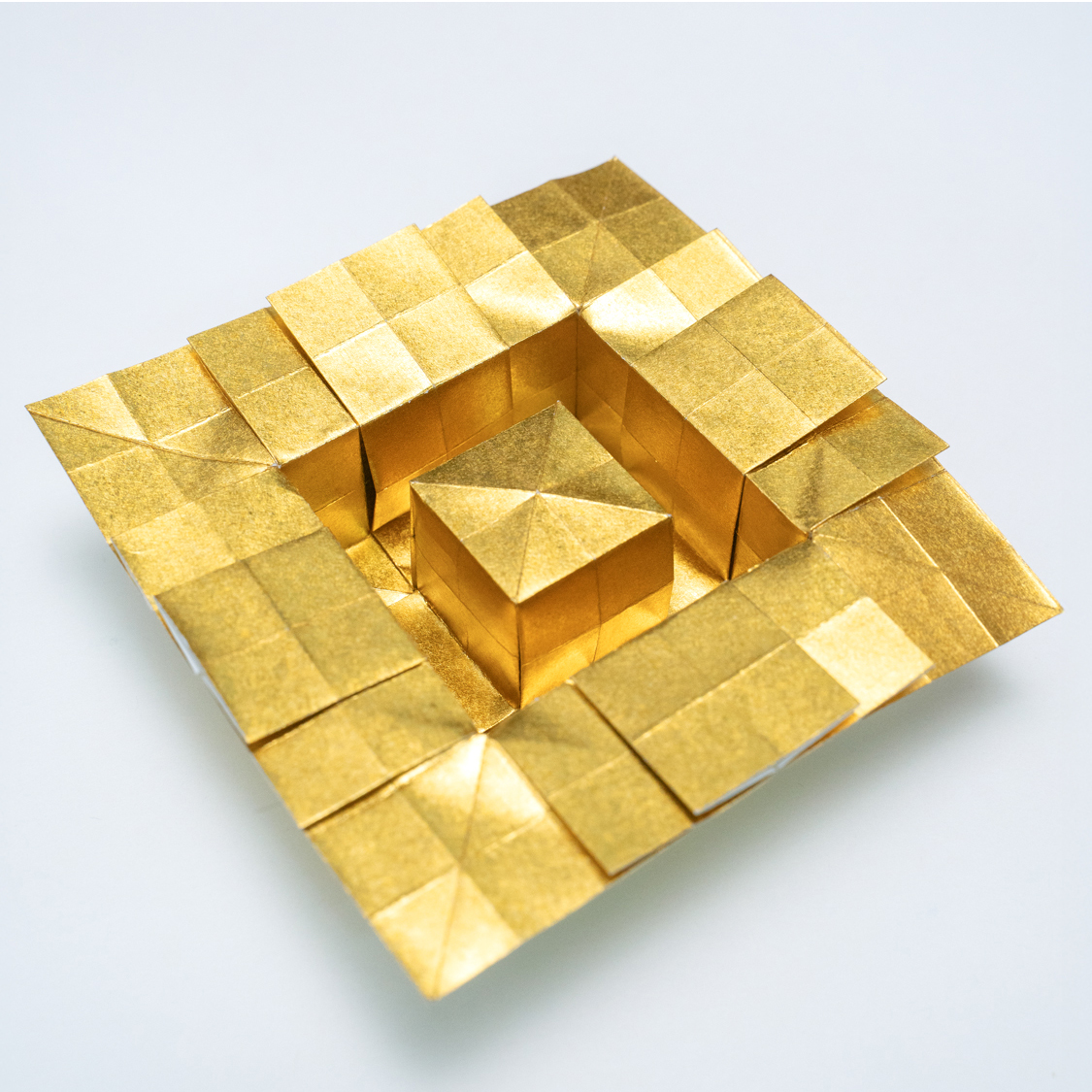
Nested Cube

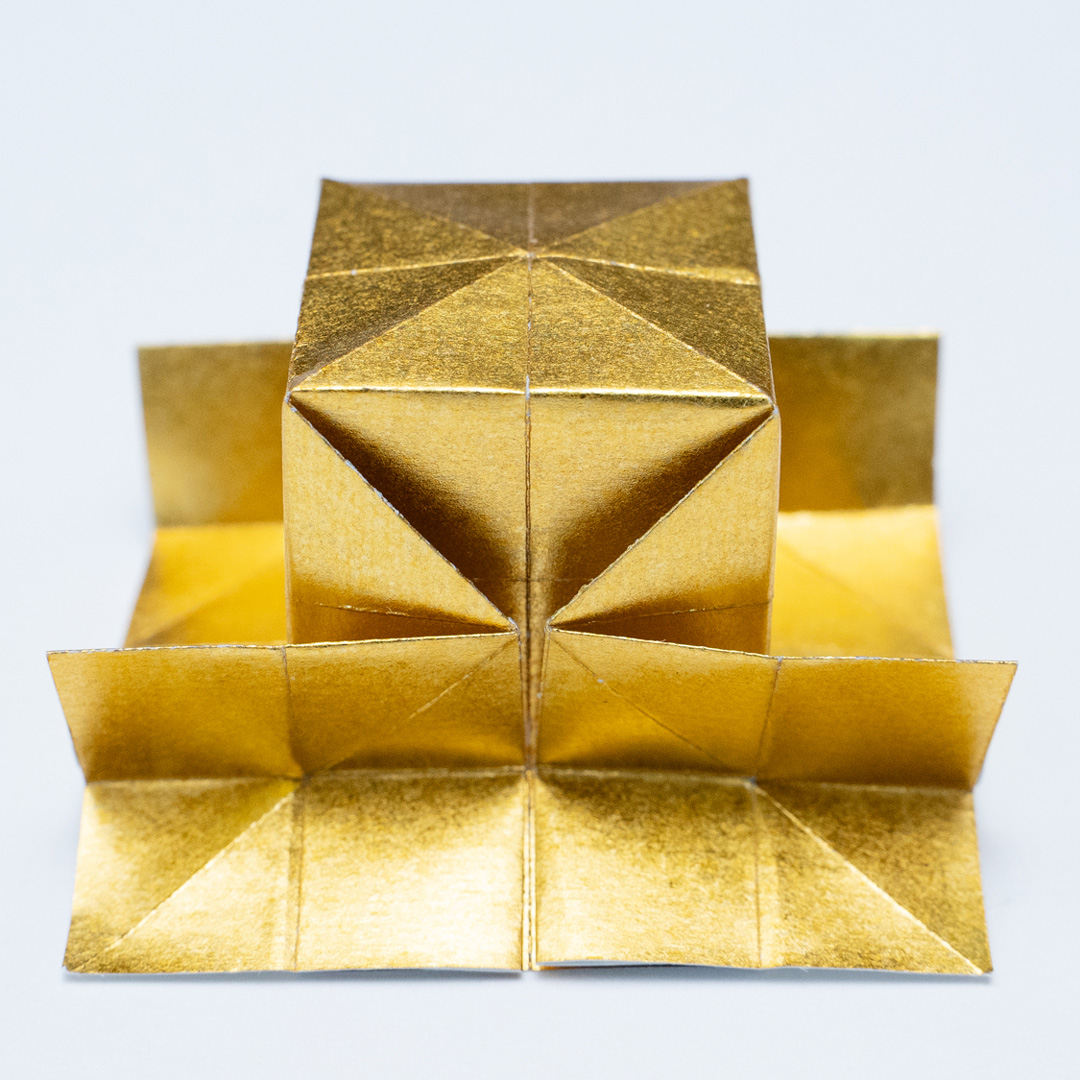
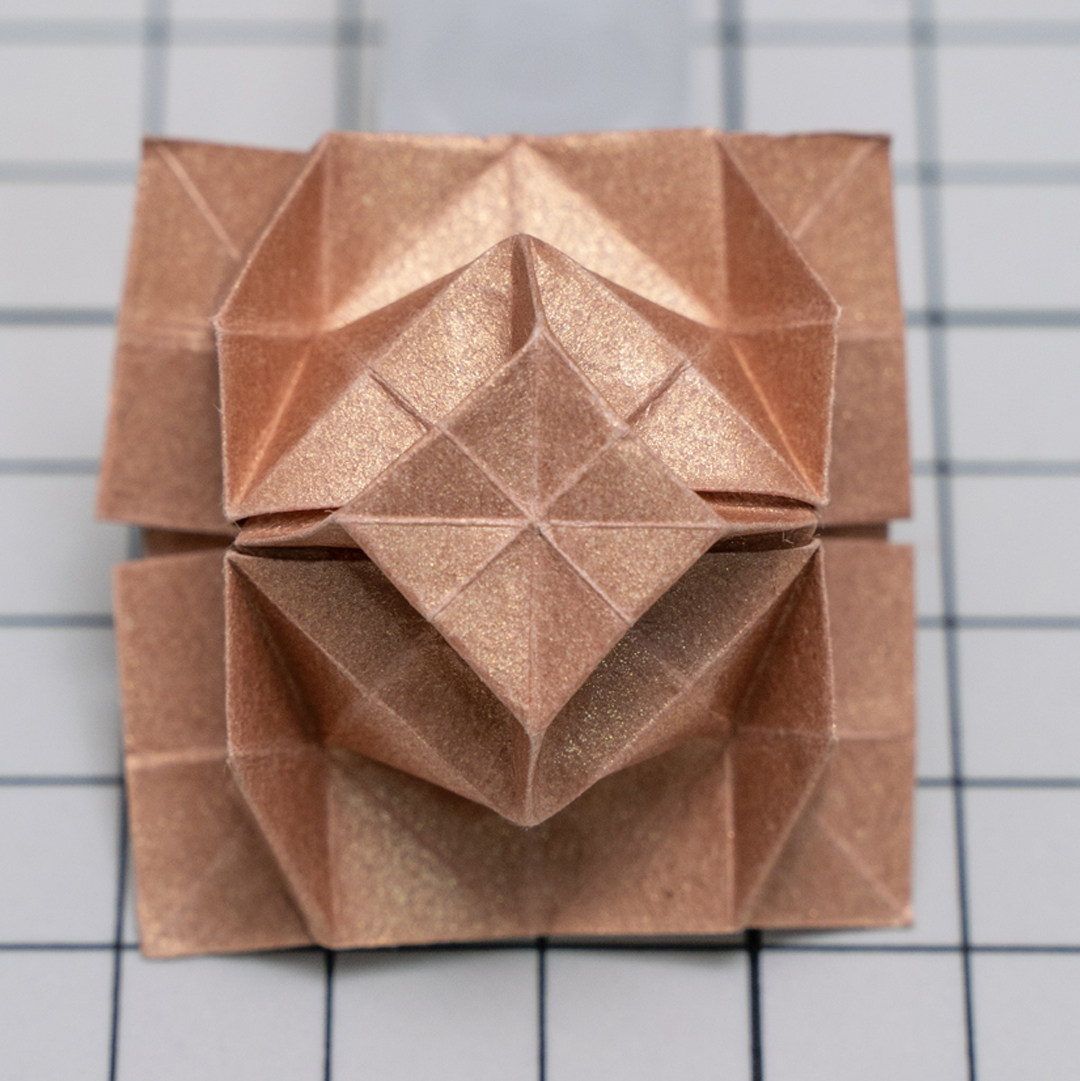
A structure in which a cube is placed at the center of a recessed rectangular prism. A composite component created by combining a banded cube with a basic cube.

Human Figures

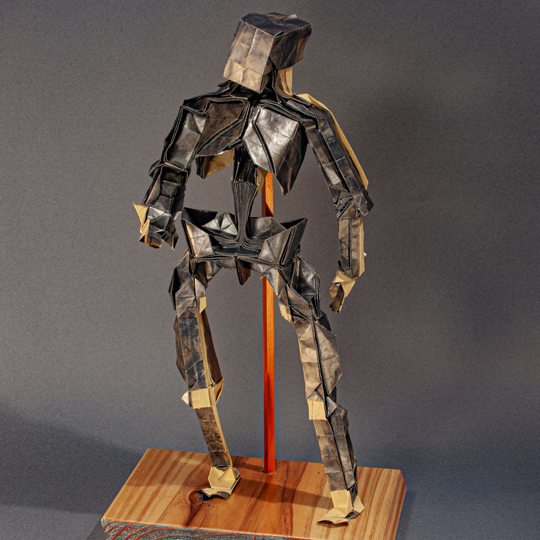
Human skelton

A work that represents the human skeleton as a means of exploring the underlying structure of humanity.

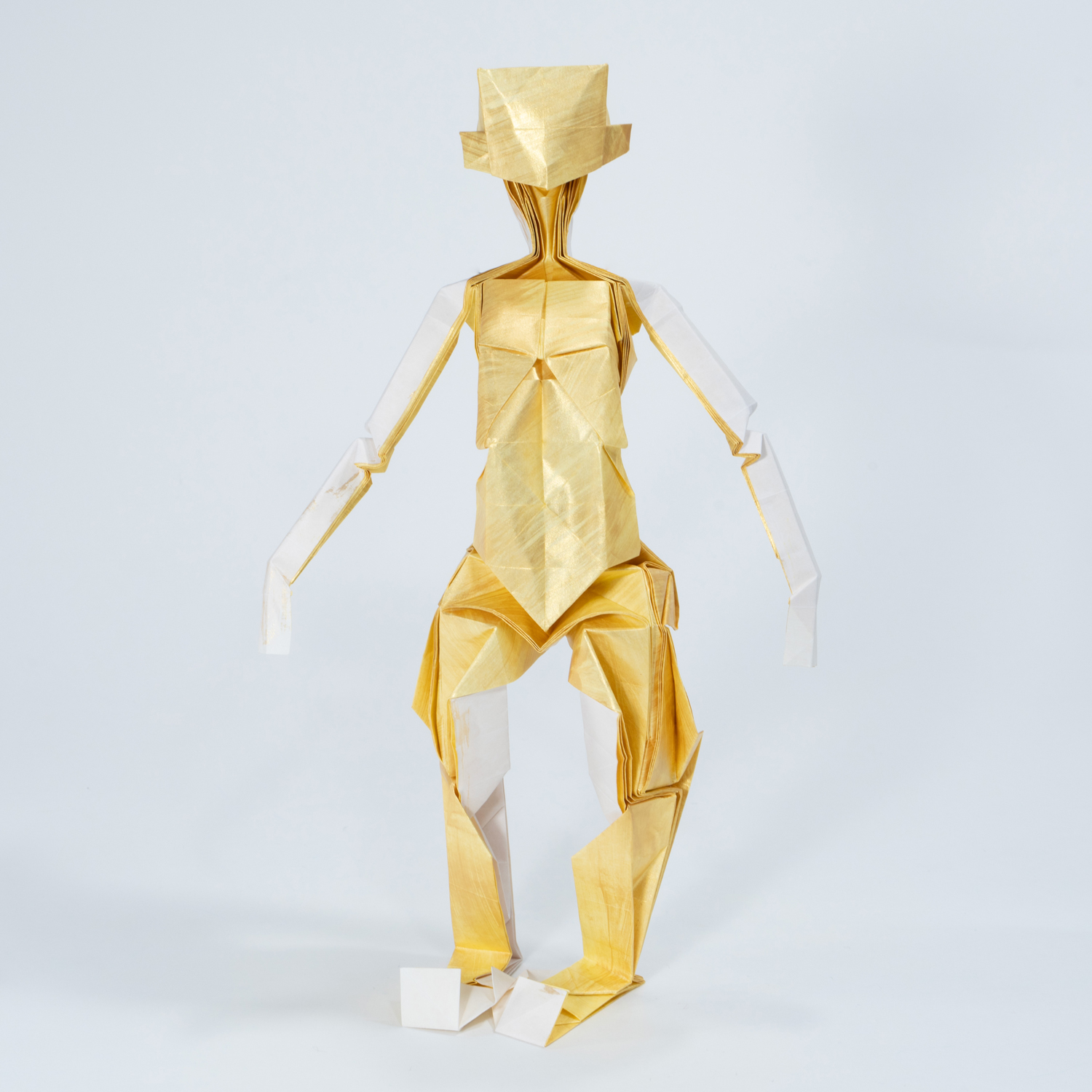
Origami Girl

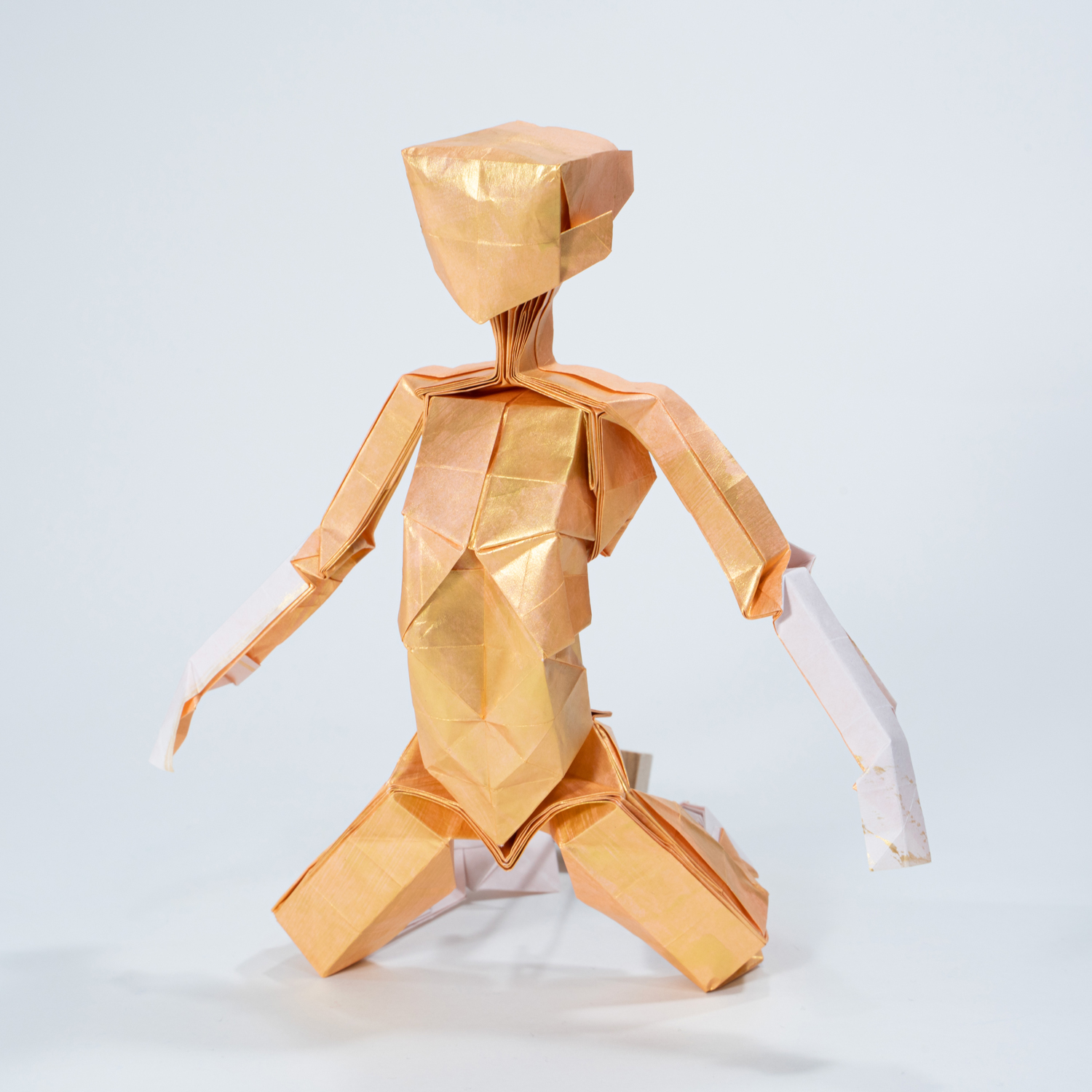
another dedign of an origami girl ( blonze, 32 grid )

Origami Girl

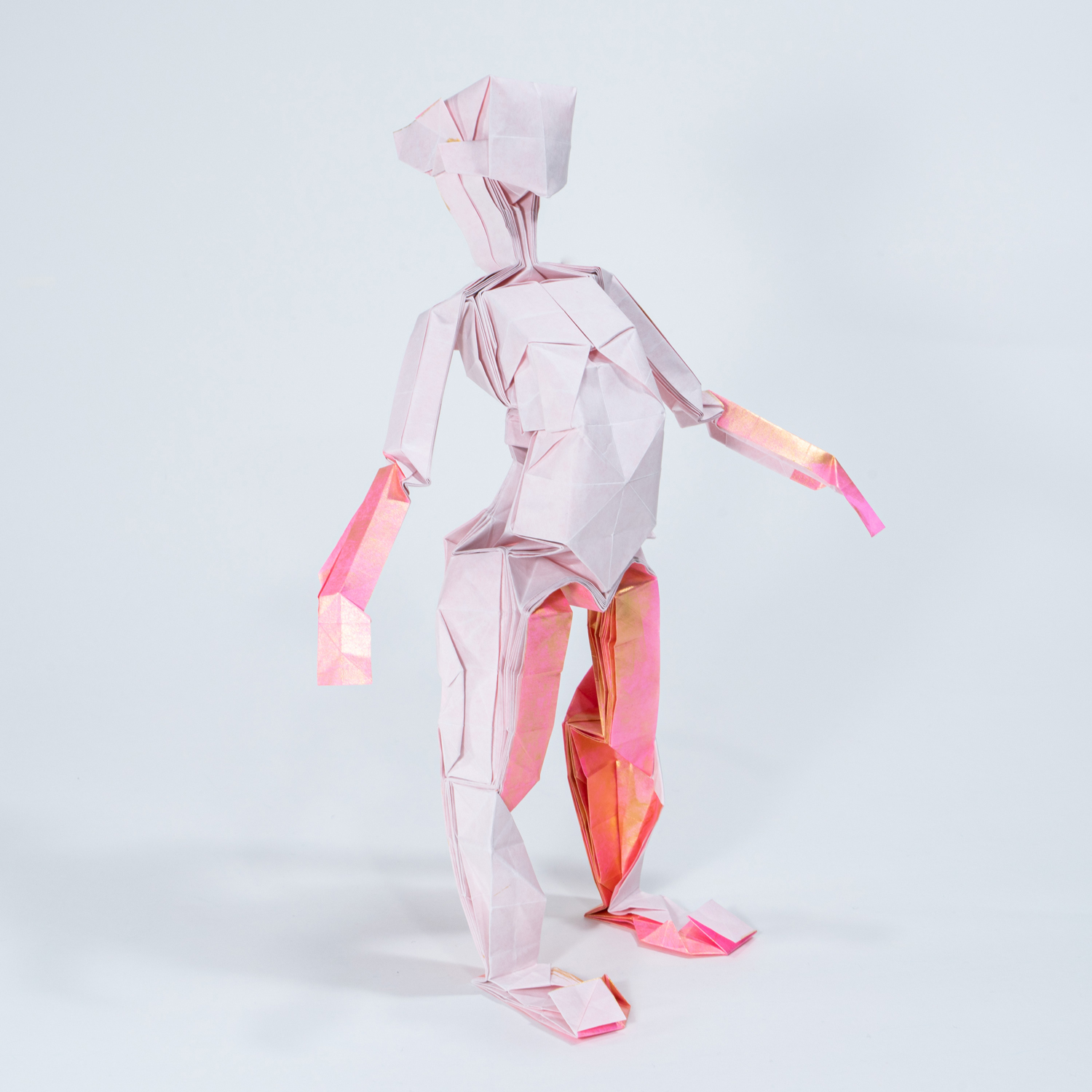
another design of an origami girl ( red gold, 32 grid )

Origami Girl

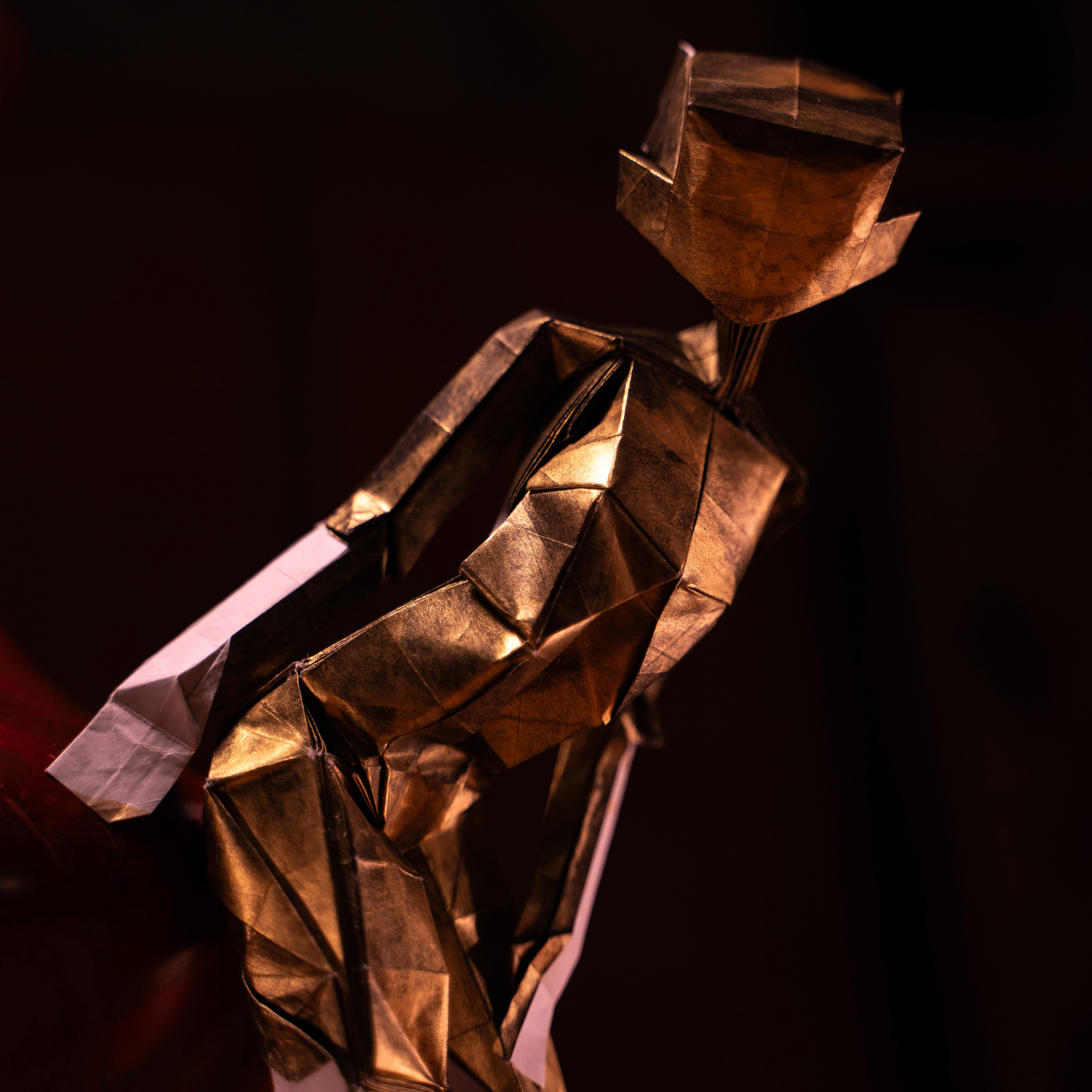
Another design of an origami girl. ( black and gold )

Origami Girl

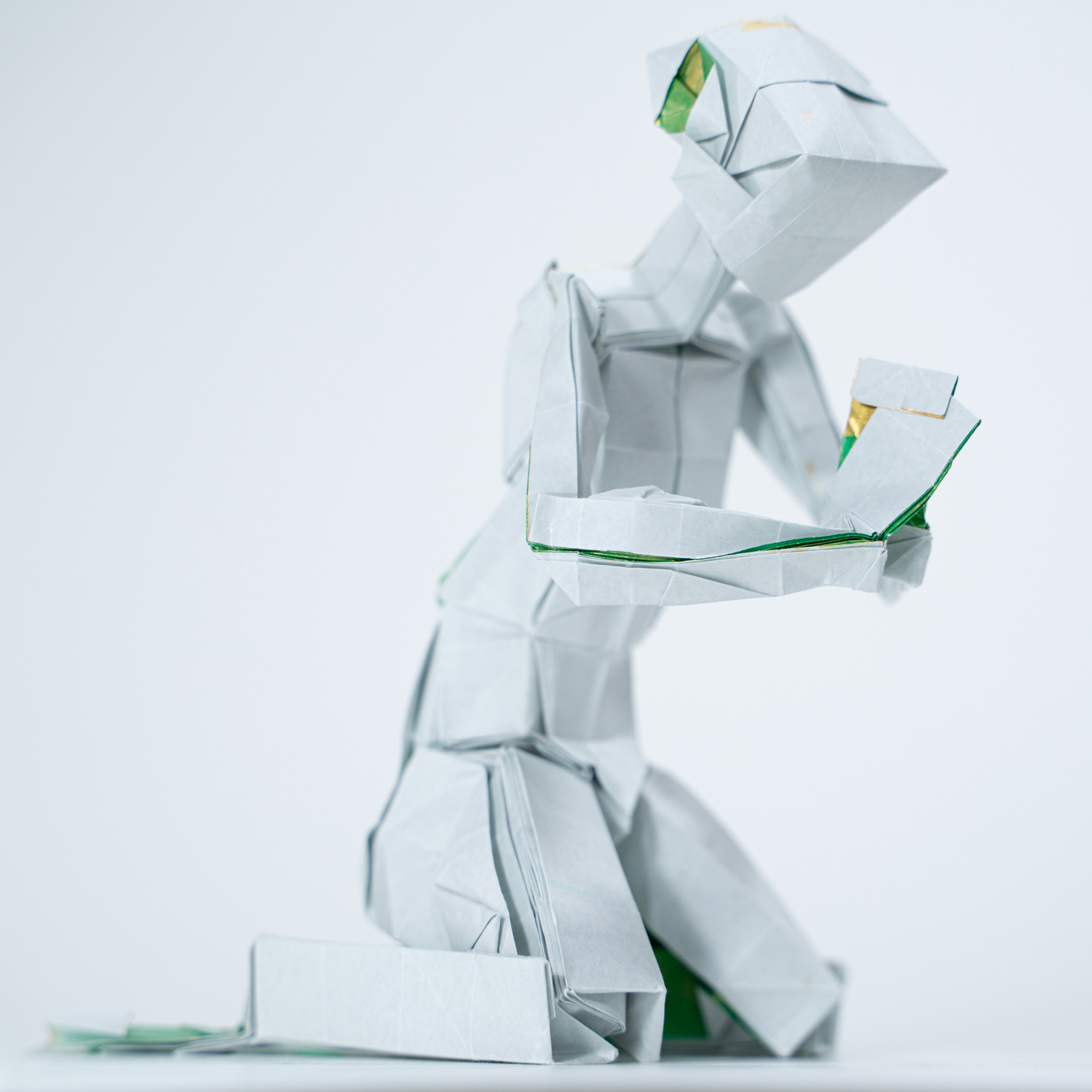
another design of an origami girl ( green, 36 grid )

Origami Girl

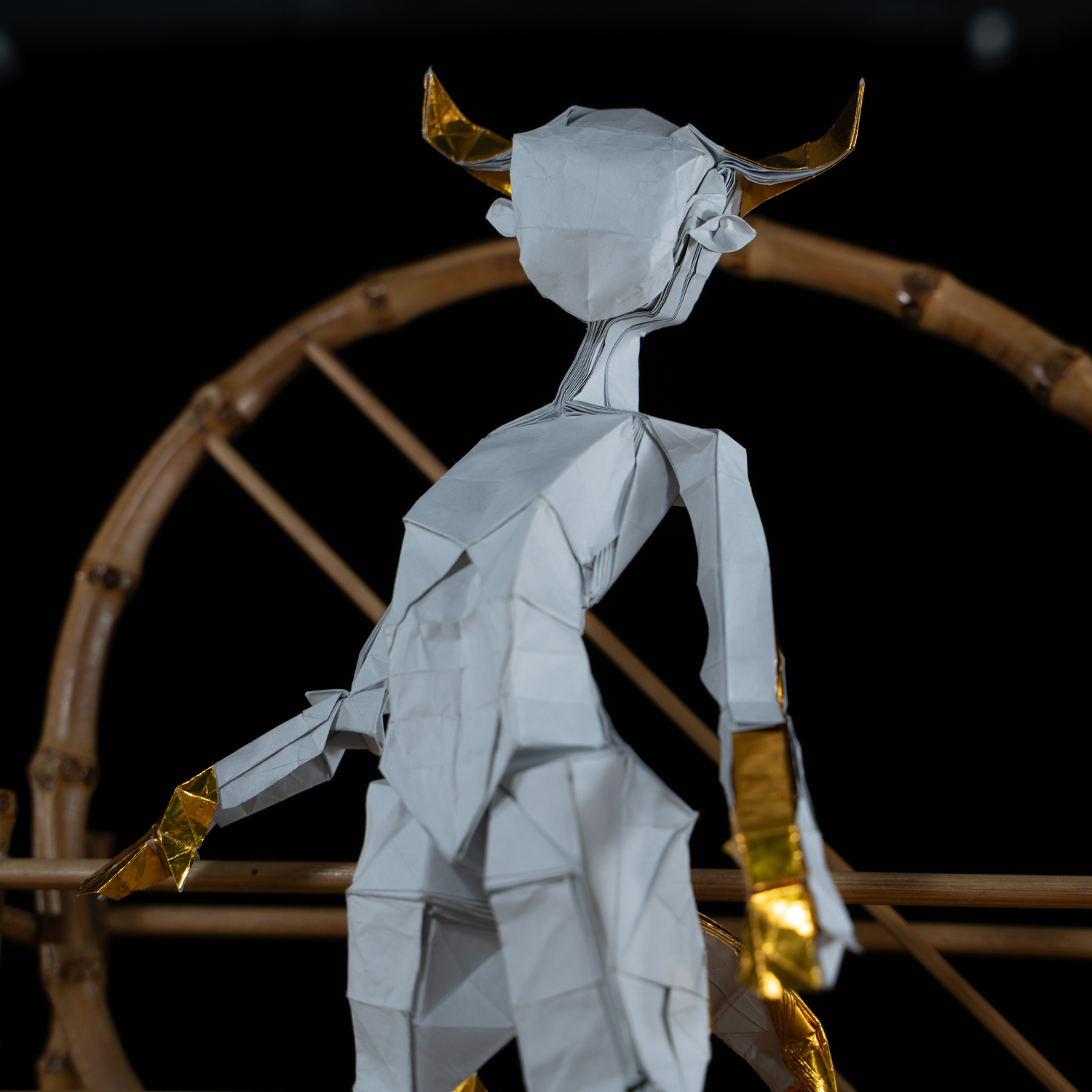
another design of an origami girl ( beast man, 40 grid ? )